Portrait of a Woman
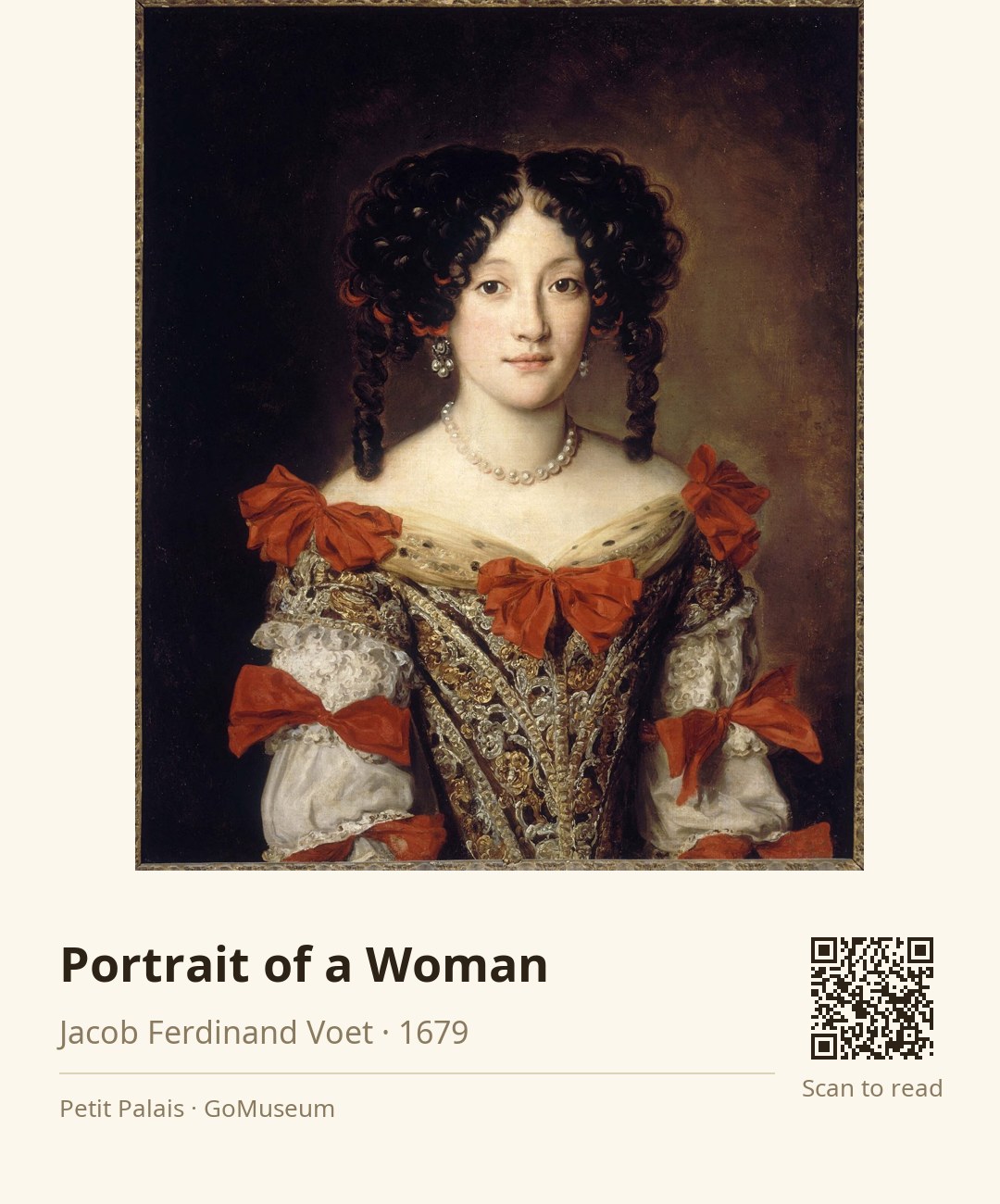
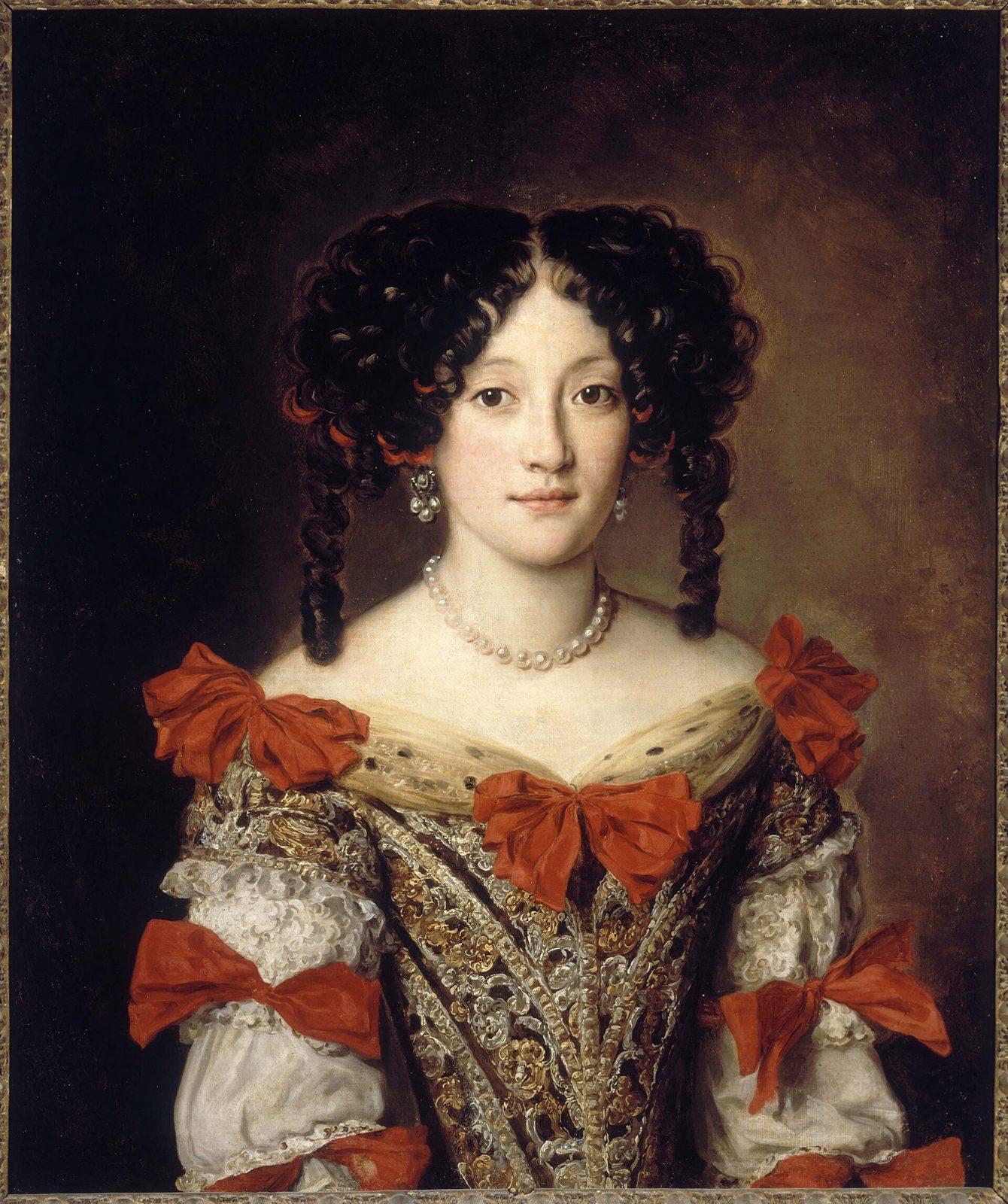
🎧 This work has audio narration — listen in the appThe young woman in this portrait, with her dark, curly hair styled in elaborate ringlets and adorned with red ribbons, commands your attention. Her attire, a richly embroidered dress with intricate floral motifs, is accentuated by large red bows at the shoulders, while a pearl necklace and matching earrings add a touch of elegance. The muted background enhances the vivid colors and textures of her clothing, creating a striking contrast that draws you into her serene expression.
Voet's ability to capture the essence of his subjects is evident here, as the detailed depiction of luxurious fabrics and the formal pose reflect the fashion and status of the late 17th century. This painting likely served not just as a representation of beauty but also as a statement of the subject's social standing, showcasing the opulence associated with the aristocracy of the time. Voet, known for his portraits of elite clientele, developed a style that emphasized elegance and refinement, which was highly sought after in both Italy and France.
Created in 1679, this work exemplifies Voet's mastery during a period when he was at the height of his career, painting for influential patrons in Rome and beyond.
Jacob Ferdinand Voet, born in Antwerp in 1639, was a prominent Flemish portrait painter whose career flourished in Italy and France during the late 17th century. Voet's artistic journey began in Rome, where he became a sought-after portraitist for the aristocracy, including the influential Colonna and Chigi families. His portraits, characterized by elegant poses and luxurious fabrics, reflected the fashionable tastes of his elite clientele. Voet's work gained further acclaim through his series "Galleria delle Belle," which celebrated the beauty of Roman society women.
Despite his success, Voet faced challenges, including disapproval from Pope Innocent XI, leading to his departure from Rome. He continued his career in Milan, Florence, and Turin before settling in Paris, where he became a court painter. Voet's legacy, initially overshadowed, saw a revival in the 1930s, recognizing him as one of the most fashionable portrait painters of his time. His influence on portraiture and the depiction of beauty in art remains significant, securing his place in art history. Voet passed away in Paris in 1689, leaving behind a rich body of work that continues to be celebrated today.
Voet's career was flourishing at this time, having spent over a decade painting for influential families and patrons, including the papal court. The painting's provenance traces back to the Dutuit family, indicating its esteemed status among collectors. Voet's work was well-received, celebrated for its elegance and attention to detail, which made him a sought-after artist in both Italy and France. However, by the late 17th century, he faced challenges, including a shift in cultural attitudes under Pope Innocent XI, which ultimately led to his departure from Rome in 1678.
Voet's technique shines through in this painting, where he masterfully employs oil paint on canvas to create a vivid portrayal of the young woman. The brushwork is meticulous, allowing for the intricate details of her dress to come alive, from the delicate gold embroidery to the rich textures of the fabric. The use of color is particularly striking; the deep, muted background serves to amplify the brightness of her attire, drawing your eye directly to her. Voet's choice of a formal pose, with the subject gazing directly at the viewer, establishes a connection that feels both intimate and commanding. The scale of the painting, measuring 75.5 by 62 centimeters, allows for a life-like representation, making the viewer feel as though they are in the presence of the subject herself.
An interesting tidbit about Voet is that he was a member of the Bentvueghels, a group of Dutch and Flemish artists in Rome. He even created a charcoal drawing of all the members on the wall of a popular inn, which was so cherished that it was preserved through multiple renovations of the inn. This camaraderie among artists highlights the vibrant community Voet was part of during his time in Rome.
The Bentvueghels was an association of Dutch and Flemish artists active in Rome, and Voet was a member who even created a cherished charcoal drawing of its members on the wall of a popular inn.
The Parravicini family was connected to the Odescalchi family, and Voet's close ties with them likely facilitated his move to Lombardy after leaving Rome.
The Galleria delle Belle was a series of portraits of young women in Roman society that became influential, inspiring similar galleries among other noble families throughout Italy.