Jérôme de La Lande
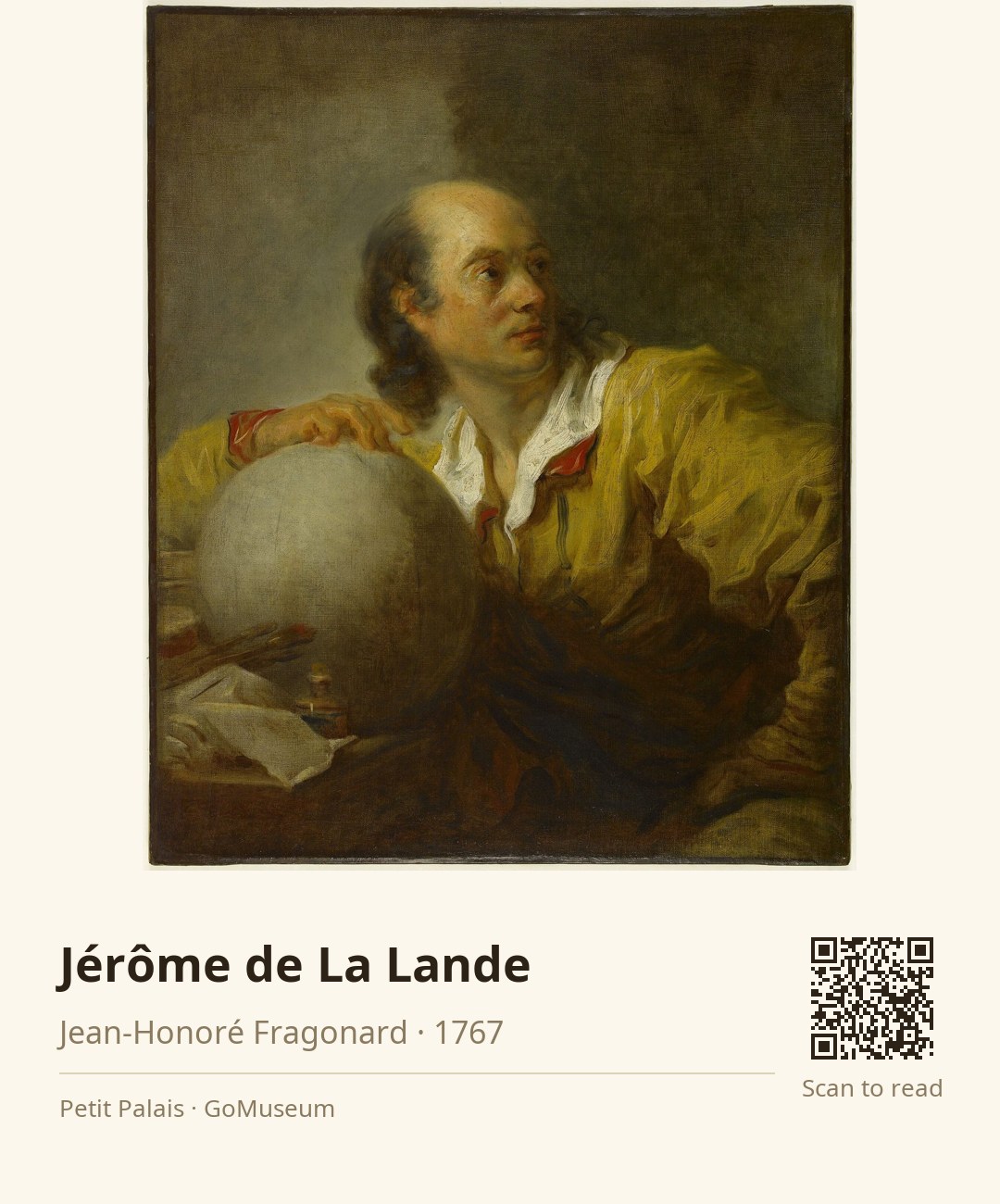
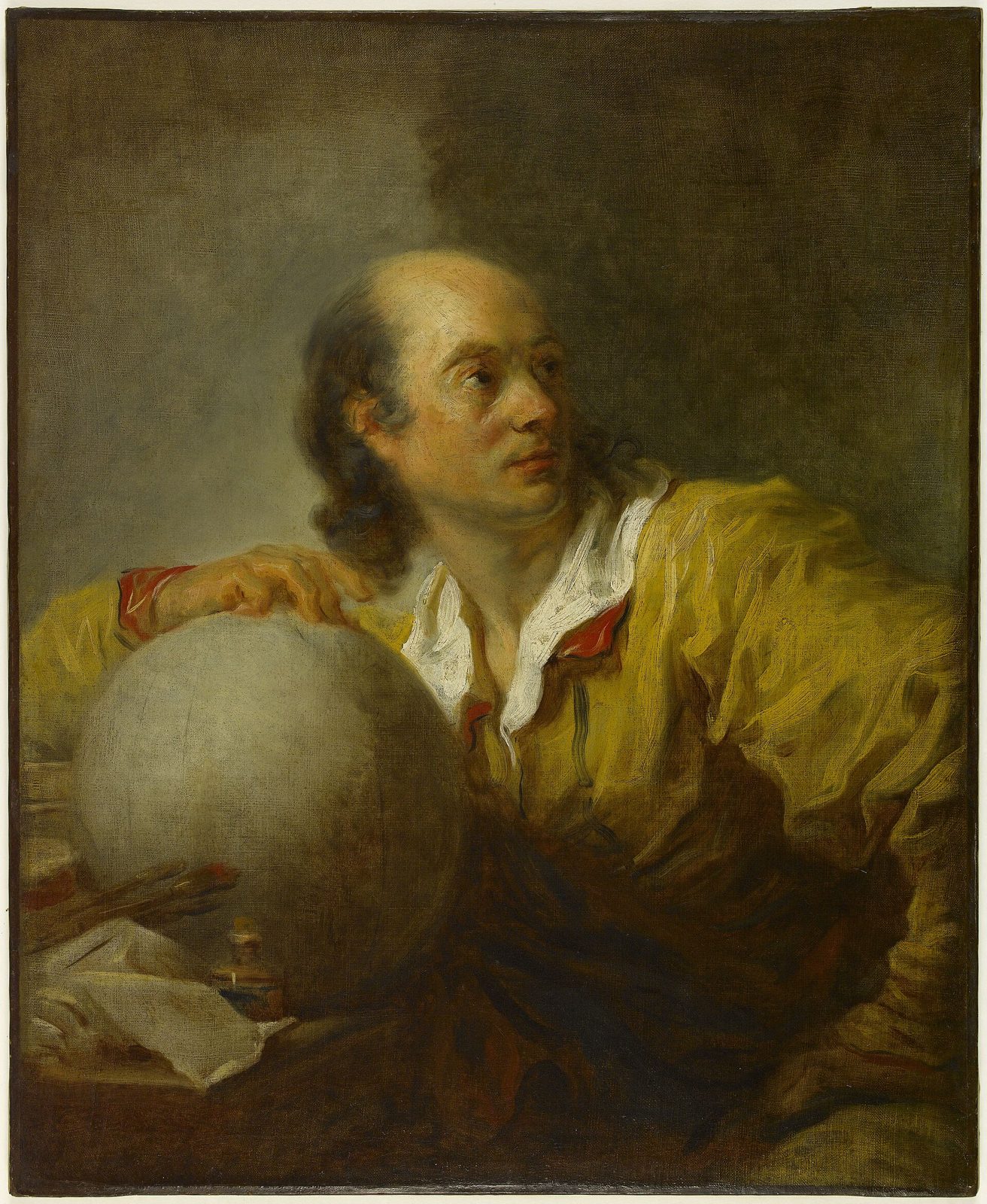
🎧 This work has audio narration — listen in the appJérôme de La Lande gazes thoughtfully from the canvas, his left arm resting on a large globe that symbolizes his role as an astronomer. Clad in a striking yellow garment with a white collar and red accents, he stands out against the dark, indistinct background, which draws your focus to his contemplative expression and the rich textures of his clothing and skin.
Fragonard's choice of warm tones enhances the scholarly atmosphere, inviting a connection between the viewer and the intellectual pursuits of the 18th century. The loose brushwork adds a sense of immediacy, as if capturing a fleeting moment of reflection. The indistinct objects in the foreground, possibly papers or tools, further emphasize the scholarly environment surrounding Lalande, suggesting a life dedicated to exploration and discovery.
Fragonard, a prolific painter of his time, produced over 550 works, yet this piece stands out as a significant portrayal of a prominent figure in the field of astronomy.
Jean-Honoré Fragonard, born on April 5, 1732, in Grasse, France, was a prominent French painter and printmaker known for his exuberant Rococo style. The only child of a glover, he moved to Paris at six, where his artistic talent was nurtured under the guidance of François Boucher. Fragonard won the prestigious Prix de Rome in 1752, allowing him to study in Italy, where he developed a love for romantic landscapes and the works of masters like Tiepolo.
His career flourished in the 1760s, creating intimate and often erotic genre paintings that captivated the court of Louis XV. Notable works include "The Swing" and "The Bolt," characterized by vibrant colors and fluid brushwork. Despite his success, Fragonard struggled with official commissions, preferring the freedom of private patronage. He married Marie-Anne Gérard in 1769, and their family included several artists.
The French Revolution disrupted his career, leading him to retreat to Grasse, where he continued to paint. Although largely forgotten after his death on August 22, 1806, Fragonard's influence resurfaced in the 19th century, particularly impacting Impressionists like Renoir and Morisot. Today, he is celebrated as a master of French painting, embodying the spirit of the Rococo era.
This portrait of Jérôme de La Lande was painted by Jean-Honoré Fragonard in 1767, a time when the artist was embracing the late Rococo style. Commissioned likely by a private patron, the work reflects the era's fascination with intellectual pursuits. It was later acquired in 1978 from the estate of Eugène Dutuit, a notable collector, and has since been housed in the Petit Palais in Paris, where it is celebrated as one of the museum's masterpieces. The painting's reception has evolved over time, initially overshadowed by Fragonard's more famous works, but it has gained recognition for its intimate portrayal of a significant figure in astronomy, showcasing the artist's skill in capturing character and emotion.
Fragonard's technique in this painting is striking, characterized by loose brushwork that creates a sense of immediacy and texture. The warm palette, dominated by the vibrant yellow of La Lande's garment, contrasts beautifully with the dark background, drawing the viewer's eye directly to the figure. The use of oil paint on canvas allows for rich layering, enhancing the depth of color and detail in the fabric and skin. Fragonard's choice to depict La Lande with his arm resting on a globe not only symbolizes his scholarly pursuits but also adds a dynamic element to the composition, suggesting a moment of contemplation. The indistinct objects in the foreground further enrich the scholarly atmosphere, inviting speculation about the tools of his trade.
Fragonard's work has left a lasting legacy, influencing later artists, particularly the Impressionists. His approach to color and brushwork can be seen in the works of painters like Renoir and Berthe Morisot, who admired his ability to convey emotion and atmosphere. This portrait, while initially overlooked, has come to represent a bridge between the Rococo and the emerging Neoclassical styles, marking a shift in artistic focus from frivolity to more serious subjects. It stands as a testament to the evolving nature of portraiture in the 18th century, reflecting both personal and intellectual identity.
Interestingly, Fragonard was not only a painter but also a printmaker, and he produced a staggering number of works—over 550 paintings alone. This prolific output is remarkable considering that only five of his works are dated, making it challenging for art historians to pinpoint the exact timeline of his creative journey.
The globe adds a dynamic element to the composition, suggesting that La Lande is in a moment of contemplation.
Fragonard was born as the only child to a glover and his wife in Grasse, which influenced his early life and artistic inclinations.