Alexander and Bucephalus
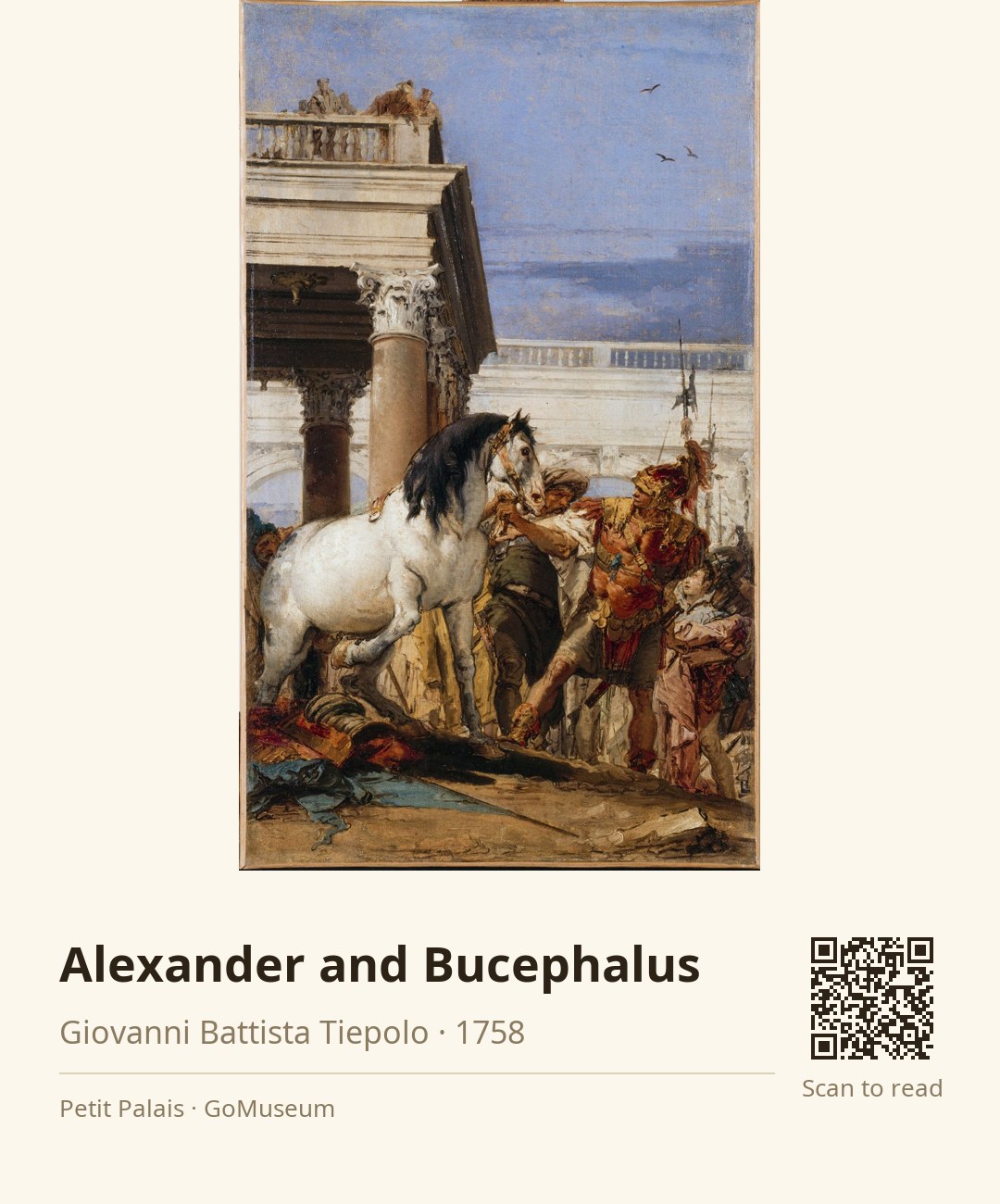
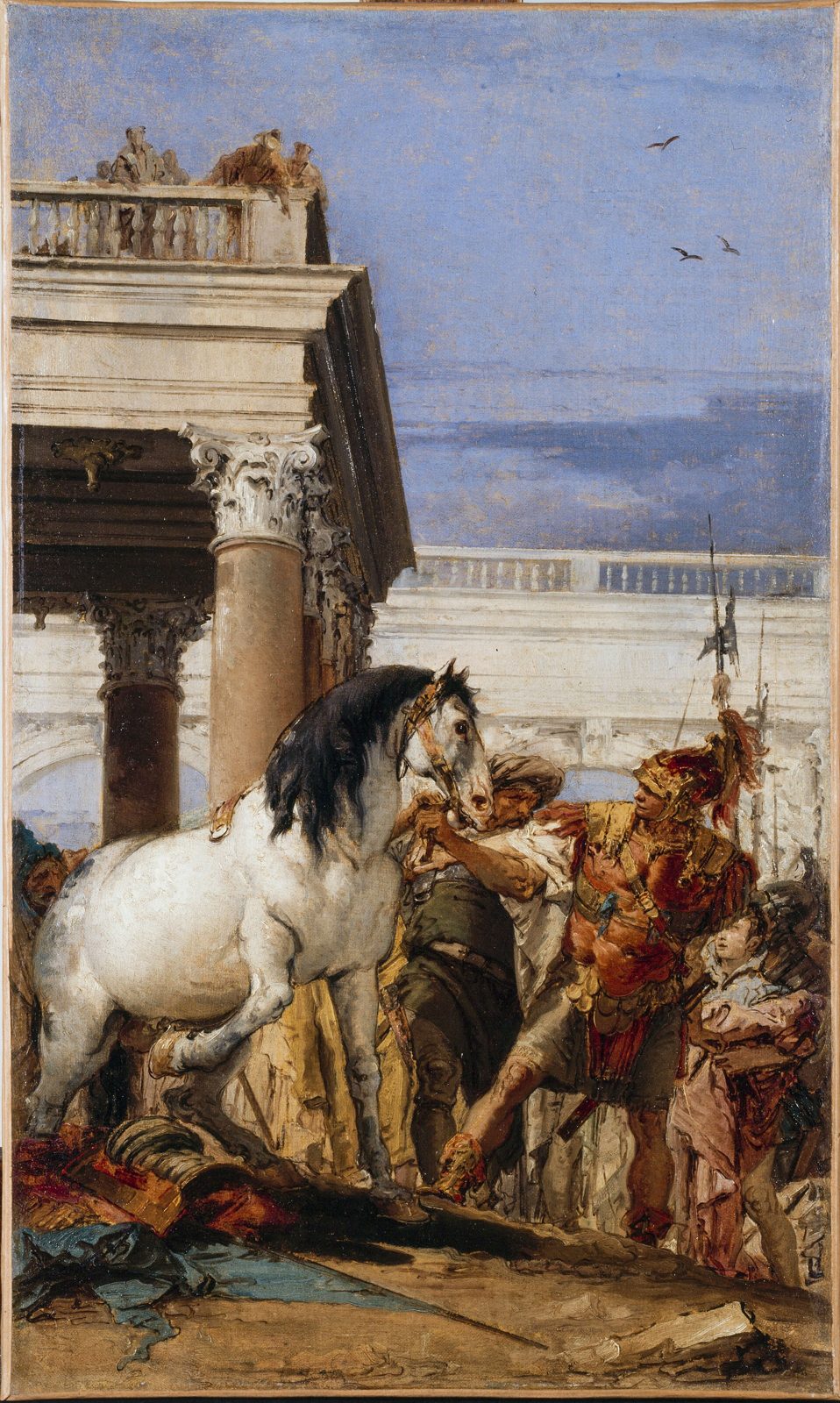
🎧 This work has audio narration — listen in the appThe white horse, Bucephalus, stands at the center of this vibrant scene, restrained by a man clad in ornate red and gold armor. His poised demeanor suggests a moment of calm amidst the tension, as surrounding figures brandish spears, hinting at a military or ceremonial context. Above, the clear blue sky contrasts with the grand architectural elements, including columns and a balustrade, which frame this dramatic encounter.
This depiction of Alexander the Great and his legendary steed captures a pivotal moment in their storied relationship, illustrating not just the bond between man and horse, but also the themes of power and control inherent in leadership. Tiepolo's expressive brushwork and rich palette breathe life into the composition, conveying movement and the emotional weight of the moment. The figures observing from the balcony add a layer of narrative, suggesting that this scene is not just a private encounter but one witnessed by many, emphasizing Alexander's public persona.
Created in 1758, this oil on canvas painting exemplifies Tiepolo's mastery of history painting, a genre that seeks to convey significant moments from the past. The work is part of a tradition that celebrates heroic figures, and it reflects the artist's ability to blend drama with elegance, a hallmark of his Rococo style.
Giovanni Battista Tiepolo, born on March 5, 1696, in Venice, was a prominent Italian painter and printmaker known for his mastery in the Rococo style. As the youngest of six children in a modest family, he faced early hardships after his father's death. Tiepolo's artistic journey began under the tutelage of Gregorio Lazzarini, where he developed a distinctive style that combined theatricality with a vibrant palette, influenced by Venetian masters like Tintoretto and Veronese.
His career flourished as he received significant commissions, including frescoes for the Dolfin family and grand cycles for churches and palaces across Europe, notably in Spain and Germany. Tiepolo's work is characterized by its luminosity and dynamic compositions, earning him the title of "the greatest decorative painter of eighteenth-century Europe." He married Maria Cecilia Guardi, and their family included several artists who continued his legacy.
Tiepolo's contributions to art history are substantial, marking him as a key figure in the Venetian school and the broader Rococo movement. His innovative techniques and grand themes have left a lasting impact on the art world, solidifying his status as a master of his craft until his death in Madrid on March 27, 1770.
The painting was likely intended for a prominent patron, as was typical for Tiepolo's works, which often adorned the grand halls of the elite. After its completion, it became part of the collection of Auguste Dutuit, a notable art collector, and was bequeathed to the Petit Palais in Paris in 1902. The reception of Tiepolo's work was generally favorable, celebrated for its vibrant colors and dynamic compositions, which resonated with the tastes of the 18th-century aristocracy.
Tiepolo's technique in 'Alexander and Bucephalus' showcases his mastery of oil paint on canvas, employing a vibrant palette that draws the viewer into the scene. The brushwork is both expressive and fluid, capturing the tension of the moment as the armored figure calms the spirited horse. Tiepolo's use of color is particularly striking; the rich reds and golds of the armor contrast beautifully with the whites of the horse and the deep blue of the sky, creating a sense of vibrancy and life. The composition is dynamic, with the figures arranged to lead the eye through the scene, emphasizing the central interaction. Architectural elements like the columns and balustrade frame the action, grounding the figures in a grand setting that enhances the narrative of power and control. This careful orchestration of elements not only conveys movement but also evokes an emotional response, making the viewer feel the weight of the moment.
Tiepolo's technique in 'Alexander and Bucephalus' showcases his ability to create a sense of luminosity and depth, using a cooler palette that was innovative for his time, allowing the figures to appear almost three-dimensional against the vibrant background.
Tiepolo's marriage to Maria Cecilia Guardi connected him to a family of artists, and their children, particularly Giovanni Domenico and Lorenzo, not only assisted him but also continued the family legacy in art, contributing to the evolution of Venetian painting.