Paris › Musée d'Orsay › Alfred Stevens
Alfred Stevens at Musée d'Orsay
1823 – 1906
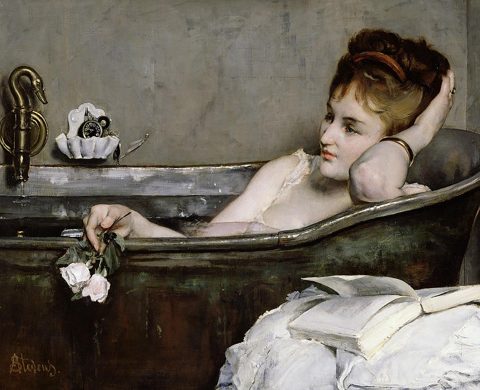
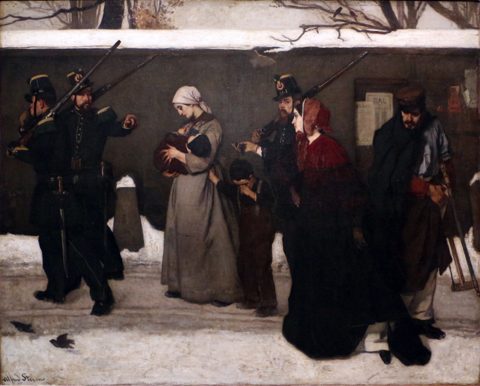
Alfred Émile Léopold Stevens, born on May 11, 1823, in Brussels, was a prominent Belgian painter celebrated for his depictions of elegant modern women. Coming from a family steeped in the arts, he was influenced by his father's passion for painting and his brothers' artistic pursuits. After studying at the Académie Royale des Beaux-Arts and later the École des Beaux-Arts in Paris, Stevens quickly gained recognition for his social realist works, notably addressing urban poverty. His painting "What is called vagrancy" garnered attention from Napoleon III, leading to significant social change.
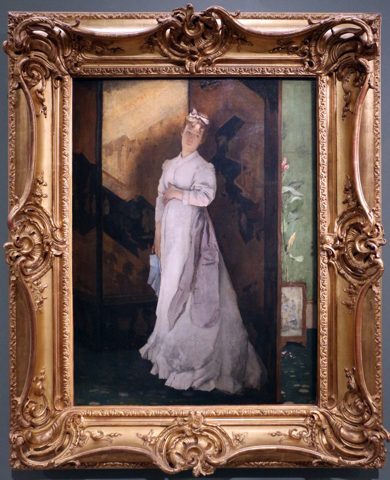
By the 1860s, Stevens had established himself as a leading figure in the Parisian art scene, known for his refined portrayals of upper-middle-class life. His works, characterized by a realistic style and meticulous detail, often featured fashionable women in intimate settings, reflecting the era's fascination with modernity and Japonisme. Despite initial reservations about Impressionism, he later embraced aspects of the movement, evolving his style.
Stevens was well-connected, mingling with notable figures like Édouard Manet and Alexandre Dumas. His legacy lies in his ability to blend genre painting with contemporary themes, securing his place in art history as a master of capturing the elegance and complexities of 19th-century Parisian life. He passed away on August 24, 1906, leaving behind a rich body of work that continues to resonate.