Eglise de Clignancourt
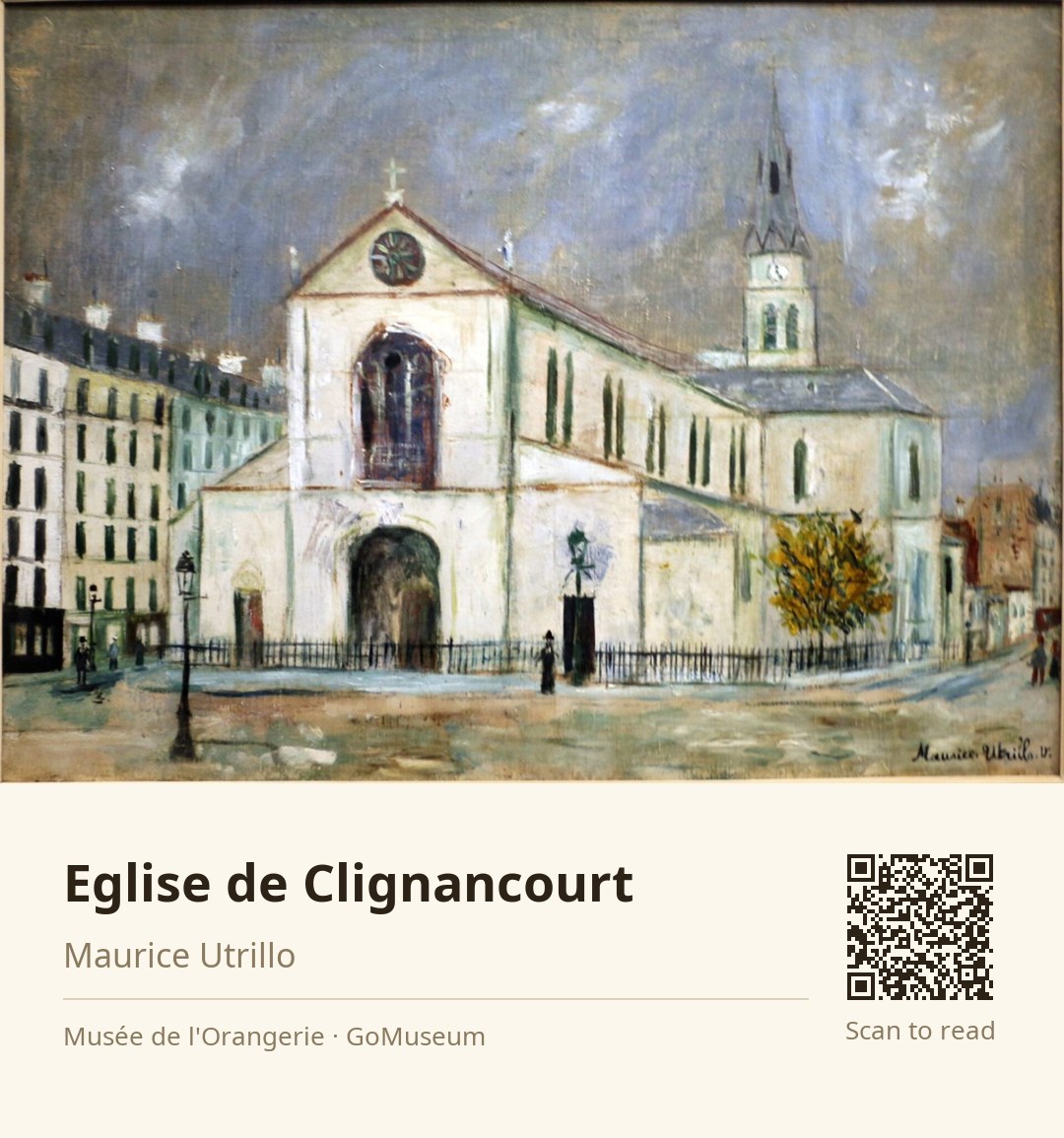
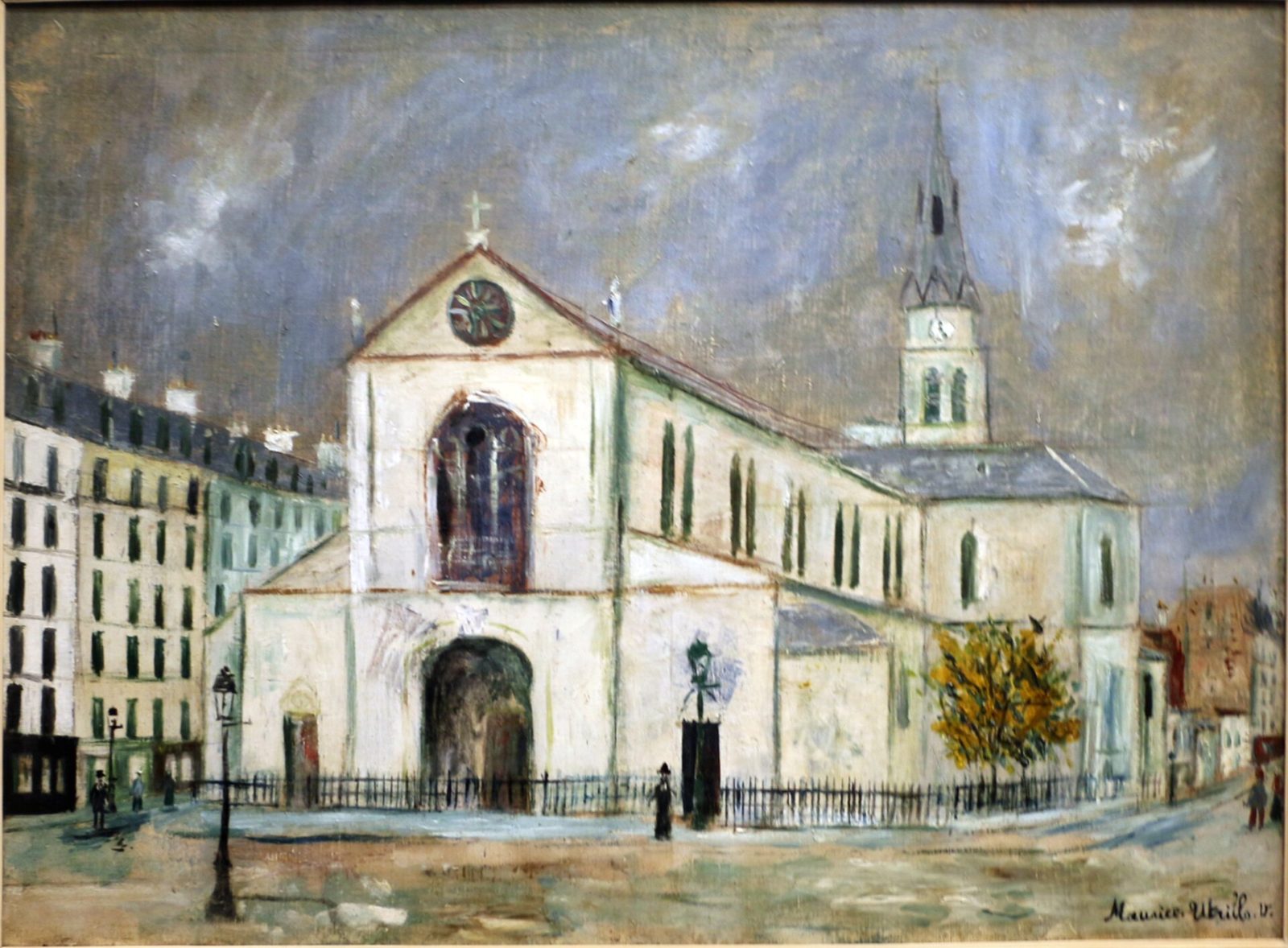
🎧 This work has audio narration — listen in the appEglise de Clignancourt stands as a striking centerpiece, its prominent facade showcasing a large arched window and a circular window above, all framed by a black iron fence. The spire, complete with a clock, rises to the right, while figures stroll along a wet street, remnants of recent rain glistening underfoot.
This scene captures the essence of early 20th-century Paris, where the muted palette of grays, whites, and soft greens evokes a sense of calm amidst the urban hustle. The loose brushwork lends an impressionistic quality, inviting you to feel the atmosphere rather than just observe the details. The surrounding multi-story buildings, with their myriad windows, further emphasize the church's significance as a focal point in the bustling neighborhood.
Maurice Utrillo was a French painter born on December 26, 1883, in Montmartre, Paris, where he would later become renowned for his evocative cityscapes. The son of artist Suzanne Valadon, Utrillo faced a tumultuous childhood marked by instability and mental health struggles, including schizophrenia. Encouraged by his mother to pursue painting, he developed a unique style that captured the essence of Montmartre, gaining critical acclaim by the 1920s.
Despite his artistic success, Utrillo battled alcoholism and spent significant time in asylums. His work, characterized by a vivid portrayal of urban landscapes, earned him a place among the notable figures of the School of Paris. In 1928, he received the prestigious Cross of the Légion d'honneur, solidifying his status in the art world.
In his later years, Utrillo embraced religion and married Lucie Valore, though his health continued to decline. He painted from memory and photographs, producing works that remain popular today. Utrillo passed away on November 5, 1955, leaving behind a legacy as a quintessential Montmartre artist whose paintings continue to resonate with audiences worldwide.
Eglise de Clignancourt was painted by Maurice Utrillo in the early 20th century, a time when Paris was a vibrant hub of artistic innovation. This particular piece was exhibited in New York in 1935, showcasing Utrillo's unique vision to an American audience eager for European art. Later, it was featured in two significant exhibitions at the Galerie Charpentier in Paris during the late 1950s. The first, in 1959, displayed a collection of Utrillo's works, while the second in 1960 included pieces from private collections, emphasizing the artist's growing reputation. The painting has passed through notable hands, including those of Guillaume Paul and Walter Mme Vve Jean, marking its journey through the art world.
Utrillo's technique in Eglise de Clignancourt is marked by his loose brushwork, which creates a sense of immediacy and atmosphere. The oil paint is applied with a fluidity that allows colors to blend softly, enhancing the impressionistic quality of the scene. The muted palette, dominated by grays and whites with touches of green and yellow, evokes a calm yet lively urban environment. The composition centers around the church, drawing the viewer's eye to its architectural details, like the large arched window and the clock-topped spire. This central placement, combined with the surrounding buildings, creates a dynamic interplay between the church and its bustling context. The wet street in the foreground not only adds depth but also reflects the sky's cloudy hues, further immersing you in this moment in Paris.
Some notable owners of the painting include Guillaume Paul and Walter Mme Vve Jean, which highlights its significance and value in the art market.