Rue du Mont-Cenis
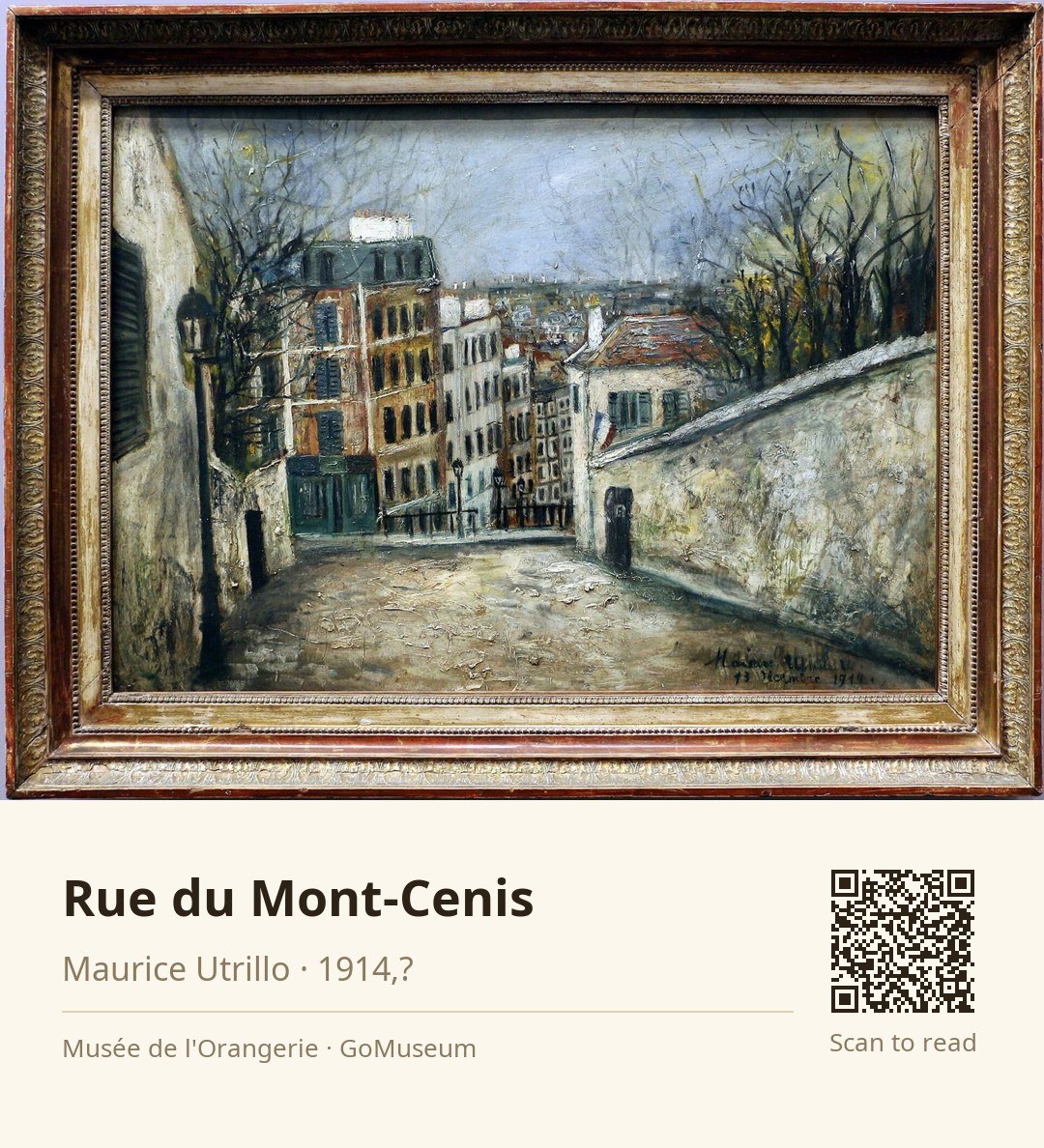
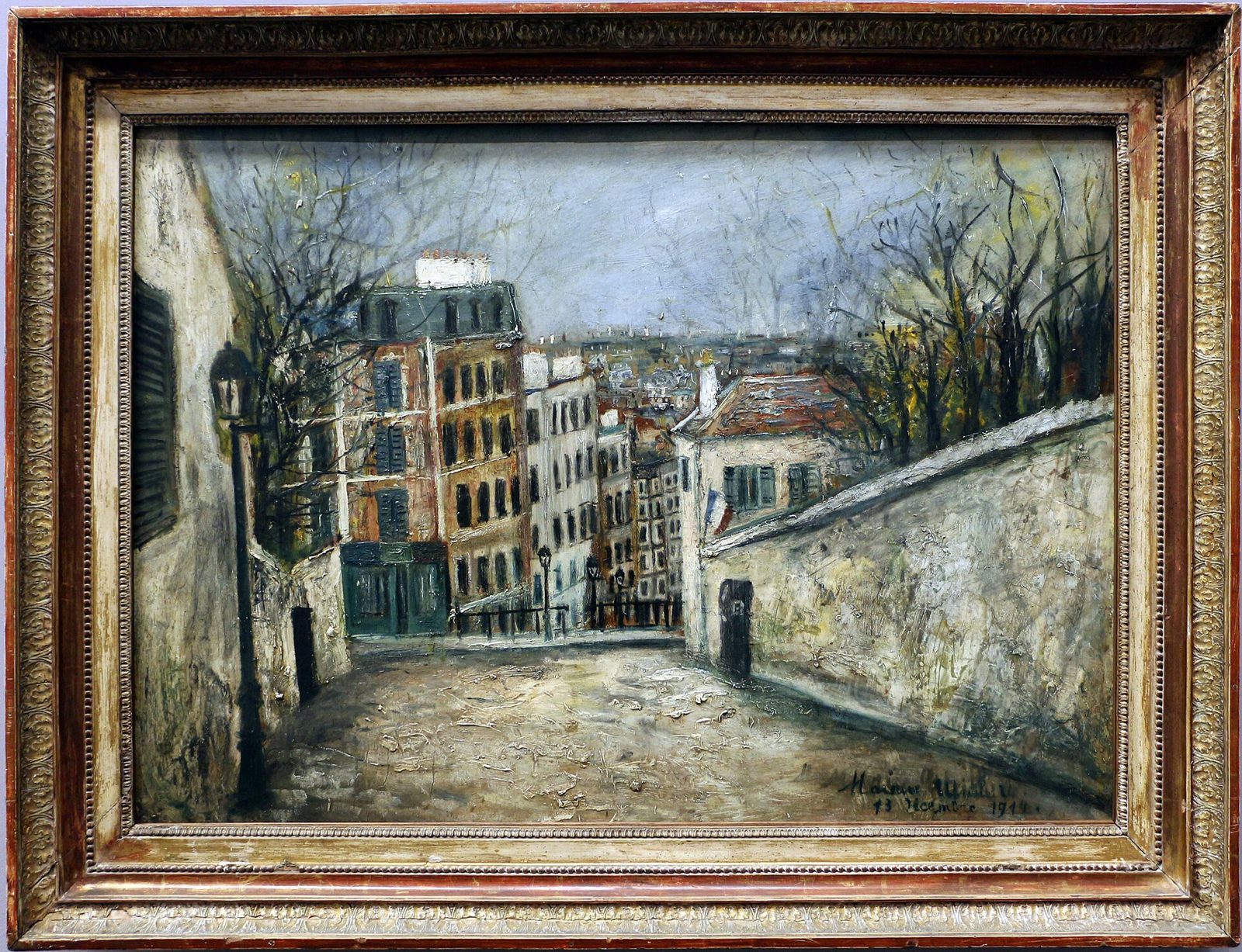
🎧 This work has audio narration — listen in the appThe narrow cobblestone street in "Rue du Mont-Cenis" invites you into a quiet corner of Paris, where the tall building on the left, with its shuttered windows, stands sentinel over the scene. A streetlamp casts a soft glow, hinting at the time of day, while the high wall on the right creates a sense of enclosure, with bare trees reaching above it, their branches stark against the cloudy sky.
This composition captures the essence of urban life in early 20th-century Paris, where the muted earth tones of grays and browns evoke a sense of nostalgia and stillness. The textured brushwork brings the cobblestones to life, almost allowing you to feel their roughness underfoot, while the varied facades of the multi-story buildings draw your gaze deeper into the cityscape, suggesting stories hidden within each structure.
Maurice Utrillo painted this work in 1914, during a time when Paris was on the brink of monumental change.
Maurice Utrillo was a French painter born on December 26, 1883, in Montmartre, Paris, where he would later become renowned for his evocative cityscapes. The son of artist Suzanne Valadon, Utrillo faced a tumultuous childhood marked by instability and mental health struggles, including schizophrenia. Encouraged by his mother to pursue painting, he developed a unique style that captured the essence of Montmartre, gaining critical acclaim by the 1920s.
Despite his artistic success, Utrillo battled alcoholism and spent significant time in asylums. His work, characterized by a vivid portrayal of urban landscapes, earned him a place among the notable figures of the School of Paris. In 1928, he received the prestigious Cross of the Légion d'honneur, solidifying his status in the art world.
In his later years, Utrillo embraced religion and married Lucie Valore, though his health continued to decline. He painted from memory and photographs, producing works that remain popular today. Utrillo passed away on November 5, 1955, leaving behind a legacy as a quintessential Montmartre artist whose paintings continue to resonate with audiences worldwide.
In 'Rue du Mont-Cenis,' Utrillo employs a textured brushwork that breathes life into the cobblestones, making them almost palpable. The oil paint is applied with a deft hand, creating a tactile quality that invites you to imagine walking down that very street. The muted earth tones—grays and browns—set a somber yet nostalgic mood, while the varied facades of the buildings draw your eye deeper into the scene. The high wall on the right and the bare trees above create a sense of enclosure, enhancing the feeling of intimacy within the urban landscape. Utrillo's choice of a descending perspective adds depth, leading the viewer's gaze toward the distant cityscape under a brooding sky, suggesting both a physical and emotional journey through the heart of Paris.
Utrillo's textured brushwork creates a tactile quality that enhances the viewer's sensory experience, making the cobblestones feel almost tangible.
The painting features an inscription in the lower right corner, which remains illegible, adding an element of mystery to the artwork.