La maison de Berlioz
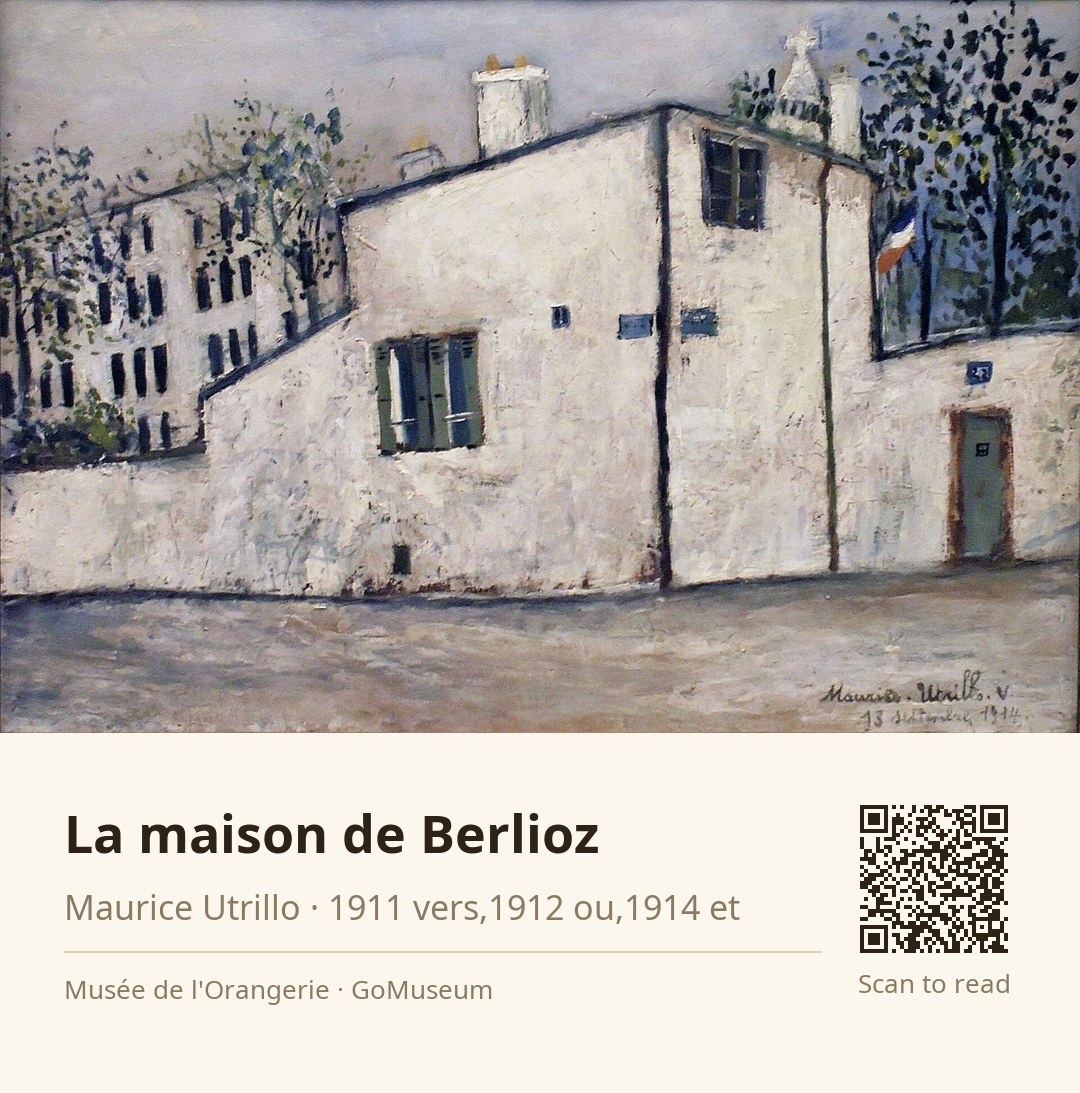
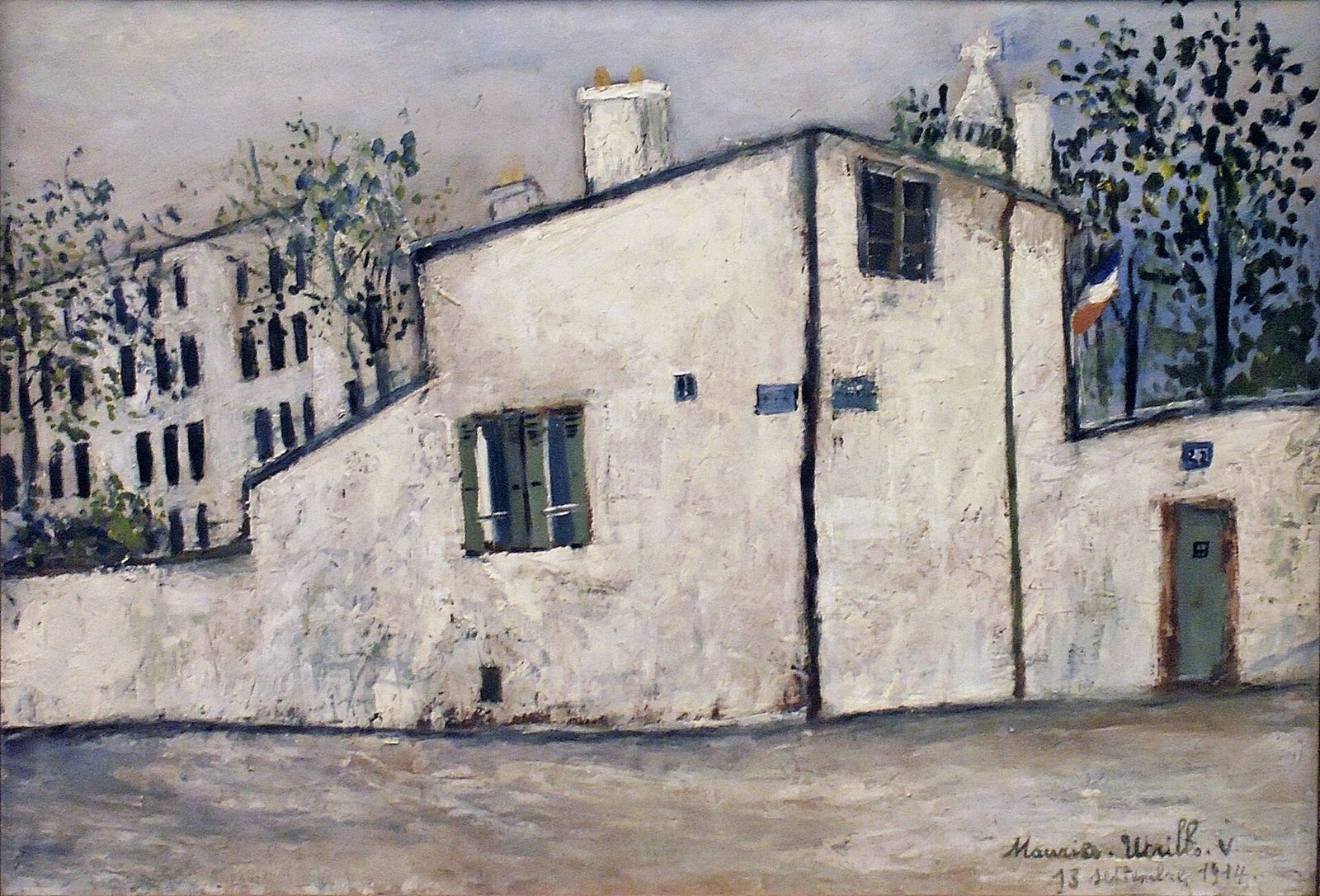
🎧 This work has audio narration — listen in the appThe angular building in front of you, with its textured white and gray façade, is a striking representation of La maison de Berlioz. The small windows, particularly the one adorned with green shutters, add a touch of life to the otherwise somber scene, while the tricolor flag on the right hints at its significance as a national or official structure.
This painting captures not just a physical space but also a moment in time, reflecting the early 20th-century architectural style with its simplicity and muted color palette. The empty street in the foreground enhances the feeling of solitude, inviting you to ponder the stories that might unfold within those walls. Utrillo's choice of an overcast sky contributes to the overall melancholic mood, suggesting a deeper narrative behind the building's façade.
Maurice Utrillo was a French painter born on December 26, 1883, in Montmartre, Paris, where he would later become renowned for his evocative cityscapes. The son of artist Suzanne Valadon, Utrillo faced a tumultuous childhood marked by instability and mental health struggles, including schizophrenia. Encouraged by his mother to pursue painting, he developed a unique style that captured the essence of Montmartre, gaining critical acclaim by the 1920s.
Despite his artistic success, Utrillo battled alcoholism and spent significant time in asylums. His work, characterized by a vivid portrayal of urban landscapes, earned him a place among the notable figures of the School of Paris. In 1928, he received the prestigious Cross of the Légion d'honneur, solidifying his status in the art world.
In his later years, Utrillo embraced religion and married Lucie Valore, though his health continued to decline. He painted from memory and photographs, producing works that remain popular today. Utrillo passed away on November 5, 1955, leaving behind a legacy as a quintessential Montmartre artist whose paintings continue to resonate with audiences worldwide.
Utrillo's technique in La maison de Berlioz reveals a masterful handling of oil paint on plywood, creating a textured surface that enhances the building's rough façade. His brushwork is deliberate yet expressive, with muted tones of white and gray that evoke a sense of melancholy. The choice of an overcast sky not only sets the mood but also allows the subtle variations in color to emerge, giving depth to the otherwise simple structure. The composition is straightforward, with the building centrally positioned, drawing the viewer's eye directly to its angular form. The empty street in the foreground serves to amplify the solitude of the scene, inviting contemplation of the stories hidden within the walls. Utrillo's ability to convey emotion through such simplicity is a testament to his skill as a painter.
The overcast sky enhances the melancholic mood of the painting and suggests that there may be a deeper story or narrative connected to the building.
The empty street amplifies the sense of solitude in the scene, encouraging viewers to reflect on the untold stories that may exist within the building.