Grande cathédrale
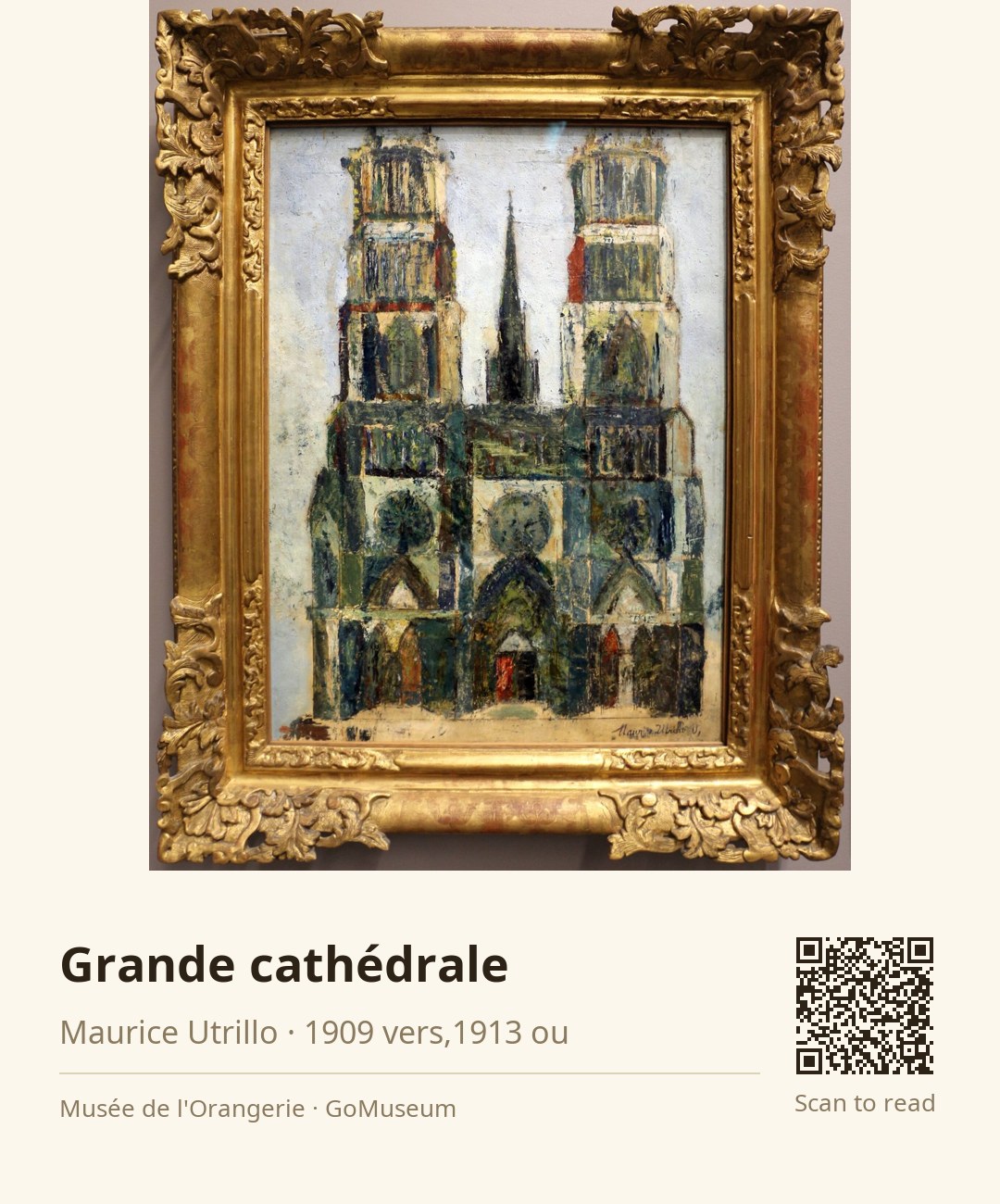
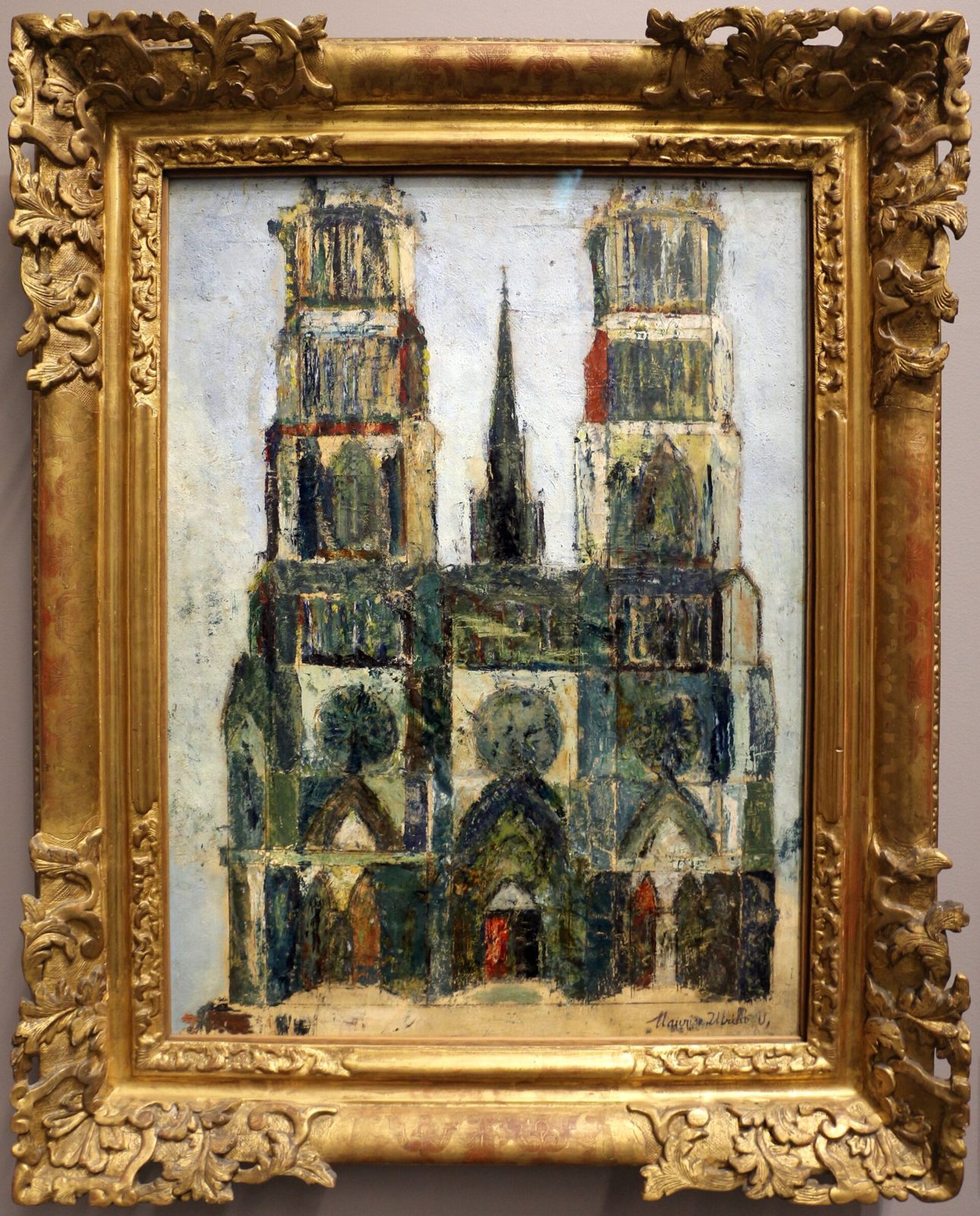
🎧 This work has audio narration — listen in the appThe towering spires of the cathedral in "Grande cathédrale" rise dramatically against a pale sky, their textured surfaces inviting a closer look. The muted blues and greens create a serene backdrop, while earthy tones and hints of red draw your eye to the doorways, suggesting warmth and life amidst the stone.
This interplay of color and texture reflects Utrillo's unique approach to capturing architectural forms, where the rough impasto technique brings a sense of dynamism to the otherwise static structure. The symmetry of the composition, with the two towers flanking the central spire, emphasizes the grandeur of the cathedral, while the expressive brushwork conveys the energy of the scene, prioritizing feeling over meticulous detail.
Maurice Utrillo was a French painter born on December 26, 1883, in Montmartre, Paris, where he would later become renowned for his evocative cityscapes. The son of artist Suzanne Valadon, Utrillo faced a tumultuous childhood marked by instability and mental health struggles, including schizophrenia. Encouraged by his mother to pursue painting, he developed a unique style that captured the essence of Montmartre, gaining critical acclaim by the 1920s.
Despite his artistic success, Utrillo battled alcoholism and spent significant time in asylums. His work, characterized by a vivid portrayal of urban landscapes, earned him a place among the notable figures of the School of Paris. In 1928, he received the prestigious Cross of the Légion d'honneur, solidifying his status in the art world.
In his later years, Utrillo embraced religion and married Lucie Valore, though his health continued to decline. He painted from memory and photographs, producing works that remain popular today. Utrillo passed away on November 5, 1955, leaving behind a legacy as a quintessential Montmartre artist whose paintings continue to resonate with audiences worldwide.
The expressive brushwork is not just about capturing the cathedral's form; it breathes life into the stone, making the structure feel almost alive. The muted palette of blues and greens serves to soften the imposing architecture, while the earthy tones and red accents draw your eye to the doorways, suggesting warmth and inviting entry. The symmetrical composition, with its two towers flanking the central spire, creates a sense of balance and grandeur, while the dynamic brushstrokes convey an energy that contrasts with the stillness of the stone. This approach prioritizes emotional impact over precise detail, allowing viewers to feel the essence of the cathedral rather than just see it.
The painting was owned by notable collectors including Libaude L. from Paris and Mme Vve Jean Walter.
It was exhibited at the Stedelijk Museum in Amsterdam in 1939.