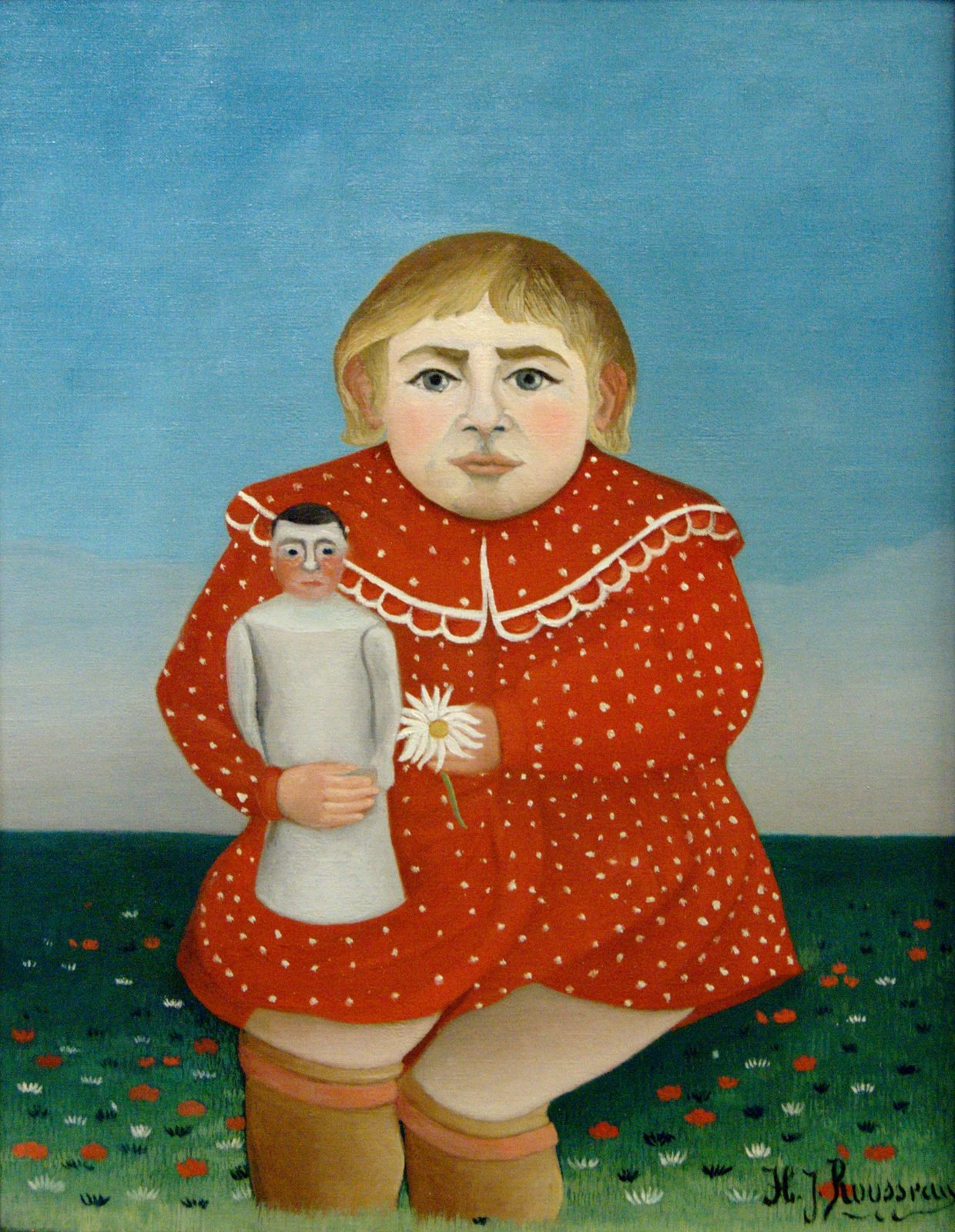
L'enfant à la poupée
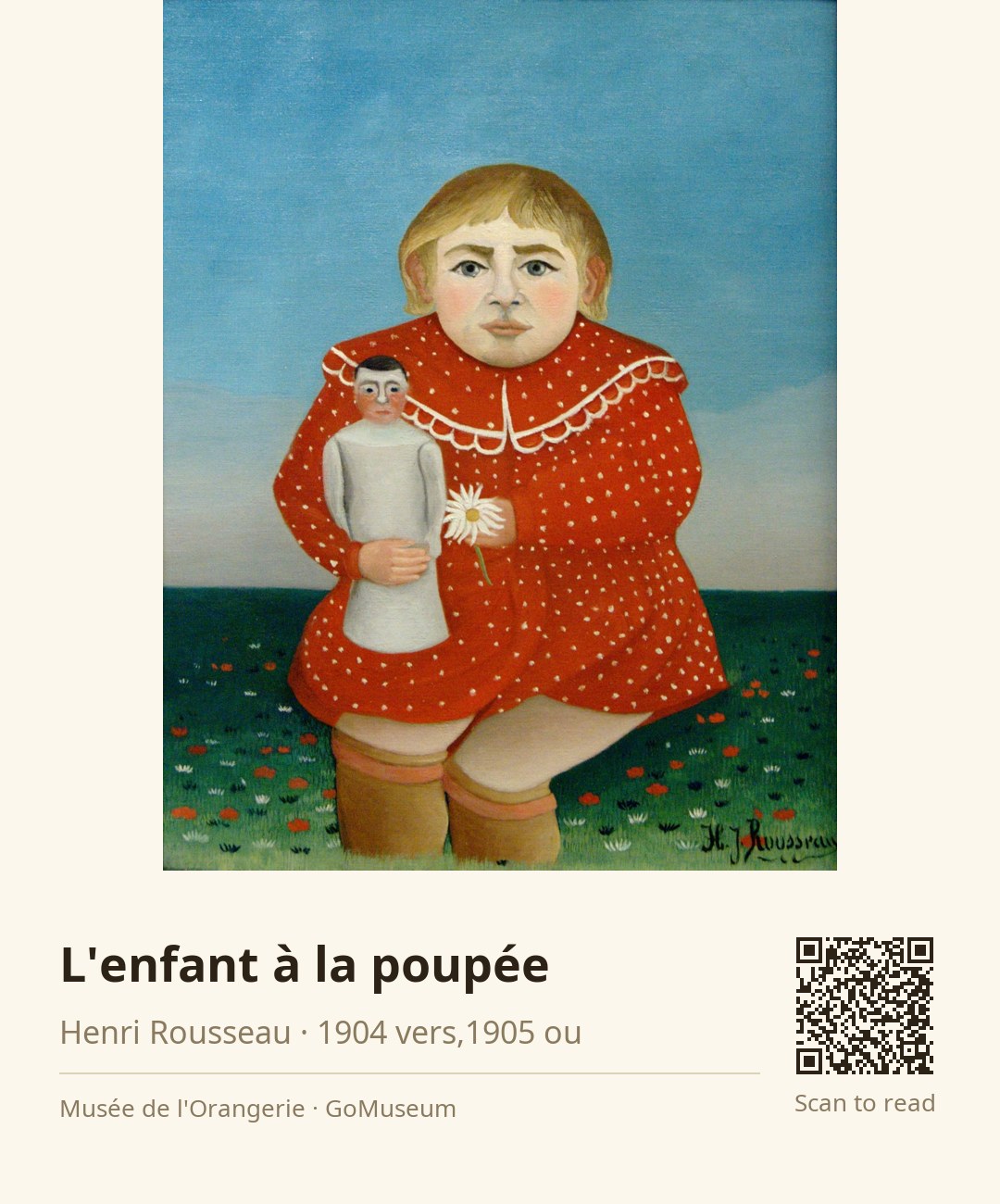
🎧 This work has audio narration — listen in the appThe child in the red dress stands proudly, clutching a doll and a delicate white daisy, surrounded by a vibrant field of flowers. The round face and short, light brown hair radiate innocence, while the polka-dotted dress and frilled collar add a playful charm.
This portrayal captures a moment of childhood joy, emphasizing the simplicity and purity of the scene. The doll, with its painted face and cylindrical body, contrasts with the natural beauty of the flowers, suggesting a blend of imagination and reality. The clear blue sky above enhances the sense of openness, inviting viewers to share in this serene moment.
Henri Rousseau, known for his unique style, created this work around 1904 or 1905, reflecting his fascination with the themes of childhood and nature. The painting has been part of notable exhibitions, including those at the Brummer Gallery in 1926 and the Kunsthalle in Basel in 1933.
Henri Rousseau, born on May 21, 1844, in Laval, France, was a self-taught painter who became a pivotal figure in the Naïve art movement. Known as "Le Douanier" due to his job as a customs officer, he began painting seriously in his forties after a modest life marked by early hardship and family responsibilities. Despite facing ridicule from critics during his lifetime, Rousseau's unique style, characterized by vivid colors and dreamlike jungle scenes, garnered a devoted following.
His works, inspired by visits to the Natural History Museum and botanical gardens in Paris, often depicted fantastical landscapes, despite his never having traveled outside France. He exhibited regularly at the Salon des indépendants, where his painting "Surprised!" received acclaim from fellow artists, including Félix Vallotton. By the end of his life, Rousseau was celebrated by avant-garde figures like Pablo Picasso, who recognized his genius and honored him with a banquet in 1908.
Rousseau's influence on modern art is profound, impacting generations of artists, including the Surrealists and the Fauves. His legacy endures as a testament to the power of imagination and the beauty of simplicity in art. He passed away on September 2, 1910, in Paris, leaving behind a body of work that continues to inspire and captivate audiences worldwide.
Henri Rousseau's 'L'enfant à la poupée' was created around 1904 or 1905, a time when Rousseau was honing his distinctive style that would later captivate the art world. It was later showcased at the Kunsthalle in Basel in 1933, gaining attention for its vibrant portrayal of childhood. The provenance of the work traces back to notable figures, including W. Uhde, who sold it at an auction in Paris in 1921, and John Quinn, a significant patron of modern art.
The brushwork is bold yet deliberate, with thick applications of oil paint that create a tactile quality. The vibrant colors, especially the reds and greens, are layered to enhance the emotional resonance of the scene. The child is positioned centrally, drawing the viewer's eye immediately to their expression and attire. The use of a clear blue sky as a backdrop not only adds depth but also evokes a sense of freedom and innocence. The composition balances the child and the surrounding flowers, creating a harmonious blend of figure and nature, while the frilled collar and polka-dots of the dress add a playful charm that invites joy.
This painting was exhibited at the Brummer Gallery in 1926 and later at the Kunsthalle in Basel in 1933.
The painting's provenance includes W. Uhde, who sold it at an auction in Paris in 1921, and John Quinn, a key patron of modern art.
The painting features bold and deliberate brushwork, using thick applications of oil paint that give it a tactile quality.