Le navire dans la tempete
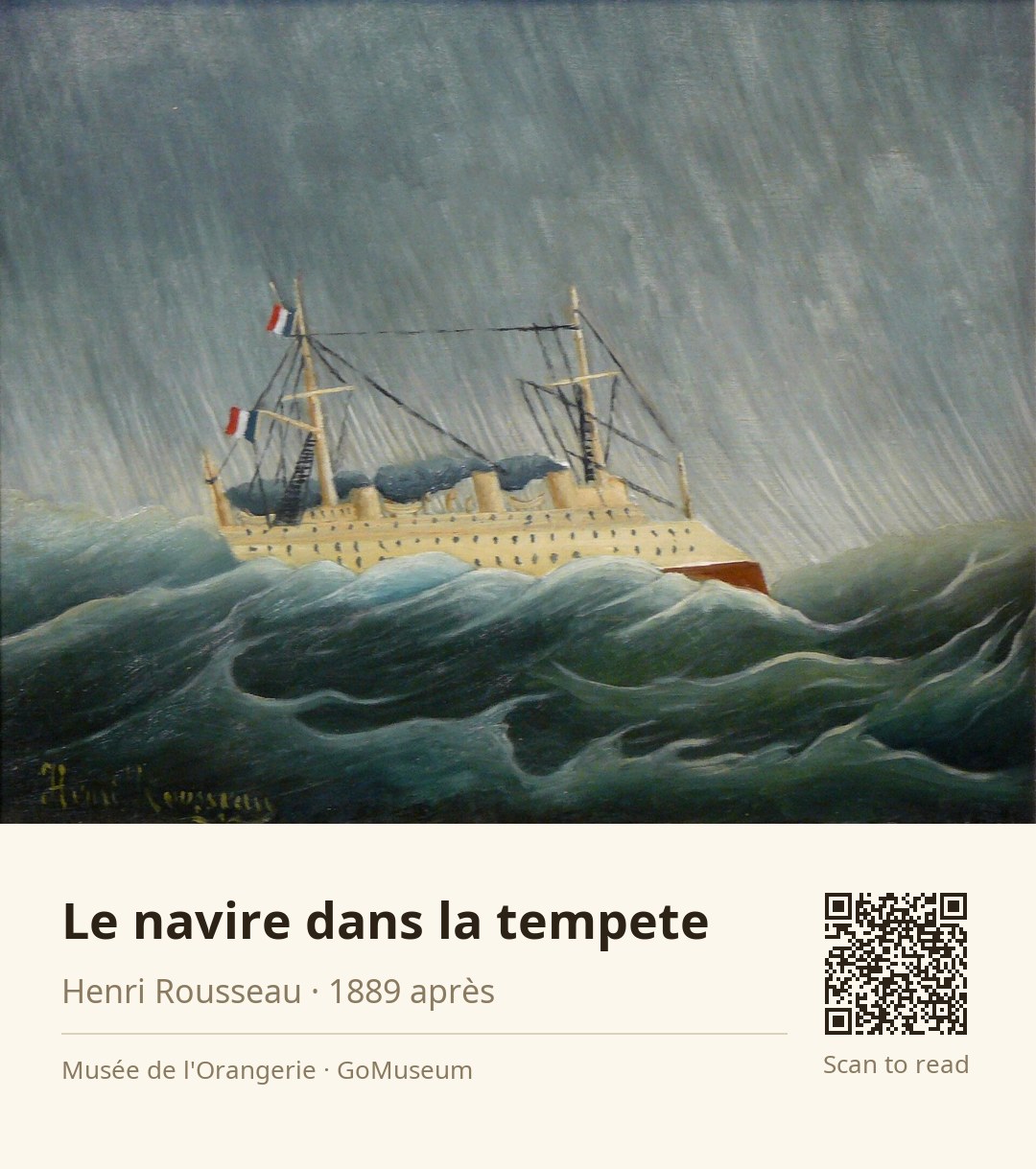
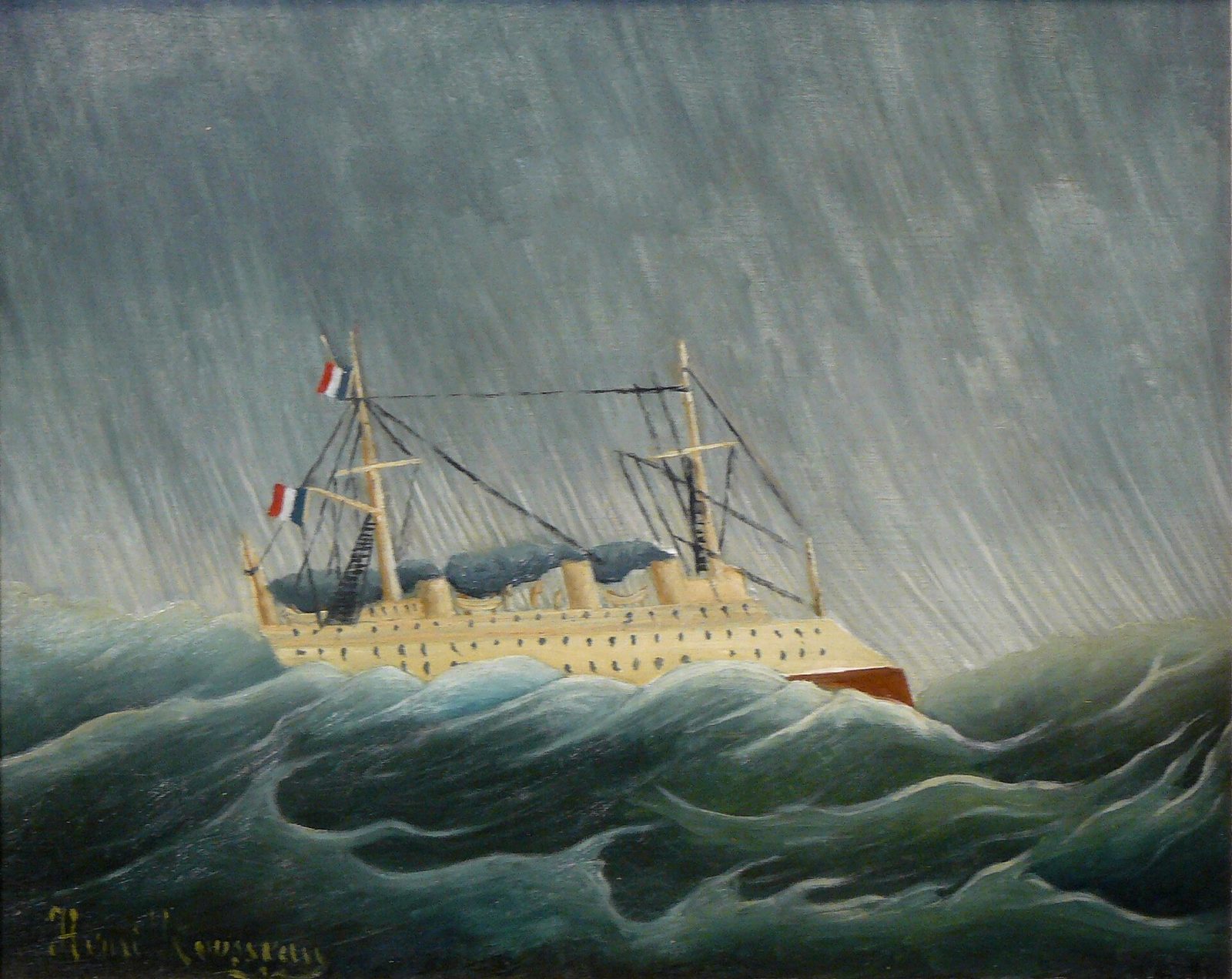
🎧 This work has audio narration — listen in the appA steamship braves the storm in Henri Rousseau's "Le navire dans la tempete," where the vessel's cream-colored hull stands out against the tumultuous sea. Two flags, emblazoned with red, white, and blue stripes, flutter defiantly as the ship navigates through massive rolling waves painted in deep greens and blues, evoking the chaos of a tempest. The diagonal streaks of rain in varying shades of gray create a dramatic atmosphere, emphasizing the relentless downpour that surrounds the ship.
This painting captures not just a moment of struggle against nature but also reflects Rousseau's fascination with the power of the elements and the resilience of human endeavor. The absence of land or other vessels intensifies the isolation of the ship, making it a symbol of determination amidst overwhelming odds. Rousseau, often regarded as a naïve artist, employs a vivid color palette and bold brushstrokes to convey emotion, drawing viewers into the scene's intensity.
Created in 1889, "Le navire dans la tempete" showcases Rousseau's unique style, which would later influence modern art movements. The work is part of a rich legacy that includes exhibitions in notable galleries, such as the Marie Harriman Gallery in New York in 1931 and the Kunsthalle in Basel in 1933.
Henri Rousseau, born on May 21, 1844, in Laval, France, was a self-taught painter who became a pivotal figure in the Naïve art movement. Known as "Le Douanier" due to his job as a customs officer, he began painting seriously in his forties after a modest life marked by early hardship and family responsibilities. Despite facing ridicule from critics during his lifetime, Rousseau's unique style, characterized by vivid colors and dreamlike jungle scenes, garnered a devoted following.
His works, inspired by visits to the Natural History Museum and botanical gardens in Paris, often depicted fantastical landscapes, despite his never having traveled outside France. He exhibited regularly at the Salon des indépendants, where his painting "Surprised!" received acclaim from fellow artists, including Félix Vallotton. By the end of his life, Rousseau was celebrated by avant-garde figures like Pablo Picasso, who recognized his genius and honored him with a banquet in 1908.
Rousseau's influence on modern art is profound, impacting generations of artists, including the Surrealists and the Fauves. His legacy endures as a testament to the power of imagination and the beauty of simplicity in art. He passed away on September 2, 1910, in Paris, leaving behind a body of work that continues to inspire and captivate audiences worldwide.
Henri Rousseau's 'Le navire dans la tempete' was created in 1889, a time when the artist was still carving out his unique place in the art world. It was first exhibited at the Marie Harriman Gallery in New York in 1931, where it was showcased as part of a larger retrospective of Rousseau's work. The painting later traveled to the Kunsthalle in Basel in 1933 and was featured in the Petit Palais in Paris in 1935. Over the years, it changed hands among notable collectors, including Paul Guillaume and Walter Mme Vve Jean, further solidifying its importance in Rousseau's oeuvre.
The brushwork is thick and expressive, lending a sense of movement to the crashing waves and the billowing sails of the ship. The cream-colored hull of the vessel pops against the deep greens and blues of the tumultuous sea, drawing your eye immediately to the ship's struggle. Rousseau's use of color is particularly noteworthy; the vivid palette not only captures the chaos of the storm but also evokes an emotional response. The diagonal streaks of rain, rendered in various shades of gray, create a dynamic tension in the sky, enhancing the feeling of a relentless downpour. The composition is carefully balanced, with the ship positioned in the middle distance, making it the focal point amidst the swirling chaos of nature. This choice amplifies the sense of isolation and determination, as the ship battles against overwhelming odds, a testament to Rousseau's ability to convey profound themes through his distinctive style.
The brushwork is thick and expressive, which creates a dynamic sense of movement in both the crashing waves and the sails of the ship.
Rousseau's vivid color palette captures the storm's chaos while also evoking an emotional response from viewers.