 Image: Francesco Bini
Paysage de Provence
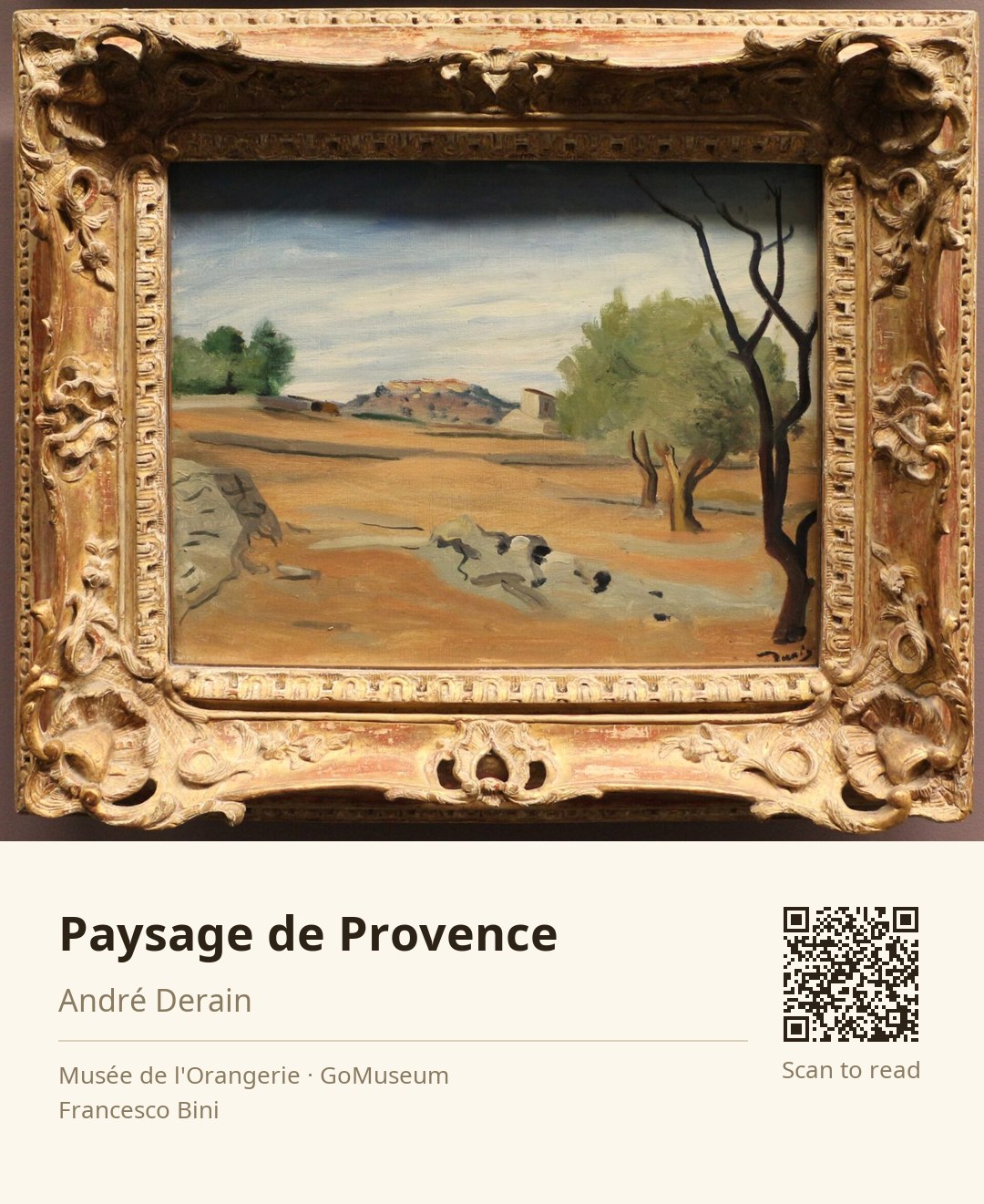
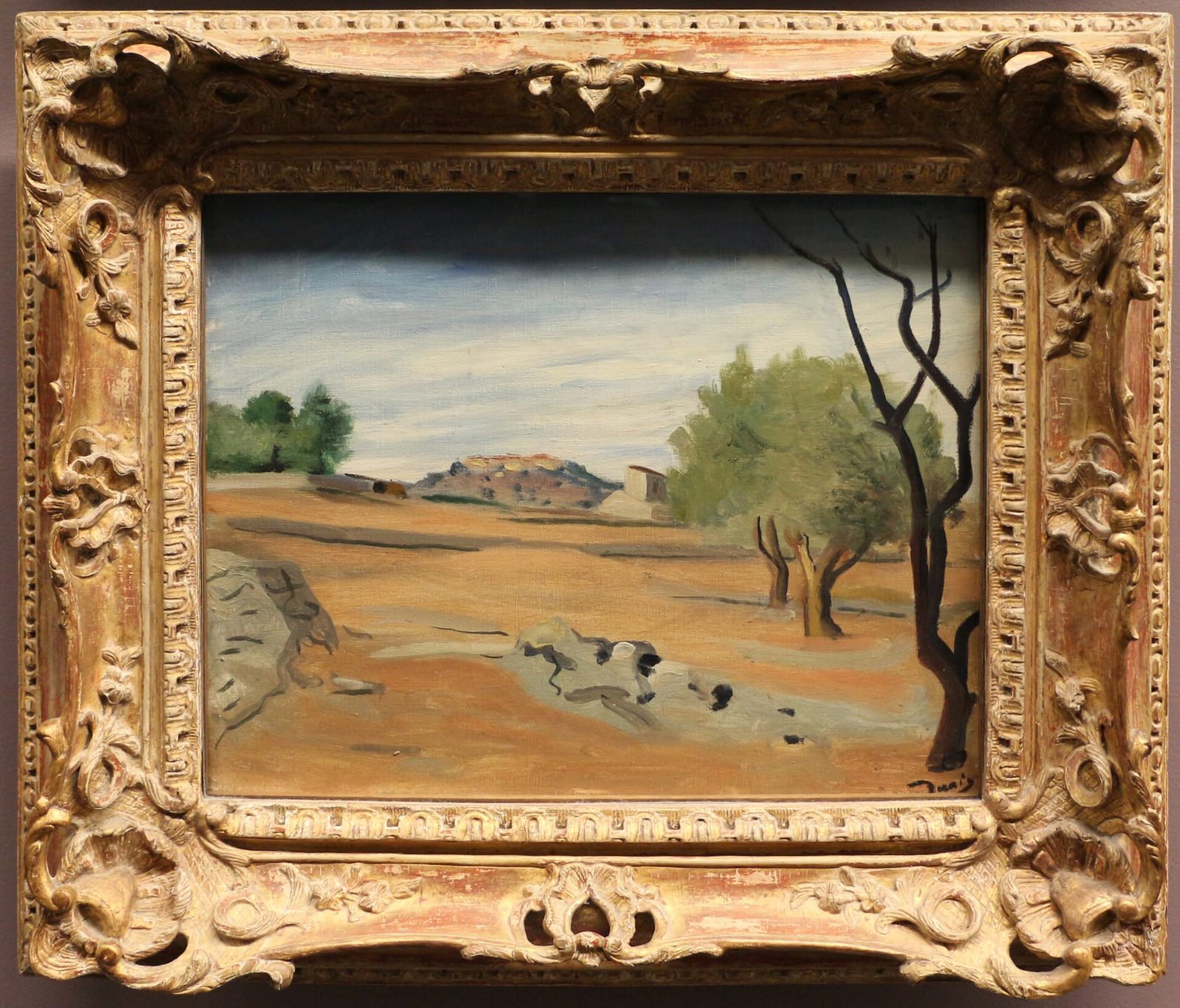
🎧 This work has audio narration — listen in the appThe dry, earthy foreground of "Paysage de Provence" invites you into a serene landscape where scattered rocks and sparse vegetation set the stage. Just beyond, slender trees with delicate foliage rise against rolling hills, while a small structure peeks out on the right, hinting at human presence in this tranquil scene.
This interplay of natural elements and architecture reflects the harmony of rural life in Provence, capturing a moment of stillness and simplicity. The smooth brushwork and gentle color transitions create a soothing atmosphere, with earthy browns, greens, and soft blues blending seamlessly to evoke the region's unique charm. Derain's choice of palette enhances the sense of calm, drawing you into a world where nature and humanity coexist peacefully.
André Derain was a pivotal French artist born on June 17, 1880, in Chatou, near Paris. He co-founded the Fauvist movement alongside Henri Matisse, known for its bold use of color and expressive brushwork. Derain's early works from 1905-1906 showcased vibrant hues that challenged traditional aesthetics, earning the moniker "les Fauves" or "the wild beasts." His time in London further evolved his style, where he produced a series of striking paintings that captured the essence of the city with innovative techniques.
After World War I, Derain shifted towards a more classical approach, influenced by the Old Masters and a desire for order in art. This transition marked his emergence as a leader in the renewed classicism movement, where he combined his theatrical interests with visual arts. Despite facing criticism post-war, he remained a significant figure in the interwar period, contributing to ballet and theater design.
Derain's legacy is marked by his ability to bridge movements, from Fauvism to classicism, leaving an indelible mark on 20th-century art. He passed away on September 8, 1954, remembered as a complex artist who navigated the tumultuous changes of his time.
André Derain's "Paysage de Provence" was painted in the first half of the 20th century, a time when artists were exploring new ways to express their connection to nature. This particular piece was part of a significant exhibition titled 'Beautés de Provence' held at the Galerie Charpentier in Paris in 1947, where it was listed as number 35. It later appeared in the 1954 exhibition at the Musée National d'Art Moderne, and again in 1958 at the Galerie Maeght, showcasing its enduring appeal. The painting has changed hands over the years, with notable provenance tracing back to collectors like Guillaume Paul and Walter Mme Vve Jean.
The smooth brushwork creates a seamless flow between colors, allowing for gentle transitions that evoke the soft, tranquil atmosphere of the Provençal landscape. The earthy palette, dominated by browns, greens, and blues, reflects the natural environment, while the composition draws your eye across the canvas. The sparse vegetation and slender trees are painted with a light touch, suggesting delicacy amidst the rugged terrain. This choice not only highlights the beauty of the landscape but also emphasizes the harmony between nature and the small human structure nestled within it.
The painting has been owned by notable collectors such as Guillaume Paul and Walter Mme Vve Jean.
Derain employed smooth brushwork to create gentle color transitions, contributing to the tranquil atmosphere of the Provençal landscape.