 Image: Francesco Bini
Le gros arbre
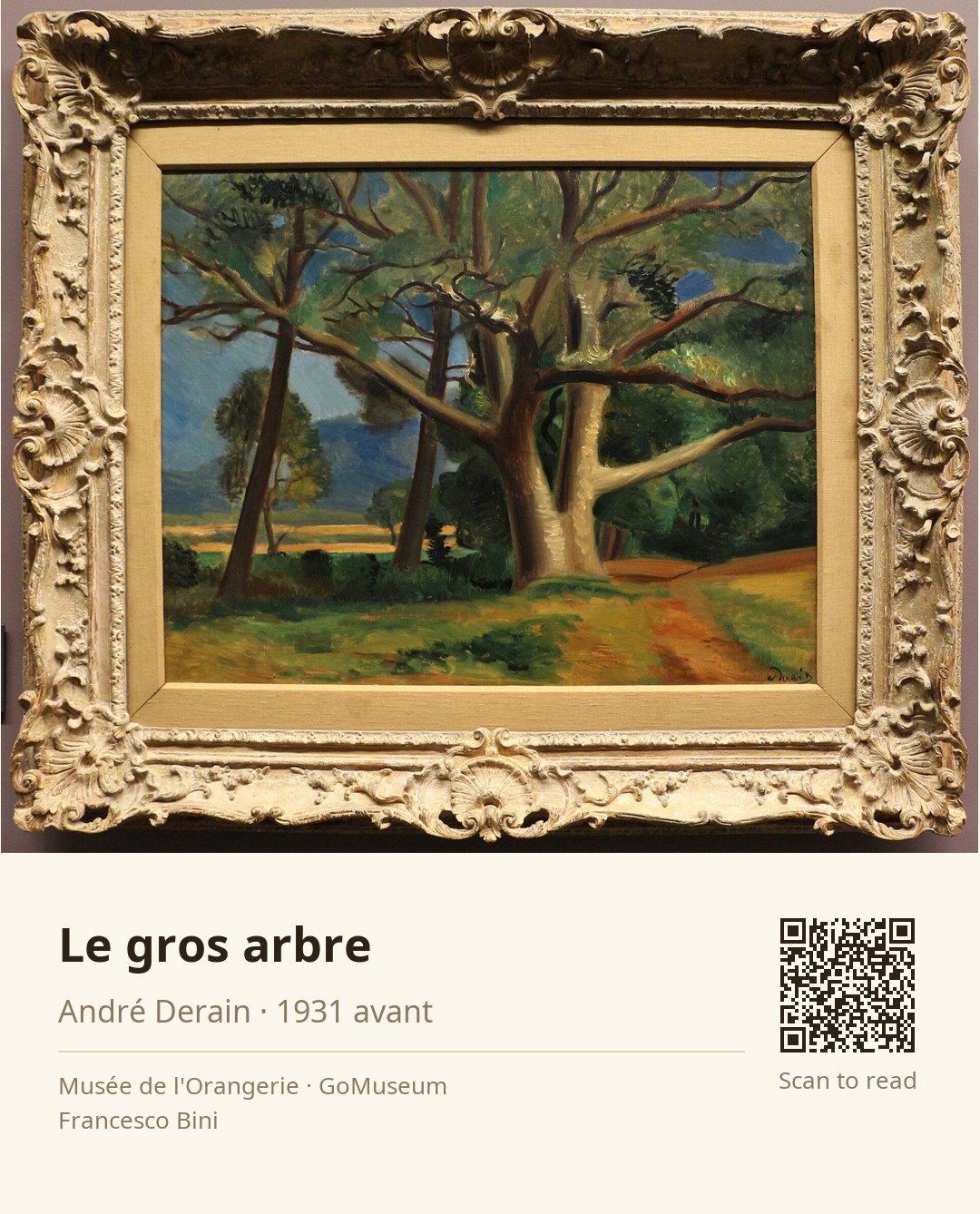
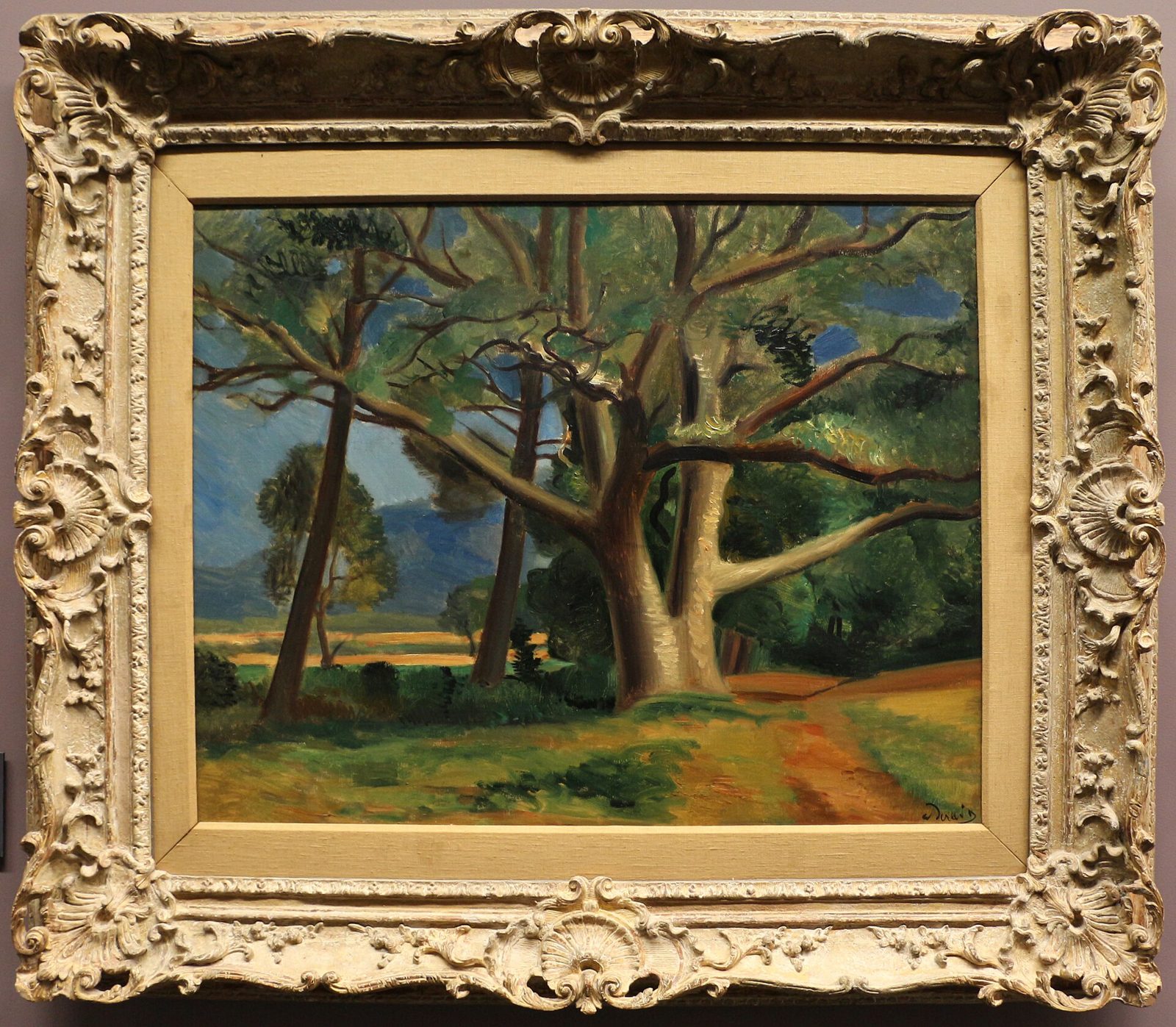
🎧 This work has audio narration — listen in the appThe large tree at the center of "Le gros arbre" stands as a testament to nature's grandeur, its thick trunk and sprawling branches inviting you into a vibrant forest scene. Surrounding the tree, lush greenery bursts forth, with smaller trees and bushes creating a rich tapestry of life, while a winding dirt path leads your eye deeper into the landscape.
This path not only guides the viewer's gaze but also symbolizes a journey, hinting at the stories that unfold in the woods. The interplay of greens, browns, and blues in the palette captures the essence of a clear day, while the brushwork brings texture to both the foliage and the bark, enhancing the painting's immersive quality.
Created in 1931 by André Derain, this work reflects the artist's fascination with the natural world during the early 20th century, a time when artists were exploring new ways to express their connection to the environment. Derain's "Le gros arbre" was exhibited in notable venues such as the Carnegie Institute in Pittsburgh that same year.
André Derain was a pivotal French artist born on June 17, 1880, in Chatou, near Paris. He co-founded the Fauvist movement alongside Henri Matisse, known for its bold use of color and expressive brushwork. Derain's early works from 1905-1906 showcased vibrant hues that challenged traditional aesthetics, earning the moniker "les Fauves" or "the wild beasts." His time in London further evolved his style, where he produced a series of striking paintings that captured the essence of the city with innovative techniques.
After World War I, Derain shifted towards a more classical approach, influenced by the Old Masters and a desire for order in art. This transition marked his emergence as a leader in the renewed classicism movement, where he combined his theatrical interests with visual arts. Despite facing criticism post-war, he remained a significant figure in the interwar period, contributing to ballet and theater design.
Derain's legacy is marked by his ability to bridge movements, from Fauvism to classicism, leaving an indelible mark on 20th-century art. He passed away on September 8, 1954, remembered as a complex artist who navigated the tumultuous changes of his time.
The work later made its way to the Carnegie Institute in Pittsburgh, where it was displayed as number 178. Its journey continued, and in 1954, it was featured in a retrospective at the Musée National d'Art Moderne in Paris, cataloged as number 64. The provenance of this piece traces back to its first owner, Paul Guillaume, and later to Madame Vve Jean Walter, showcasing its significance in the art market and its continued appreciation over the decades.
In "Le gros arbre," Derain employs oil on canvas, a medium that allows for rich color saturation and texture. The brushwork is both expressive and deliberate, with thick strokes that create a tactile quality in the foliage and bark. The vibrant greens and earthy browns are layered to evoke the lushness of the forest, while the blues in the sky add a sense of openness. The composition is masterfully balanced, with the large tree commanding attention at the center, while the winding path invites the viewer to explore deeper into the scene. This path not only leads the eye but also adds a dynamic element, enhancing the sense of depth and perspective.
The painting was initially owned by Paul Guillaume and later by Madame Vve Jean Walter, indicating its importance in the art market.
The brushwork is characterized by thick, expressive strokes that enhance the tactile quality of the foliage and bark.