 Image: Francesco Bini
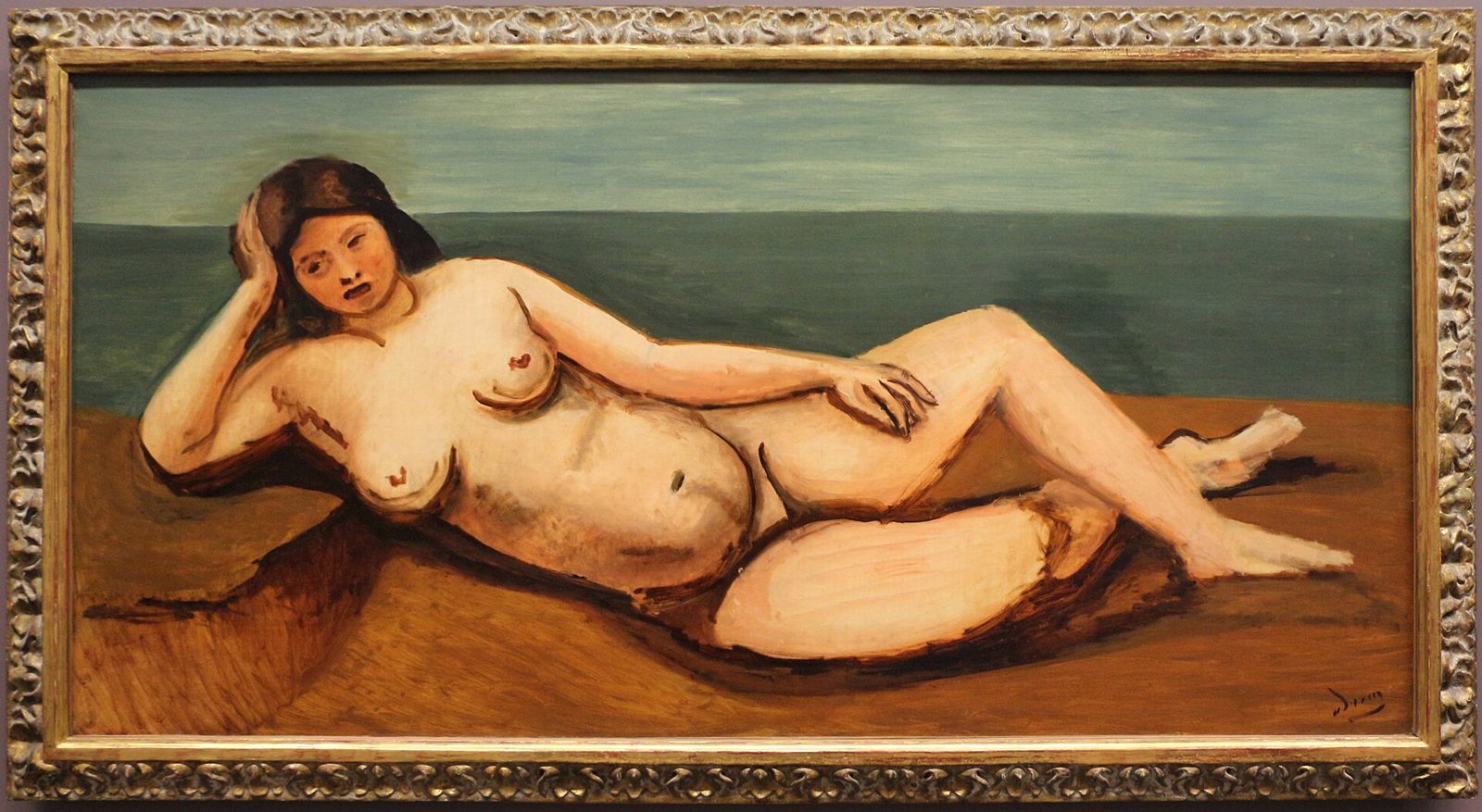
Grand nu couché
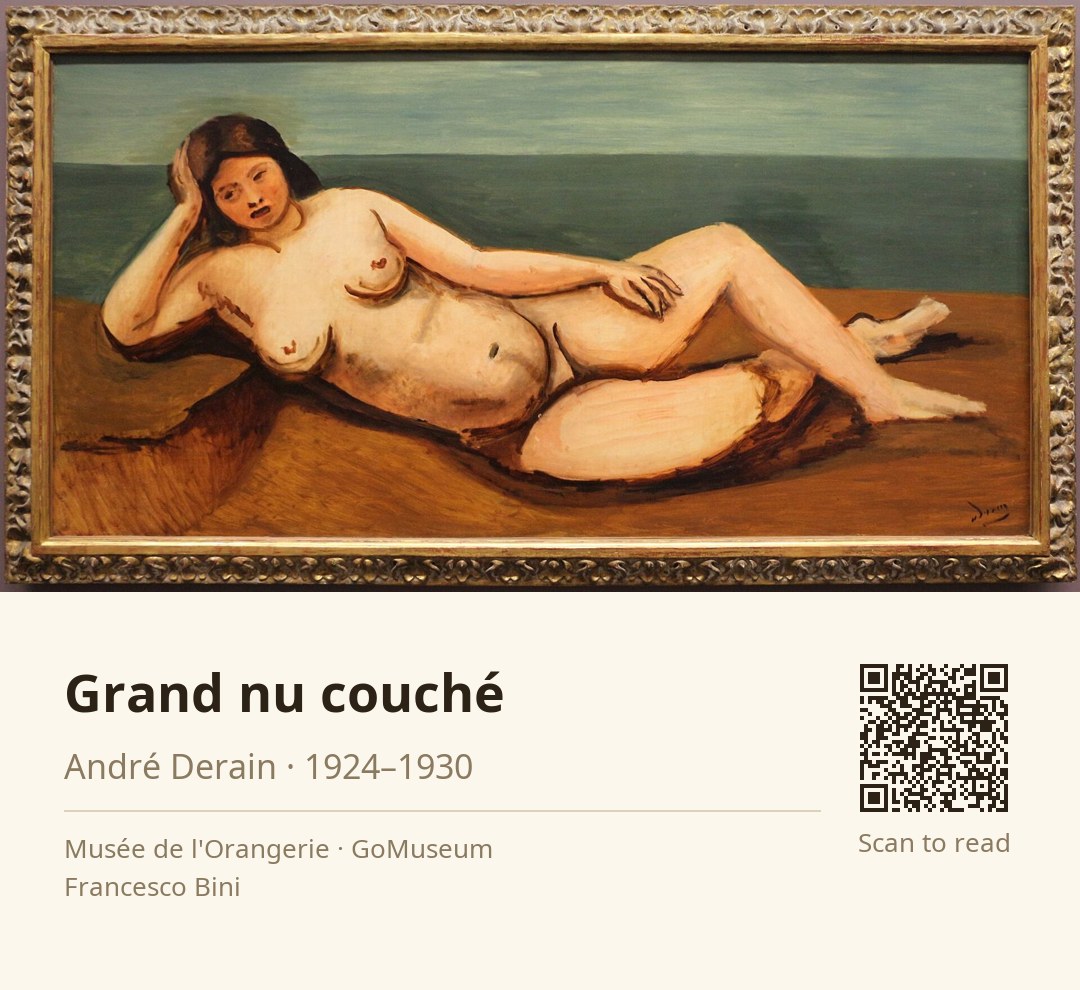
🎧 This work has audio narration — listen in the appA reclining nude figure sprawls across a sandy surface, her arm resting gracefully on her head while the other drapes softly over her body. The warm skin tones of brown and peach create a striking contrast against the cooler blues and greens of the sea and sky, inviting you to feel the warmth of the sun on her skin.
This juxtaposition of colors not only highlights the figure’s relaxed pose but also evokes a sense of tranquility, as if time has paused in this serene moment. The visible brushwork adds texture, bringing the scene to life and emphasizing the simplicity of the composition. The horizon line clearly separates the sea from the sky, grounding the figure in her peaceful environment.
Created between 1924 and 1930, André Derain’s "Grand nu couché" reflects the artist's exploration of color and form during a pivotal period in modern art. The painting was previously owned by Guillaume Paul in 1929 before becoming part of the collection.
André Derain was a pivotal French artist born on June 17, 1880, in Chatou, near Paris. He co-founded the Fauvist movement alongside Henri Matisse, known for its bold use of color and expressive brushwork. Derain's early works from 1905-1906 showcased vibrant hues that challenged traditional aesthetics, earning the moniker "les Fauves" or "the wild beasts." His time in London further evolved his style, where he produced a series of striking paintings that captured the essence of the city with innovative techniques.
After World War I, Derain shifted towards a more classical approach, influenced by the Old Masters and a desire for order in art. This transition marked his emergence as a leader in the renewed classicism movement, where he combined his theatrical interests with visual arts. Despite facing criticism post-war, he remained a significant figure in the interwar period, contributing to ballet and theater design.
Derain's legacy is marked by his ability to bridge movements, from Fauvism to classicism, leaving an indelible mark on 20th-century art. He passed away on September 8, 1954, remembered as a complex artist who navigated the tumultuous changes of his time.
In 'Grand nu couché', Derain employs a dynamic brushwork technique that breathes life into the canvas. The visible strokes create a sense of movement, contrasting with the stillness of the reclining figure. The warm skin tones are masterfully blended, showcasing Derain's ability to manipulate oil paint to achieve a rich, tactile quality. The choice of a simple composition allows the viewer to focus on the figure's relaxed pose, while the horizon line serves as a grounding element, separating the tranquil sea from the expansive sky. The scale of the painting, measuring 97 by 193 centimeters, enhances its impact, inviting viewers to immerse themselves in the serene scene. Derain's use of color is particularly striking; the warm hues of the figure stand out against the cooler blues and greens, creating a visual dialogue that evokes a sense of calm and tranquility. This technique not only highlights the subject but also encapsulates the essence of leisure and relaxation.
The painting was previously owned by Guillaume Paul in 1929.
Derain's use of warm hues for the figure creates a striking contrast with the cooler blues and greens of the background, enhancing the visual dialogue of the scene.
The large scale of the painting invites viewers to immerse themselves in the serene scene, making the experience more impactful.