 Image: Francesco Bini
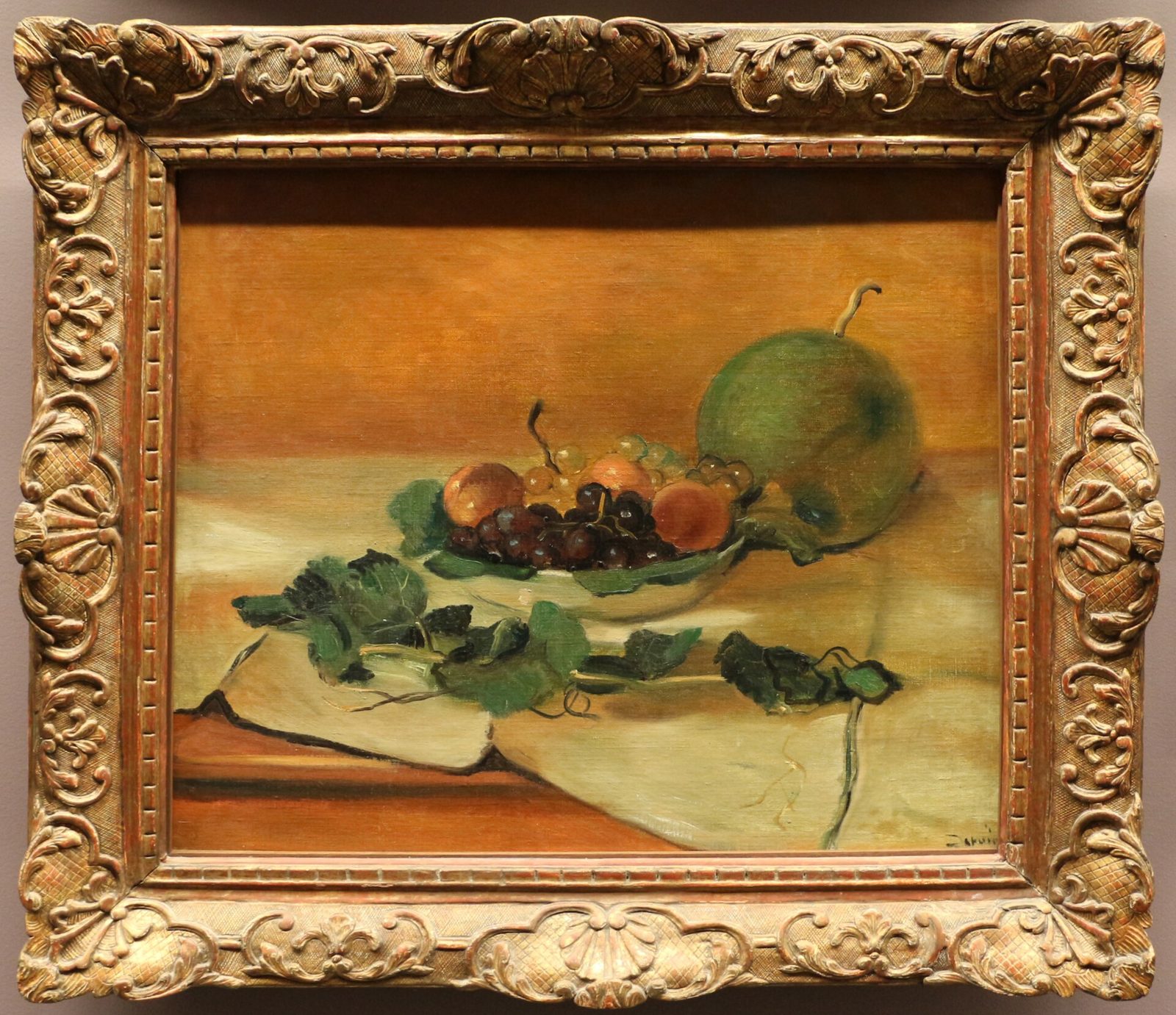
Melon et fruits
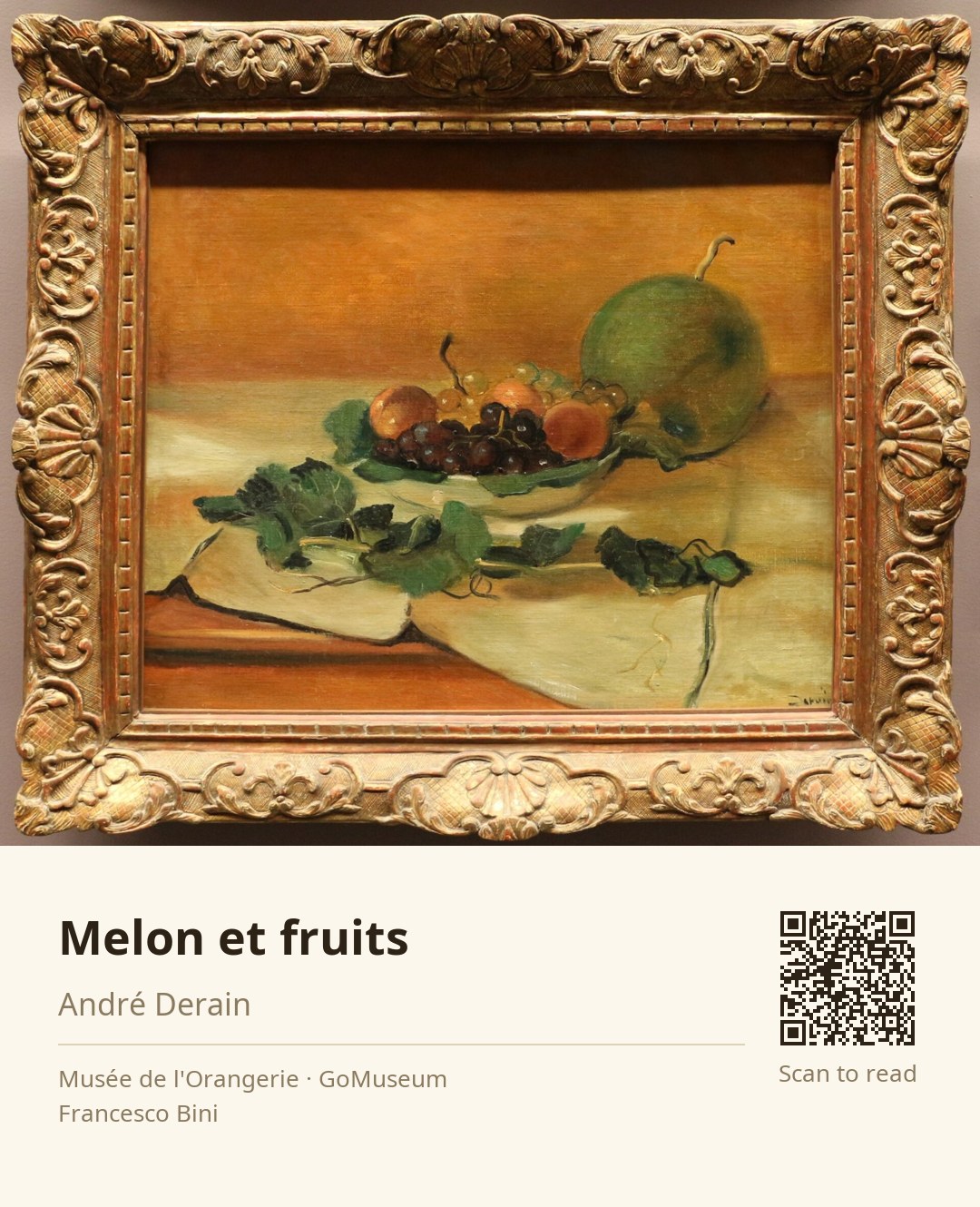
🎧 This work has audio narration — listen in the appA large melon, its stem still attached, takes center stage in this vibrant still life by André Derain. Surrounding it are luscious grapes and peaches, all nestled in a shallow bowl atop a white cloth, with green leaves scattered around, adding a touch of nature's freshness. The rich, warm tones of the fruits pop against the gradient background of oranges and yellows, creating a sense of warmth and abundance.
Derain's brushwork is smooth, allowing for subtle transitions between light and shadow, which brings the fruits to life, almost inviting you to reach out and touch them. The arrangement is carefully balanced, guiding your gaze across the scene, from the melon to the delicate leaves. This composition reflects Derain's mastery of color and form, showcasing his ability to transform everyday objects into a harmonious visual experience.
Created in the early 20th century, "Melon et fruits" exemplifies the artist's exploration of still life, a genre he embraced throughout his career. The painting was exhibited in 1929 at the Galerie Bernheim-Jeune in Paris, highlighting Derain's significant role in contemporary art during that period.
André Derain was a pivotal French artist born on June 17, 1880, in Chatou, near Paris. He co-founded the Fauvist movement alongside Henri Matisse, known for its bold use of color and expressive brushwork. Derain's early works from 1905-1906 showcased vibrant hues that challenged traditional aesthetics, earning the moniker "les Fauves" or "the wild beasts." His time in London further evolved his style, where he produced a series of striking paintings that captured the essence of the city with innovative techniques.
After World War I, Derain shifted towards a more classical approach, influenced by the Old Masters and a desire for order in art. This transition marked his emergence as a leader in the renewed classicism movement, where he combined his theatrical interests with visual arts. Despite facing criticism post-war, he remained a significant figure in the interwar period, contributing to ballet and theater design.
Derain's legacy is marked by his ability to bridge movements, from Fauvism to classicism, leaving an indelible mark on 20th-century art. He passed away on September 8, 1954, remembered as a complex artist who navigated the tumultuous changes of his time.
In 'Melon et fruits', Derain employs a smooth brushwork technique that creates a sense of depth and realism, allowing the fruits to almost leap off the canvas. The oil paint is applied with a deft hand, resulting in rich textures that evoke the tactile quality of the fruits. The warm palette of oranges and yellows in the background enhances the vibrancy of the fruits, while the subtle transitions between light and shadow give them a three-dimensional presence. The composition is meticulously balanced, with the large melon anchoring the scene and the smaller fruits guiding the viewer's eye across the painting. This thoughtful arrangement showcases Derain's mastery in transforming ordinary objects into a captivating visual narrative.
Derain used a smooth brushwork technique that enhances the depth and realism of the fruits, making them appear almost three-dimensional.
The warm oranges and yellows in the background amplify the vibrancy of the fruits, creating a harmonious and inviting atmosphere in the composition.