 Image: Francesco Bini
Nu à la cruche
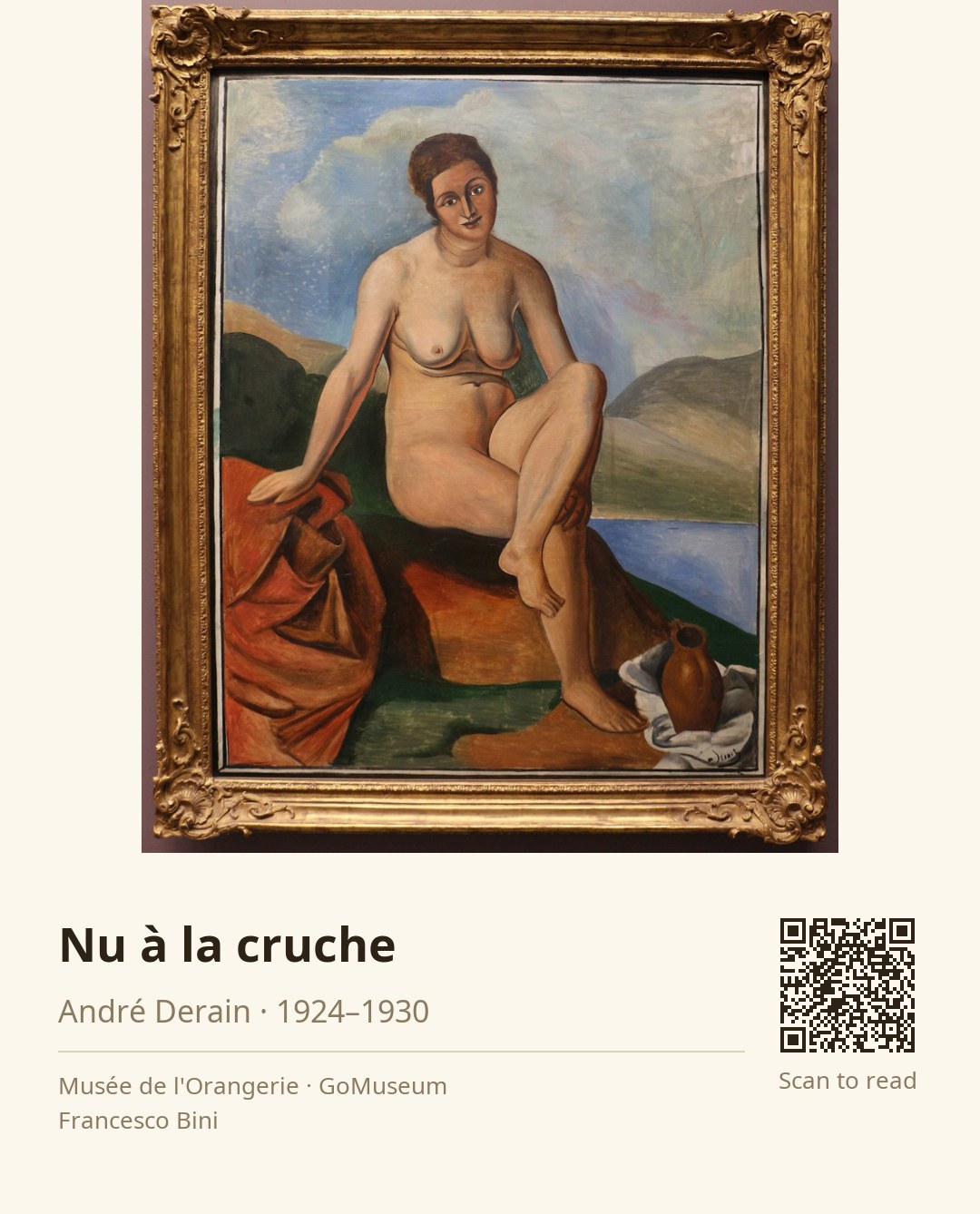
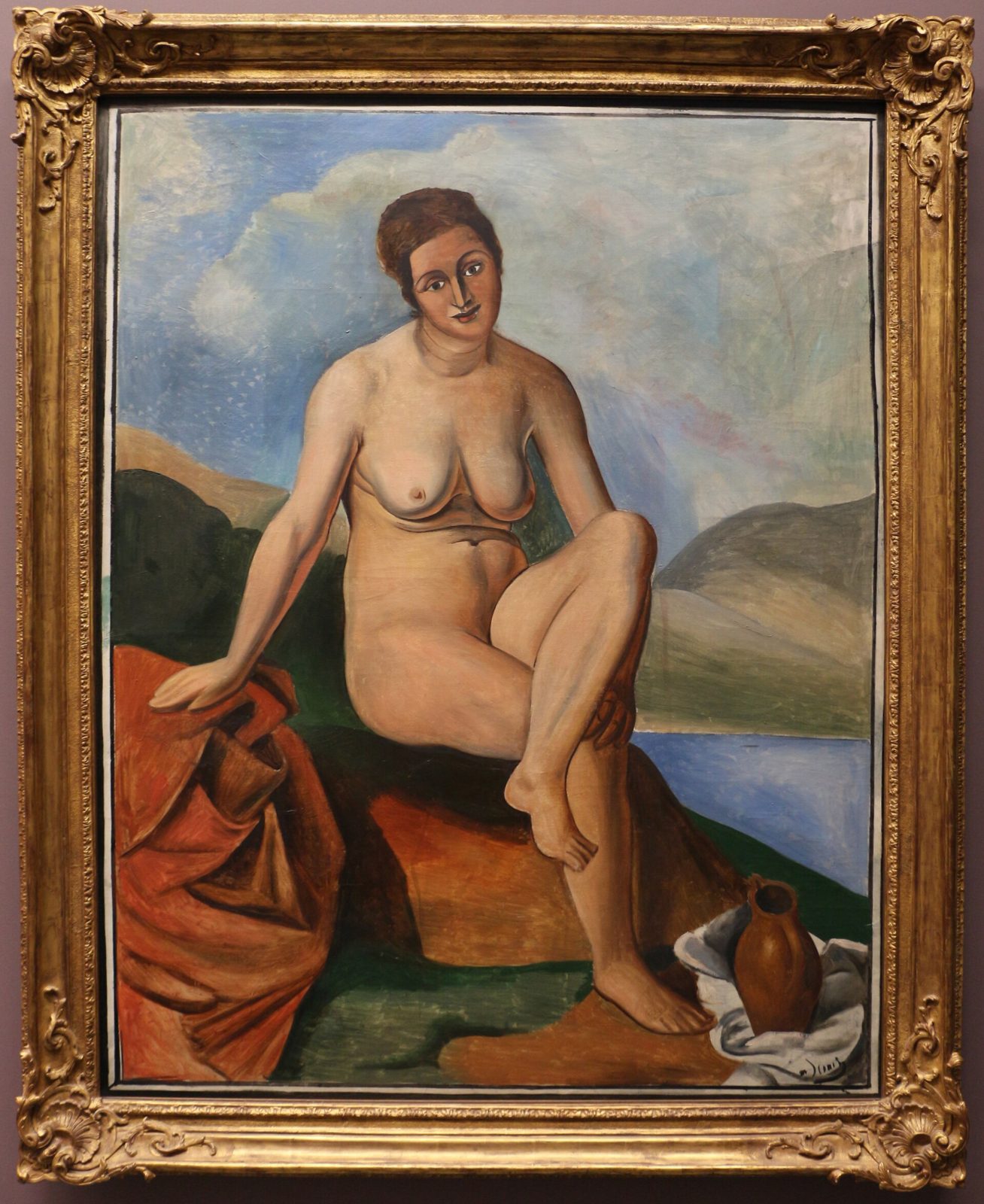
🎧 This work has audio narration — listen in the appA nude woman sits gracefully on a rock, her left leg crossed over the right, gazing directly at you with an inviting yet contemplative expression. The earthy tones of her skin harmonize with the surrounding landscape, where rolling hills meet a tranquil body of water under a partly cloudy sky. To her left, a vibrant red drapery cascades over the rock, adding a striking contrast to the scene, while a brown jug rests on a white cloth in the foreground, hinting at a narrative beyond the immediate moment.
This composition, with its smooth brushwork and defined contours, captures a serene yet intimate moment, drawing attention to the interplay between the figure and her environment. The balance of elements creates a sense of calm, inviting you to linger in this tranquil setting. Painted between 1924 and 1930 by André Derain, this work reflects his exploration of color and form during a transformative period in modern art. Derain's ability to blend the human figure with the natural world showcases his unique approach to expressionism, emphasizing both beauty and simplicity.
André Derain was a pivotal French artist born on June 17, 1880, in Chatou, near Paris. He co-founded the Fauvist movement alongside Henri Matisse, known for its bold use of color and expressive brushwork. Derain's early works from 1905-1906 showcased vibrant hues that challenged traditional aesthetics, earning the moniker "les Fauves" or "the wild beasts." His time in London further evolved his style, where he produced a series of striking paintings that captured the essence of the city with innovative techniques.
After World War I, Derain shifted towards a more classical approach, influenced by the Old Masters and a desire for order in art. This transition marked his emergence as a leader in the renewed classicism movement, where he combined his theatrical interests with visual arts. Despite facing criticism post-war, he remained a significant figure in the interwar period, contributing to ballet and theater design.
Derain's legacy is marked by his ability to bridge movements, from Fauvism to classicism, leaving an indelible mark on 20th-century art. He passed away on September 8, 1954, remembered as a complex artist who navigated the tumultuous changes of his time.
Derain's technique in 'Nu à la cruche' is characterized by smooth brushwork that creates a sense of fluidity and softness. The paint handling is deliberate, with defined contours that give the figure a sculptural quality, almost as if she is emerging from the canvas. The earthy tones of the woman's skin are harmoniously blended with the surrounding landscape, while the vibrant red drapery adds a striking visual contrast. This choice not only draws the eye but also enhances the emotional depth of the scene. The composition is carefully balanced, with the figure centrally placed, allowing the viewer to engage directly with her contemplative gaze. The scale of the painting, measuring 170 by 131 centimeters, invites an intimate interaction, making the viewer feel as if they are part of this tranquil moment.
The red drapery serves to create a bold contrast within the composition, drawing the viewer's eye and enhancing the emotional resonance of the scene.