 Image: Ninara
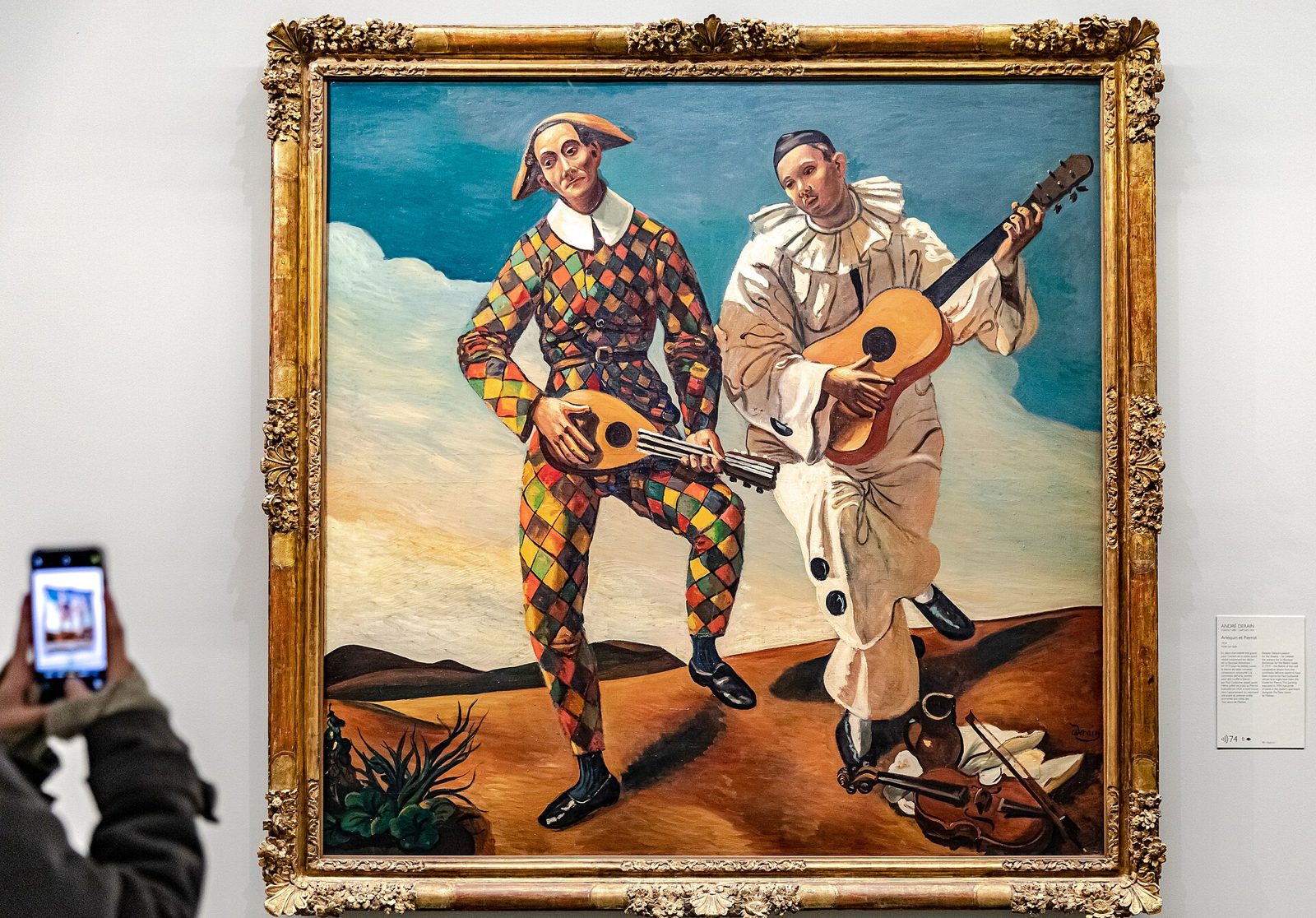
Arlequin et pierrot
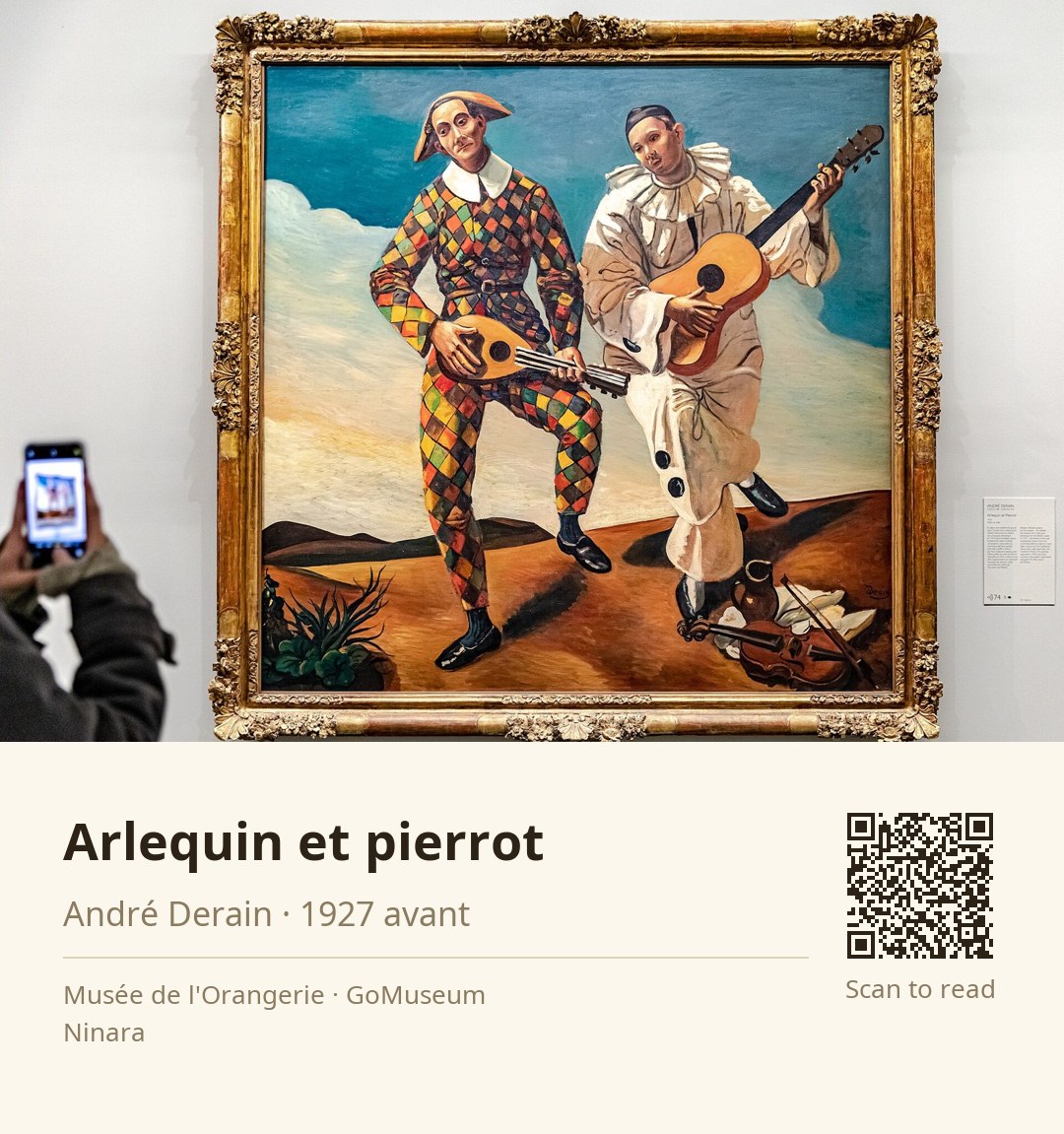
🎧 This work has audio narration — listen in the appThe vibrant harlequin, dressed in a diamond-patterned outfit, stands confidently on the left, cradling a lute, while the Pierrot on the right, in his classic white costume adorned with black buttons, strums a guitar. Their theatrical costumes pop against the serene backdrop of rolling hills and a clear blue sky, creating a lively contrast that draws the eye.
This interplay between the figures and their surroundings highlights the joy of performance and the essence of artistic expression. The smooth brushwork and vivid colors not only bring the characters to life but also evoke a sense of harmony between the playful energy of the harlequin and the melancholic charm of the Pierrot. The presence of a violin and a plant in the foreground adds depth, suggesting a narrative that intertwines music and nature, enriching the scene.
Created in 1927 by André Derain, "Arlequin et Pierrot" captures a moment of artistic celebration, reflecting the vibrant spirit of early 20th-century painting.
André Derain was a pivotal French artist born on June 17, 1880, in Chatou, near Paris. He co-founded the Fauvist movement alongside Henri Matisse, known for its bold use of color and expressive brushwork. Derain's early works from 1905-1906 showcased vibrant hues that challenged traditional aesthetics, earning the moniker "les Fauves" or "the wild beasts." His time in London further evolved his style, where he produced a series of striking paintings that captured the essence of the city with innovative techniques.
After World War I, Derain shifted towards a more classical approach, influenced by the Old Masters and a desire for order in art. This transition marked his emergence as a leader in the renewed classicism movement, where he combined his theatrical interests with visual arts. Despite facing criticism post-war, he remained a significant figure in the interwar period, contributing to ballet and theater design.
Derain's legacy is marked by his ability to bridge movements, from Fauvism to classicism, leaving an indelible mark on 20th-century art. He passed away on September 8, 1954, remembered as a complex artist who navigated the tumultuous changes of his time.
André Derain's 'Arlequin et Pierrot' was created in 1927, a time when the artist was deeply engaged in exploring the vibrant colors and forms that would define his work. Following its initial showing, the painting continued to be featured in various exhibitions, including a notable display in 1935 and later at the Musée National d'Art Moderne in Paris in 1954. Its provenance traces back to Guillaume Paul and later to Walter Mme Vve Jean, highlighting its journey through the hands of influential art patrons.
Derain employs smooth brushwork that allows the vibrant hues to blend seamlessly, creating a lively atmosphere. The diamond patterns of the harlequin's outfit are rendered with a boldness that almost pulsates with energy, while the Pierrot's white costume contrasts sharply, emphasizing the playful tension between the two figures. The composition is carefully balanced; both characters lean slightly towards each other, inviting a sense of interaction. The foreground elements, like the violin and plant, are not mere decorations but integral parts of the scene, grounding the figures in a narrative that suggests music and camaraderie. This thoughtful arrangement enhances the overall impact, making the painting feel alive.
After its debut, 'Arlequin et Pierrot' was exhibited in 1935 and later displayed at the Musée National d'Art Moderne in Paris in 1954.
The painting was initially owned by Guillaume Paul and later passed to Walter Mme Vve Jean, both of whom were influential art patrons.
The harlequin's outfit features bold diamond patterns that create a sense of pulsating energy, enhancing the vibrancy of the character.