 Image: Francesco Bini
La table de cuisine
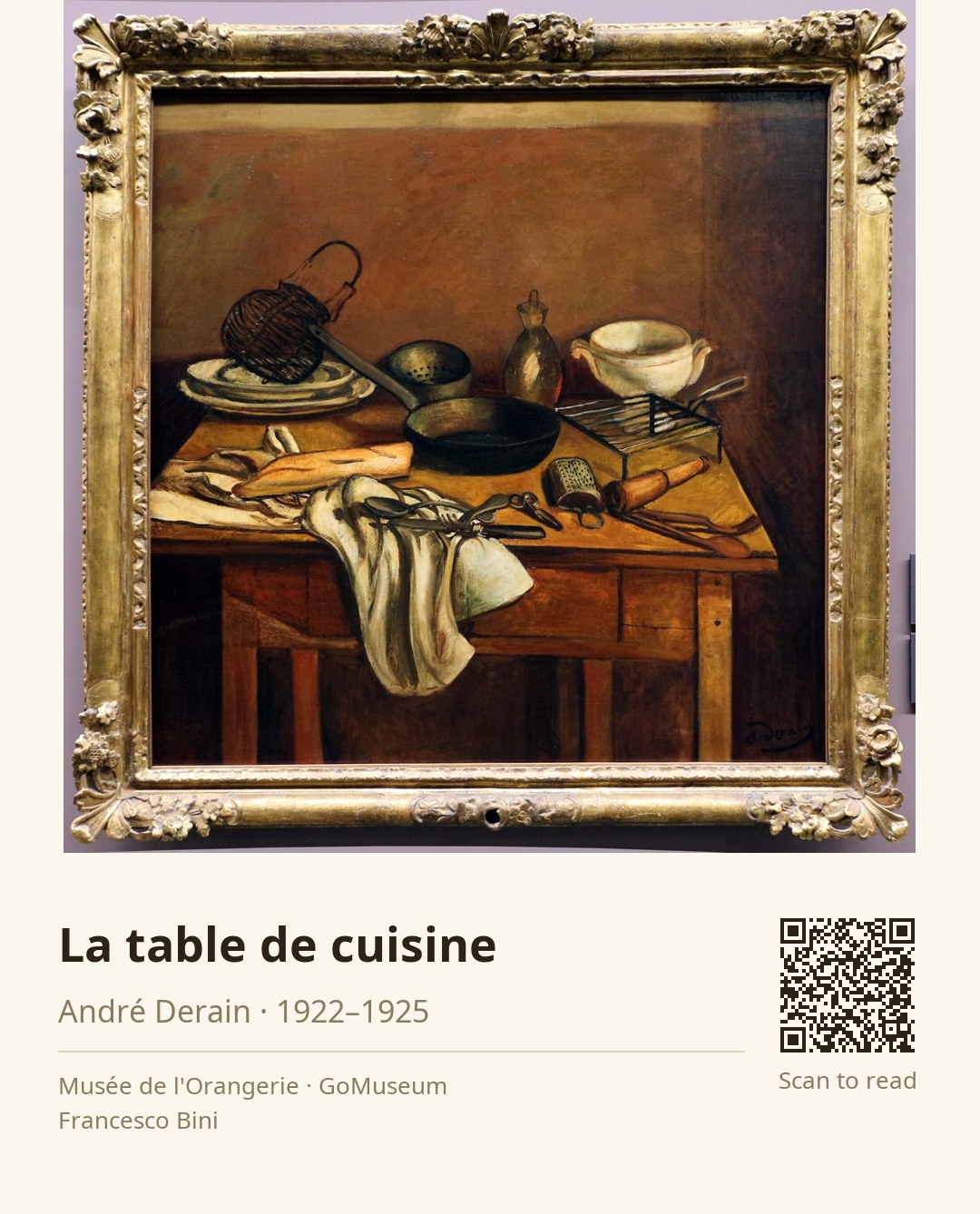
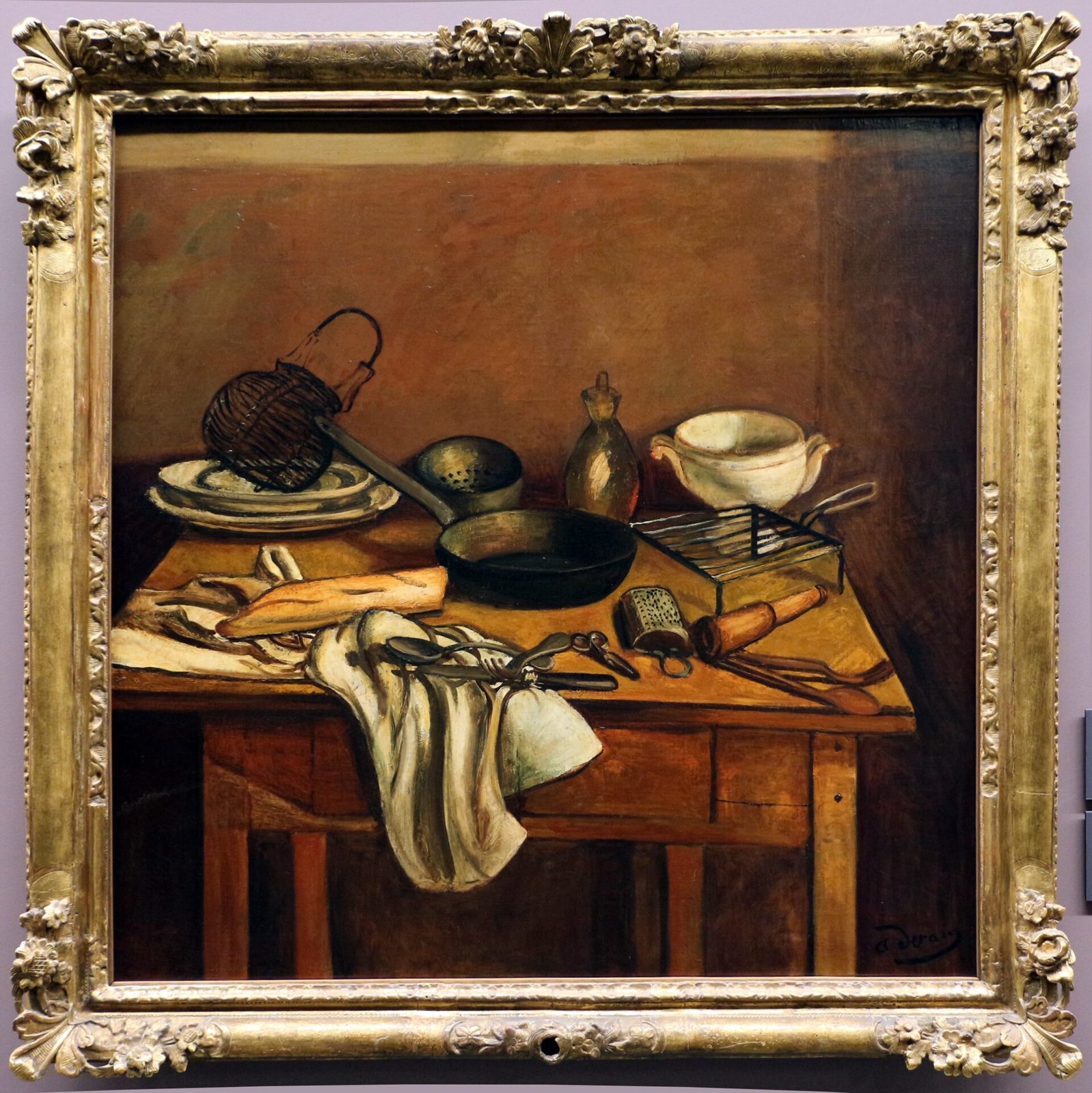
🎧 This work has audio narration — listen in the appScissors peek out from beneath a white cloth, while a rolling pin and a grater lie scattered across the surface, hinting at the activity that once took place here. The frying pan and colander occupy a central position, suggesting the heart of culinary creation, while stacked plates and a basket-like object add layers of texture and depth.
This assortment of items reflects not just the chaos of a busy kitchen, but also Derain's mastery of color and form. The warm, muted browns of the background enhance the earthy tones of the utensils, creating a sense of intimacy and warmth. Each brushstroke captures the unique textures of the objects, inviting you to imagine the tactile experience of cooking. The careful arrangement of these everyday items transforms them into a still life that resonates with the viewer, evoking memories of shared meals and family gatherings.
Created between 1922 and 1925, "La table de cuisine" showcases Derain's exploration of color and composition during the early 20th century, a time when artists were reimagining the boundaries of traditional still life. This piece was part of several exhibitions, including the 1929 showcase at Paul Guillaume's collection in Paris.
André Derain was a pivotal French artist born on June 17, 1880, in Chatou, near Paris. He co-founded the Fauvist movement alongside Henri Matisse, known for its bold use of color and expressive brushwork. Derain's early works from 1905-1906 showcased vibrant hues that challenged traditional aesthetics, earning the moniker "les Fauves" or "the wild beasts." His time in London further evolved his style, where he produced a series of striking paintings that captured the essence of the city with innovative techniques.
After World War I, Derain shifted towards a more classical approach, influenced by the Old Masters and a desire for order in art. This transition marked his emergence as a leader in the renewed classicism movement, where he combined his theatrical interests with visual arts. Despite facing criticism post-war, he remained a significant figure in the interwar period, contributing to ballet and theater design.
Derain's legacy is marked by his ability to bridge movements, from Fauvism to classicism, leaving an indelible mark on 20th-century art. He passed away on September 8, 1954, remembered as a complex artist who navigated the tumultuous changes of his time.
André Derain's 'La table de cuisine' was painted between 1922 and 1925, a period when he was deeply engaged in exploring the vibrancy of color and form. The painting made its debut in several notable exhibitions, including the 1929 showcase at Paul Guillaume's collection in Paris, where it was first introduced to the public. It later traveled to the Brummer Gallery in New York in 1936 and was featured in the Exposition Universelle at the Petit Palais in Paris in 1937. Over the years, it has been part of various prestigious exhibitions, reflecting its enduring appeal and significance in the art world. The provenance of the piece traces back to Paul Guillaume in 1928 and later to Walter Mme Vve Jean, highlighting its journey through the hands of art collectors.
The brushwork is both meticulous and expressive, allowing the textures of the kitchen utensils to come alive. Each stroke seems to dance across the canvas, capturing the smoothness of the white cloth and the roughness of the wooden table. The color palette is warm and inviting, with muted browns dominating the background, which enhances the earthy tones of the utensils. This choice creates a harmonious balance, drawing the viewer's eye to the central objects without overwhelming them. The composition is dynamic, with the placement of the frying pan and colander at the center acting as a focal point, while the scattered utensils around them create a sense of organized chaos. The scale of the painting, measuring 119 by 119 centimeters, allows for an immersive experience, inviting you to step into this intimate kitchen scene.
The painting was initially owned by Paul Guillaume in 1928 and later passed to Walter Mme Vve Jean, indicating its significance among art collectors.
After its debut, the painting was exhibited at the Brummer Gallery in New York in 1936 and featured in the Exposition Universelle at the Petit Palais in Paris in 1937.
Derain's brushwork is both meticulous and expressive, which enhances the textures of the kitchen utensils, making them appear lifelike.