 Image: Francesco Bini
Nature morte champêtre
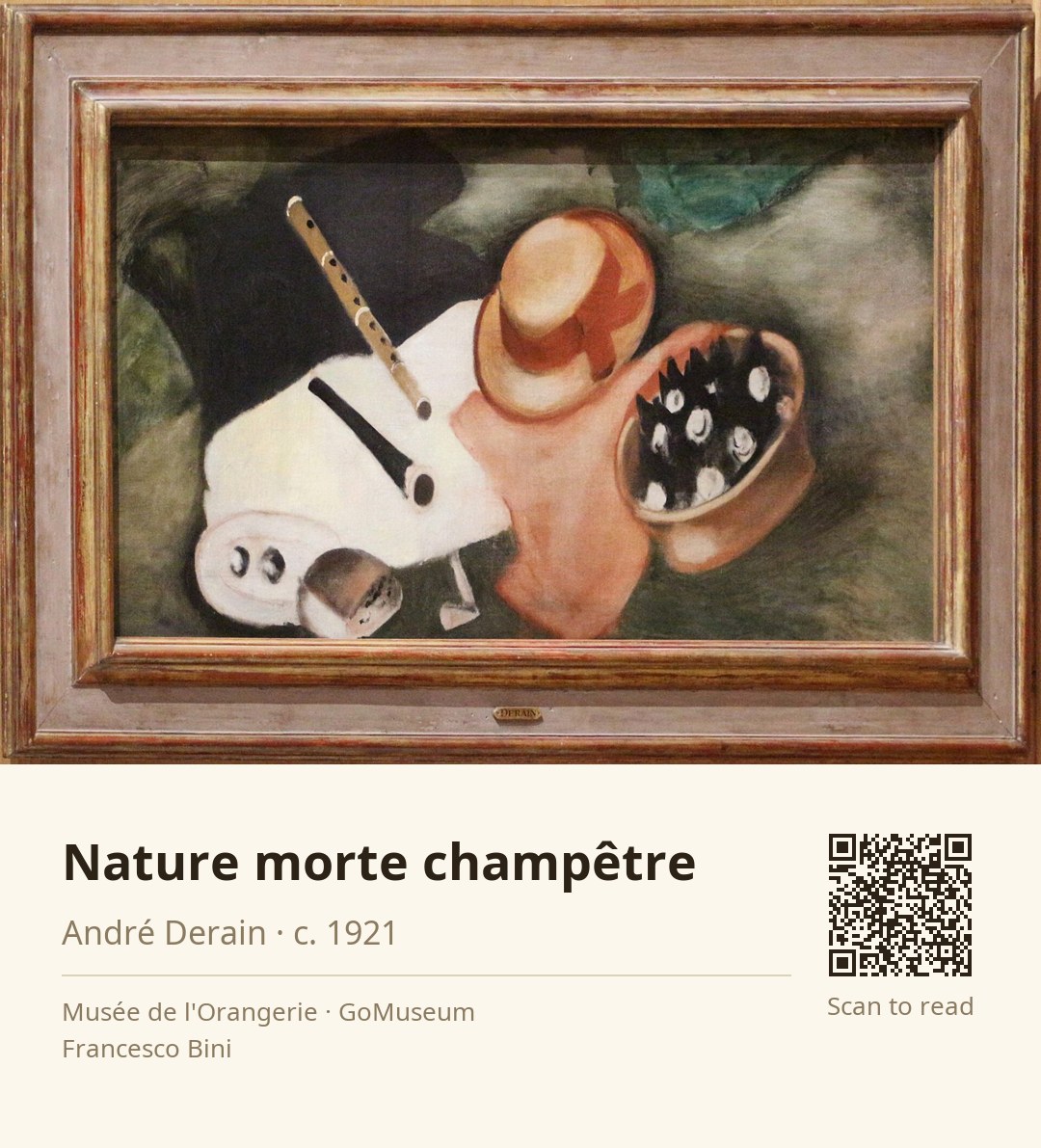
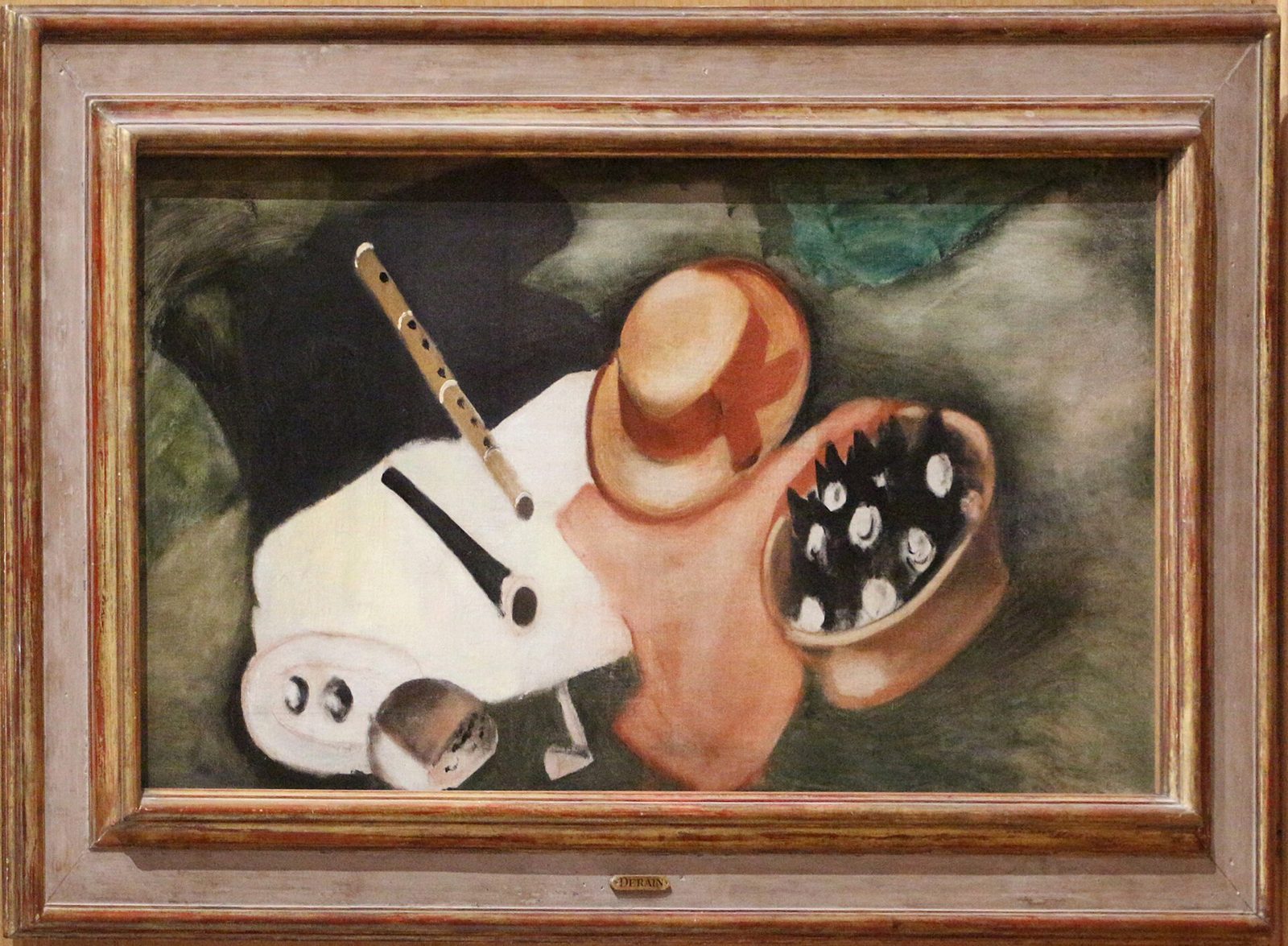
🎧 This work has audio narration — listen in the appA flute and a straw hat sit prominently in André Derain's "Nature morte champêtre," inviting you into a world of simple yet evocative objects. The white cloth beneath them contrasts with the muted greens of the background, while the red band on the hat adds a vibrant touch against the pinkish surface. This careful arrangement of everyday items creates a sense of harmony, emphasizing the beauty found in the ordinary.
Derain's use of earthy colors and rounded shapes enhances the warmth of the scene, suggesting a tranquil moment in nature. The dark objects in the bowl, possibly mushrooms or flowers, add intrigue, while the loaf of bread hints at domesticity and sustenance. The overall composition feels both inviting and contemplative, reflecting the artist's ability to elevate still life into a realm of quiet reflection.
André Derain was a pivotal French artist born on June 17, 1880, in Chatou, near Paris. He co-founded the Fauvist movement alongside Henri Matisse, known for its bold use of color and expressive brushwork. Derain's early works from 1905-1906 showcased vibrant hues that challenged traditional aesthetics, earning the moniker "les Fauves" or "the wild beasts." His time in London further evolved his style, where he produced a series of striking paintings that captured the essence of the city with innovative techniques.
After World War I, Derain shifted towards a more classical approach, influenced by the Old Masters and a desire for order in art. This transition marked his emergence as a leader in the renewed classicism movement, where he combined his theatrical interests with visual arts. Despite facing criticism post-war, he remained a significant figure in the interwar period, contributing to ballet and theater design.
Derain's legacy is marked by his ability to bridge movements, from Fauvism to classicism, leaving an indelible mark on 20th-century art. He passed away on September 8, 1954, remembered as a complex artist who navigated the tumultuous changes of his time.
In 'Nature morte champêtre', Derain employs oil on canvas to create a rich texture that invites the viewer to engage with the surface of the painting. The brushwork is both deliberate and fluid, allowing for a blend of colors that creates depth and warmth. The earthy palette, dominated by muted greens and soft pinks, enhances the tranquil atmosphere of the scene. Derain's choice of rounded shapes contributes to a sense of harmony, while the contrasting elements—like the vibrant red band on the straw hat against the pinkish background—draw the eye and create focal points. The composition is thoughtfully arranged, with the flute and pipe in the foreground anchoring the viewer's attention, while the darker objects in the bowl add a layer of intrigue. This careful orchestration of color and form not only highlights the objects but also evokes a contemplative mood, reflecting Derain's mastery in elevating still life to a meditative experience.
The painting was previously owned by Guillaume Paul and Walter Mme Vve Jean.
The balance in Derain's composition is achieved through the use of earthy colors and rounded shapes.
The dark objects in the bowl are possibly mushrooms or flowers.