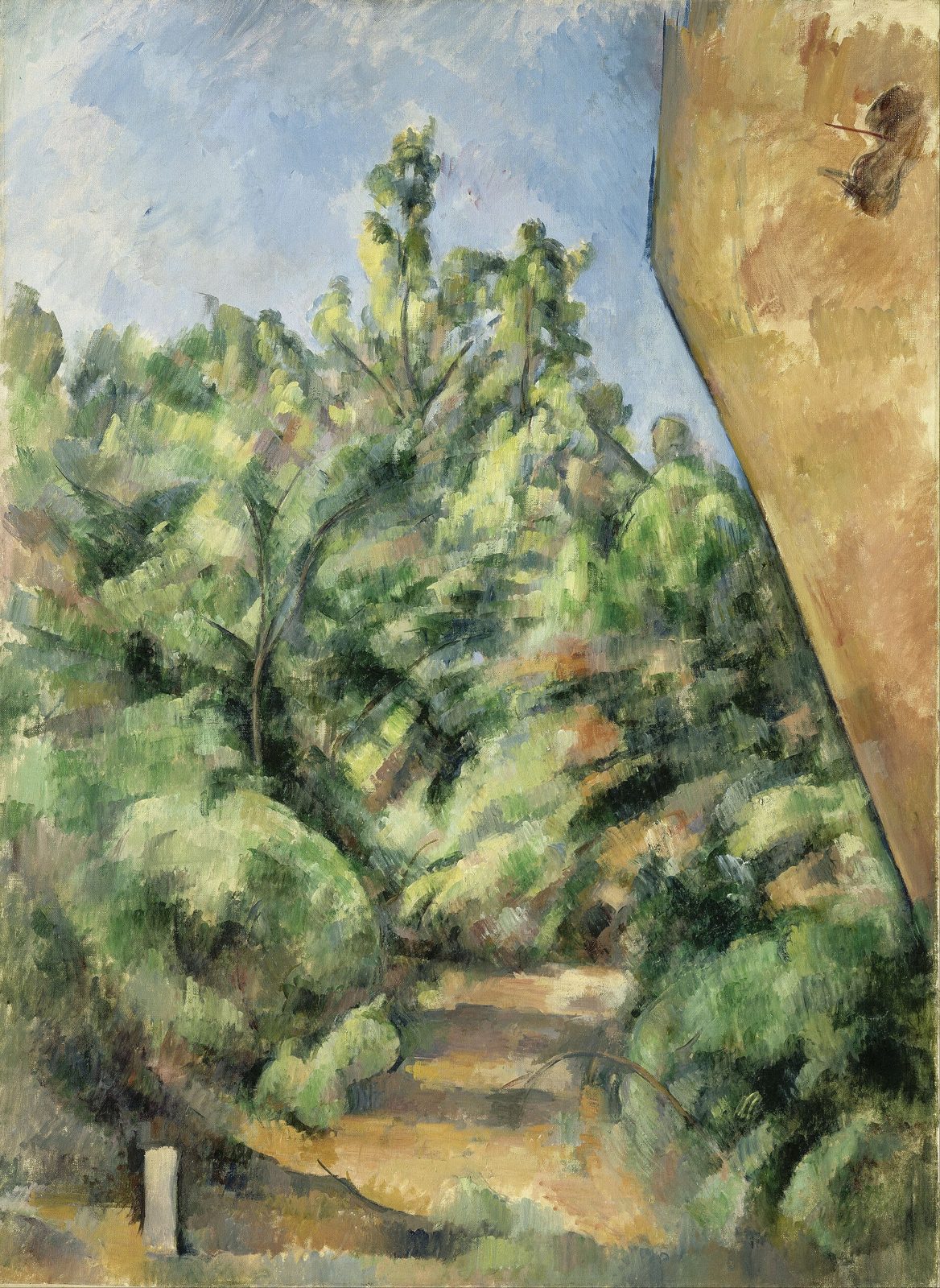
Le rocher rouge
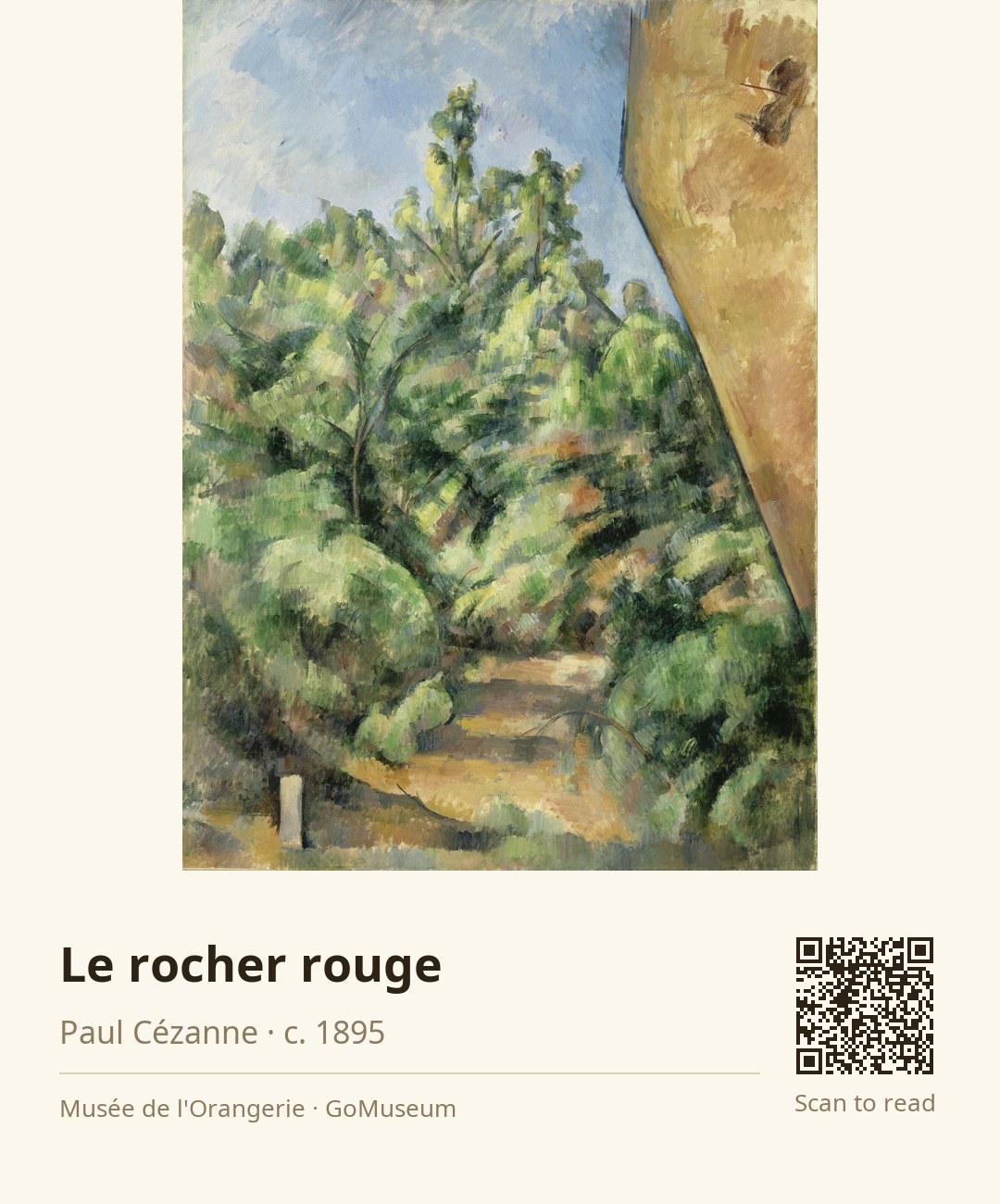
🎧 This work has audio narration — listen in the appThe large, angular rock formation on the right side of "Le rocher rouge" stands out against the lush greenery, its earthy tones creating a striking contrast with the vibrant foliage. Cézanne’s broad, textured brushstrokes bring the trees and bushes to life, suggesting a sense of movement as they sway in the breeze.
The dynamic diagonal created by the rock and the surrounding trees draws the viewer’s eye through the painting, inviting exploration of the interplay between the solid and the organic.
Painted around 1895, this work exemplifies Cézanne’s innovative approach to landscape, merging the real and the abstract in a way that would influence generations of artists.
Paul Cézanne was a French Post-Impressionist painter born on January 19, 1839, in Aix-en-Provence. His innovative approach to color and form bridged the gap between Impressionism and the emerging Cubism of the early 20th century. Initially influenced by Romanticism and Realism, Cézanne developed a unique style that emphasized the underlying structure of objects, using repetitive brushstrokes and planes of color to create depth and complexity in his work.
Despite facing ridicule and misunderstanding from critics during his early career, Cézanne garnered support from fellow artists like Camille Pissarro and the art dealer Ambroise Vollard, who recognized his talent. His first solo exhibition in 1895 marked a turning point, leading to greater appreciation of his contributions to art. Cézanne's legacy is profound; both Henri Matisse and Pablo Picasso acknowledged him as a foundational figure in modern art, dubbing him "the father of us all." He passed away on October 22, 1906, leaving behind a transformative body of work that continues to influence artists today.
Cézanne's 'Le rocher rouge' was painted around 1895, a time when he was deeply exploring the Provençal landscape that surrounded him. This particular piece was part of the Ambroise Vollard collection, a significant patron of Cézanne's work, who recognized the artist's groundbreaking approach to color and form. The painting was first exhibited in 1933 at the Knoedler Gallery in New York, where it was listed as number 42, and later shown in Paris at the Galerie Rosenberg in 1939, marked as number 32. The journey of this artwork through various exhibitions highlights its growing recognition and the evolving appreciation for Cézanne's innovative style. The provenance traces back to notable figures in the art world, including the dealer Ambroise Vollard and later, Madame Walter, showcasing its esteemed history and the value placed on it by collectors over time.
In 'Le rocher rouge', Cézanne employs a distinctive technique characterized by broad, textured brushstrokes that breathe life into the landscape. The way he layers paint creates a palpable sense of depth, as if you could step into the scene. The earthy tones of the rock formation contrast sharply with the vibrant greens of the foliage, drawing your eye to the angular structure that dominates the right side of the composition. This deliberate choice enhances the dynamic diagonal that runs through the painting, guiding your gaze across the canvas. Cézanne's use of color is equally striking; the palette, rich with greens, yellows, and browns, evokes the warmth of the Provençal sun. The soft blue sky with wispy clouds adds a serene backdrop, further emphasizing the vibrancy of the foreground. This interplay of color and texture not only captures the essence of the landscape but also reflects Cézanne's quest to merge the real with the abstract, a hallmark of his revolutionary approach.
The painting's provenance includes significant figures like Ambroise Vollard and Madame Walter, reflecting its valued history among art collectors.