 Image: Sailko
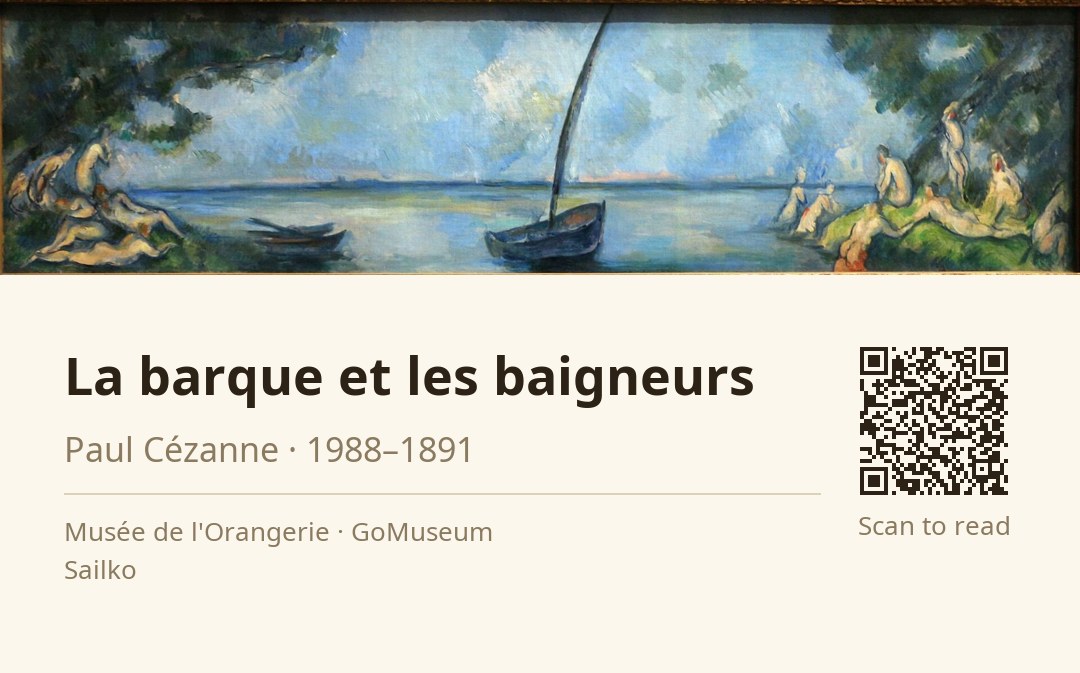
La barque et les baigneurs
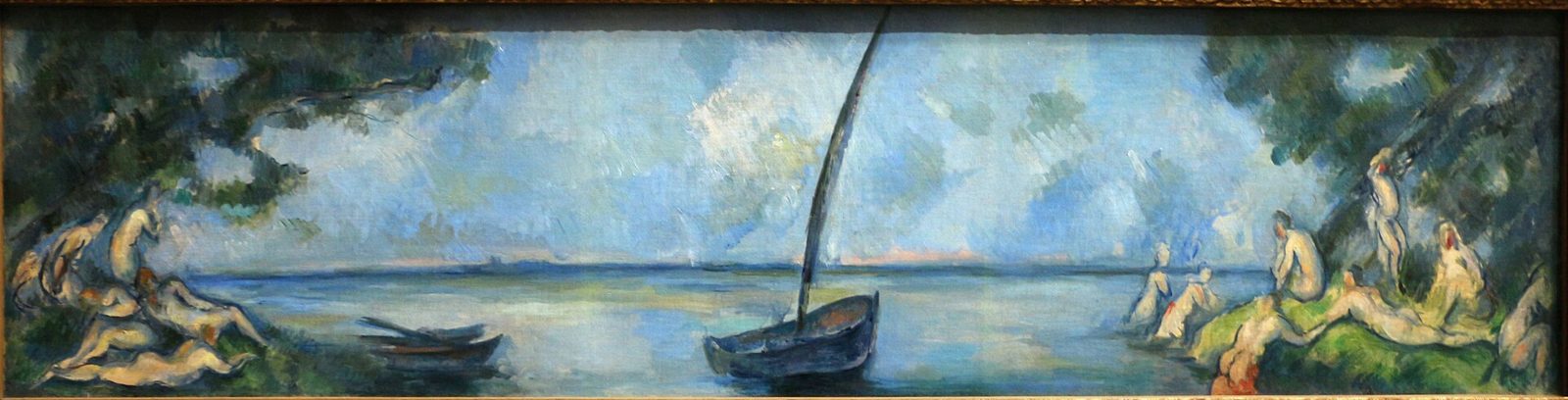
🎧 This work has audio narration — listen in the appA small boat gently floats on the calm water, its tall mast reflecting the serene hues of the surrounding landscape. To the left, bathers lounge beneath leafy trees, their soft, flowing forms blending seamlessly with the tranquil environment. This scene captures a moment of leisure, inviting you to feel the peacefulness of a sunny day by the water.
Cézanne’s brushwork here is particularly noteworthy; the figures are not just depicted but seem to merge with their surroundings, embodying the essence of relaxation and harmony with nature. The cool blues and greens dominate the palette, evoking a sense of calm, while the earthy tones ground the composition, creating a balance between the figures and the landscape. This interplay of color and form reflects Cézanne's evolving style, where he began to break away from traditional representation, focusing instead on the emotional resonance of the scene.
Created between 1888 and 1891, "La barque et les baigneurs" showcases a pivotal moment in Cézanne’s career, as he explored the relationship between figures and nature. The painting was exhibited at the Galerie Bernheim-Jeune in Paris in 1926, highlighting its significance in the artist's retrospective.
Paul Cézanne was a French Post-Impressionist painter born on January 19, 1839, in Aix-en-Provence. His innovative approach to color and form bridged the gap between Impressionism and the emerging Cubism of the early 20th century. Initially influenced by Romanticism and Realism, Cézanne developed a unique style that emphasized the underlying structure of objects, using repetitive brushstrokes and planes of color to create depth and complexity in his work.
Despite facing ridicule and misunderstanding from critics during his early career, Cézanne garnered support from fellow artists like Camille Pissarro and the art dealer Ambroise Vollard, who recognized his talent. His first solo exhibition in 1895 marked a turning point, leading to greater appreciation of his contributions to art. Cézanne's legacy is profound; both Henri Matisse and Pablo Picasso acknowledged him as a foundational figure in modern art, dubbing him "the father of us all." He passed away on October 22, 1906, leaving behind a transformative body of work that continues to influence artists today.
Cézanne's 'La barque et les baigneurs' was created between 1888 and 1891, a time when he was deeply engaged in exploring the relationship between figures and nature. This painting was part of a significant exhibition at the Galerie Bernheim-Jeune in Paris in 1926, which marked a retrospective of his work. The painting's provenance traces back to Victor Choquet, who sold it at an auction in 1899, and it later passed through several notable collections, including that of Paul Guillaume and the Walter family.
In 'La barque et les baigneurs', Cézanne employs a unique brushwork technique that merges figures with their environment, creating a sense of unity. The soft, flowing lines used to depict the bathers contrast with the more defined edges of the boat, drawing your eye across the canvas. The cool blues and greens dominate the palette, but it's the earthy tones that anchor the composition, providing a grounding effect. Cézanne's choice to use a wide horizontal format enhances the expansive feel of the lakeside scene, inviting viewers to immerse themselves in this tranquil moment. The subtle reflections in the water and the diffuse clouds above further enhance the serene atmosphere, showcasing Cézanne's mastery in manipulating light and color to evoke emotion.
Victor Choquet was the original owner of 'La barque et les baigneurs', and he sold it at an auction in 1899, marking an important moment in the painting's history.
Cézanne chose a wide horizontal format to enhance the expansive feel of the lakeside scene, inviting viewers to immerse themselves in the tranquil atmosphere.