Portrait de Mme Cézanne
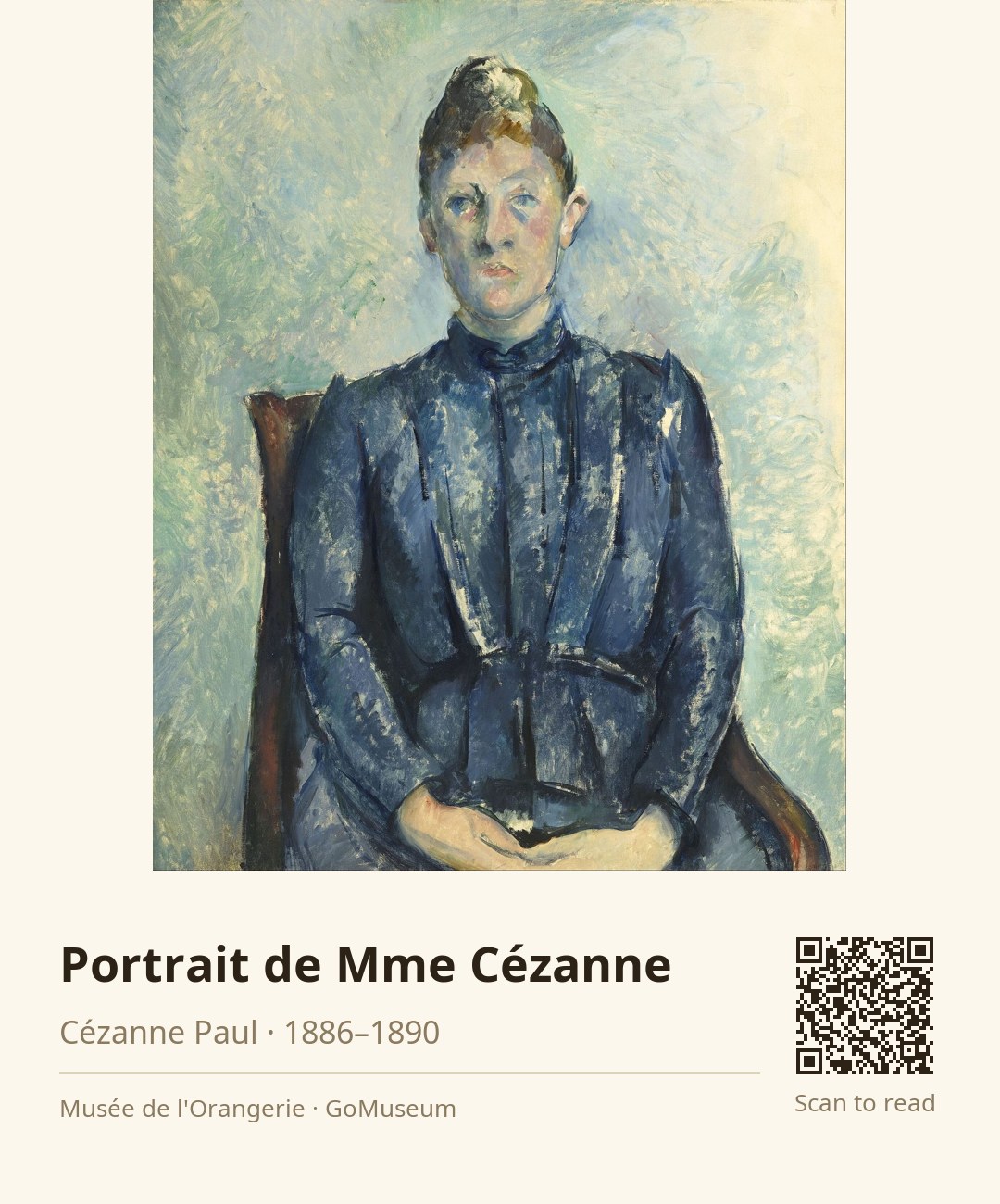
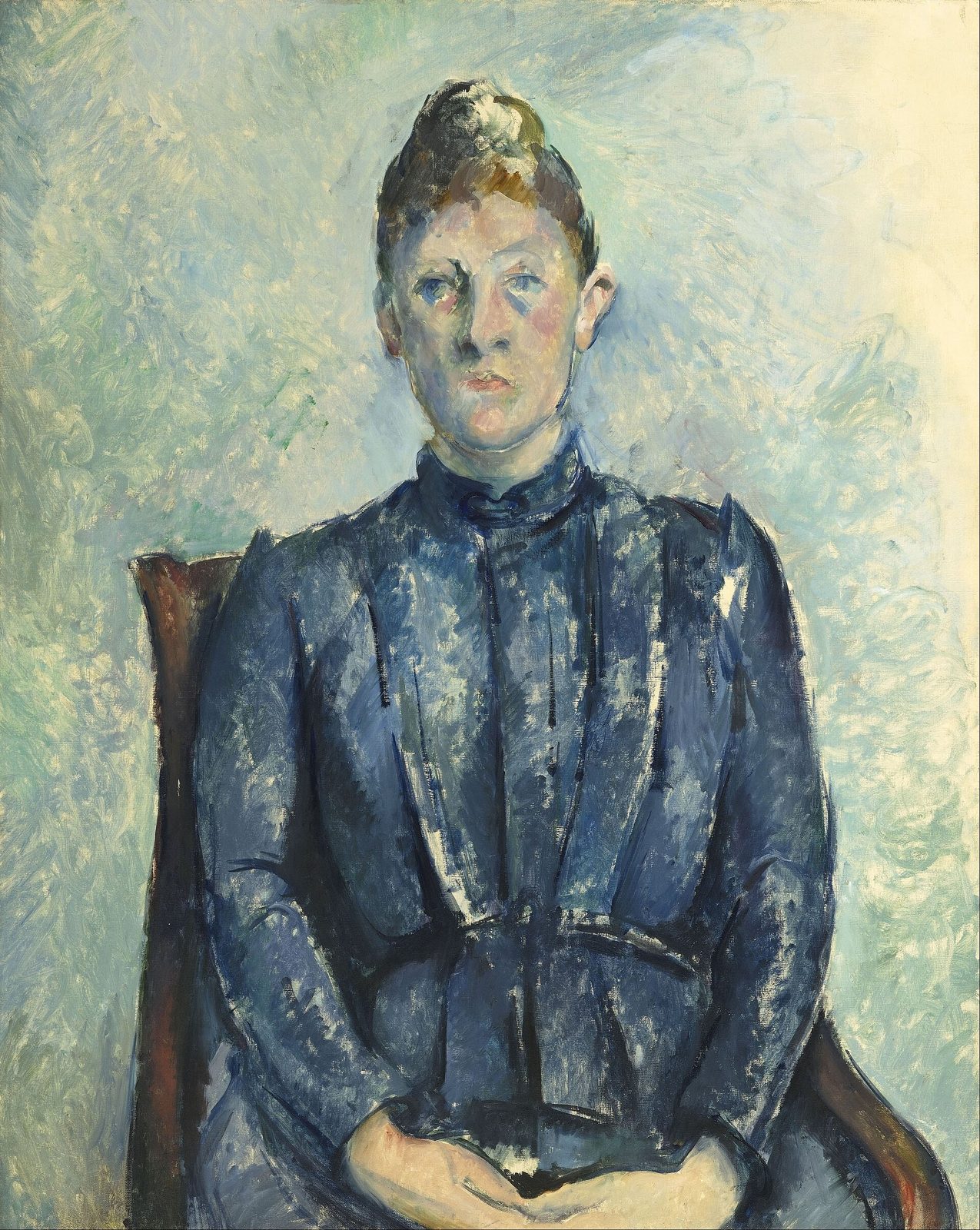
🎧 This work has audio narration — listen in the appEmilie Hortense Cézanne sits poised in her dark blue dress, the high collar framing her face, which is illuminated by soft variations of color. Her hands rest gently on her lap, while the background swirls with light blues and greens, creating a serene atmosphere that contrasts with the solidity of her figure.
This interplay of color and texture not only brings her to life but also invites you into a moment of intimacy with the artist's wife, capturing a blend of warmth and coolness that reflects their relationship. Cézanne’s loose brushwork adds a sense of movement, making the painting feel dynamic despite its calm subject.
Created between 1886 and 1890, this portrait showcases Cézanne's evolving style during a pivotal time in his career, as he sought to balance realism with a more abstract approach. The work was exhibited at significant venues, including the Grand Palais in Paris and the Stedelijk Museum in Amsterdam, highlighting its importance in the art world.
Cézanne's 'Portrait de Mme Cézanne' was painted between 1886 and 1890, a period when the artist was deeply immersed in exploring the boundaries of realism and abstraction. The painting made its debut in various prestigious exhibitions, including the Grand Palais in Paris in 1926 and later at the Stedelijk Museum in Amsterdam in 1930. Over the years, it changed hands several times, passing through notable collections such as that of Paul Guillaume and later Walter Mme Vve Jean.
The technique in 'Portrait de Mme Cézanne' showcases Cézanne's mastery of oil paint, where he employs loose brushwork to create a sense of movement and life. The visible strokes are not just a stylistic choice; they add texture and depth, inviting the viewer to feel the atmosphere of the moment. The cool palette, dominated by blues and greens, contrasts beautifully with the warmer tones of Emilie's skin, creating a dynamic interplay that draws the eye. Cézanne's approach to light is subtle yet effective, using variations in color to model her features rather than relying on strict outlines. This method enhances the emotional resonance of the piece, allowing the viewer to connect with the subject on a deeper level. The balanced composition, with Emilie's gaze directed outward, engages you, making it feel as if she is inviting you into her world.
It first debuted at the Grand Palais in Paris in 1926 and was later shown at the Stedelijk Museum in Amsterdam in 1930.