Arbres et maisons
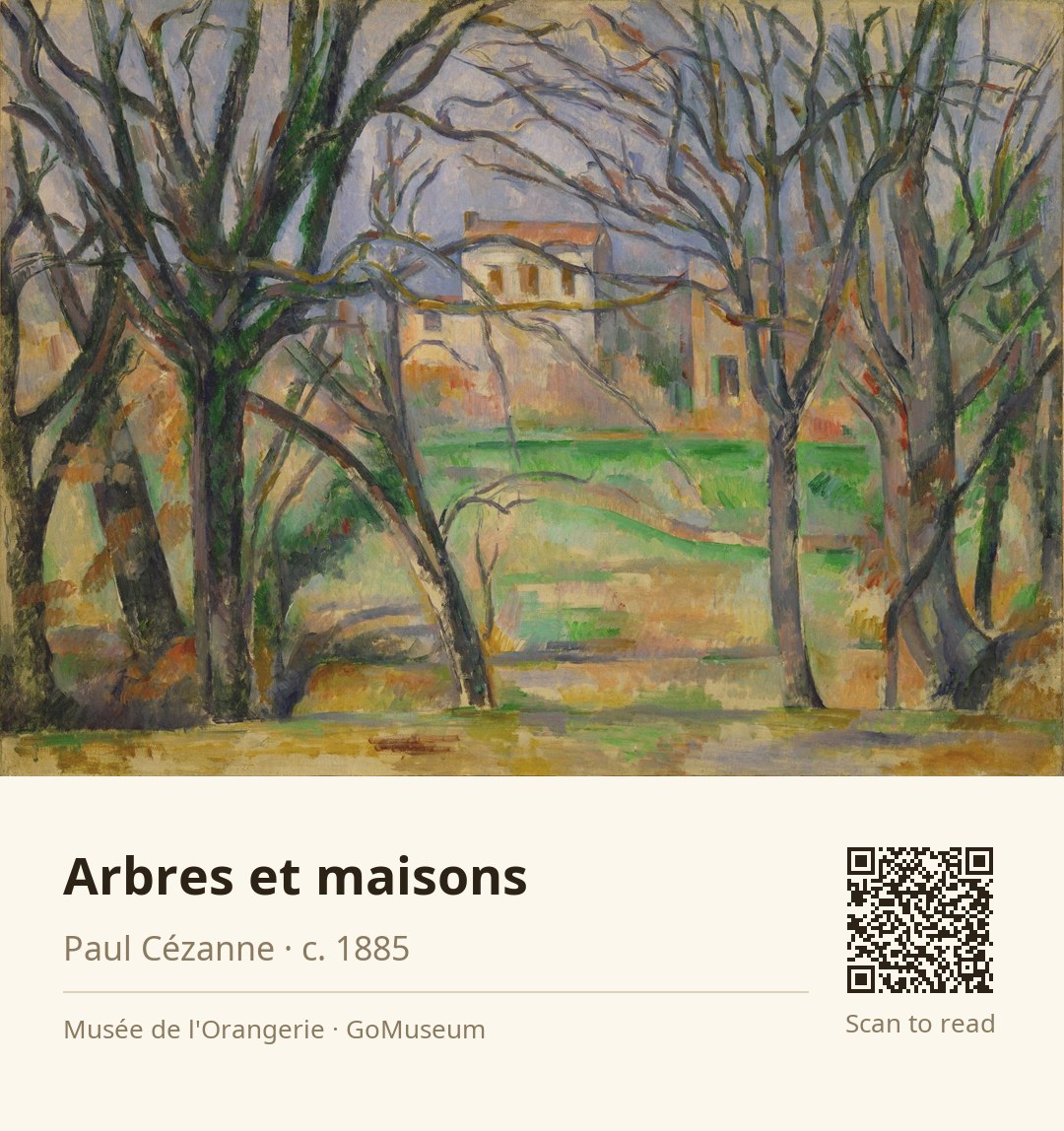
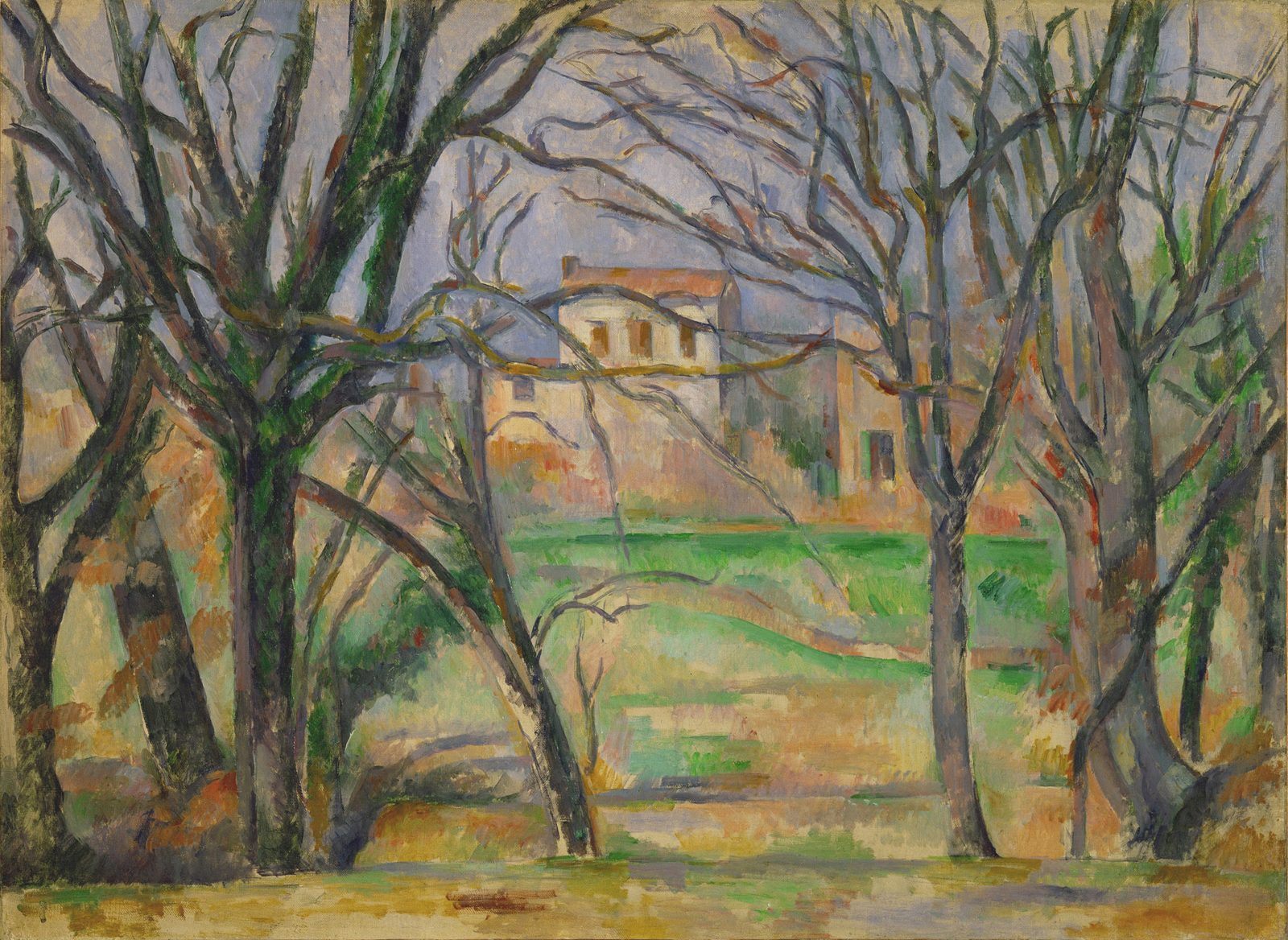
🎧 This work has audio narration — listen in the appThe tall, leafless trees in Cézanne's "Arbres et maisons" twist dramatically across the canvas, their dark branches forming a striking network that draws your eye toward the house nestled in the middle distance. This house, painted in soft cream and brown with a vibrant red roof, stands out against a backdrop of muted greens and blues, creating a serene yet dynamic landscape.
The interplay between the stark branches and the warm tones of the house highlights Cézanne's fascination with structure and form. The textured brushwork adds a palpable depth, inviting you to explore the layers of the scene. The trees act as a natural frame, guiding your gaze deeper into the composition, while the earthy ground hints at the seasonal transition, perhaps evoking a sense of quiet reflection in the viewer.
Created around 1885, this work exemplifies Cézanne's innovative approach to landscape painting, where he blends observation with a unique interpretation of nature.
Paul Cézanne was a French Post-Impressionist painter born on January 19, 1839, in Aix-en-Provence. His innovative approach to color and form bridged the gap between Impressionism and the emerging Cubism of the early 20th century. Initially influenced by Romanticism and Realism, Cézanne developed a unique style that emphasized the underlying structure of objects, using repetitive brushstrokes and planes of color to create depth and complexity in his work.
Despite facing ridicule and misunderstanding from critics during his early career, Cézanne garnered support from fellow artists like Camille Pissarro and the art dealer Ambroise Vollard, who recognized his talent. His first solo exhibition in 1895 marked a turning point, leading to greater appreciation of his contributions to art. Cézanne's legacy is profound; both Henri Matisse and Pablo Picasso acknowledged him as a foundational figure in modern art, dubbing him "the father of us all." He passed away on October 22, 1906, leaving behind a transformative body of work that continues to influence artists today.
The brushwork is vigorous yet deliberate, with thick applications of paint that create a tactile quality, inviting the viewer to feel the landscape rather than just see it. The dark, twisting branches of the trees are not merely outlines; they are expressive forms that dominate the foreground, establishing a dramatic contrast with the soft, warm tones of the house. This juxtaposition draws your eye deeper into the scene. The muted greens and blues of the background are layered in a way that suggests atmospheric depth, while the textured ground hints at the seasonal transition, perhaps evoking a sense of quiet reflection. The composition is carefully balanced, with the trees framing the house, guiding the viewer's journey through the landscape.
This connection highlights the vibrant artistic community in which Cézanne was immersed, where ideas and techniques were exchanged, influencing one another's work. It’s a testament to the collaborative spirit of the late 19th-century art scene.
Cézanne's vigorous and deliberate brushwork, with thick paint applications, creates a tactile quality that encourages viewers to engage with the landscape on a sensory level.
The expressive, dark branches of the trees dominate the foreground and create a dramatic contrast with the house's soft, warm tones, enhancing the overall composition.