 Image: Miguel Hermoso Cuesta
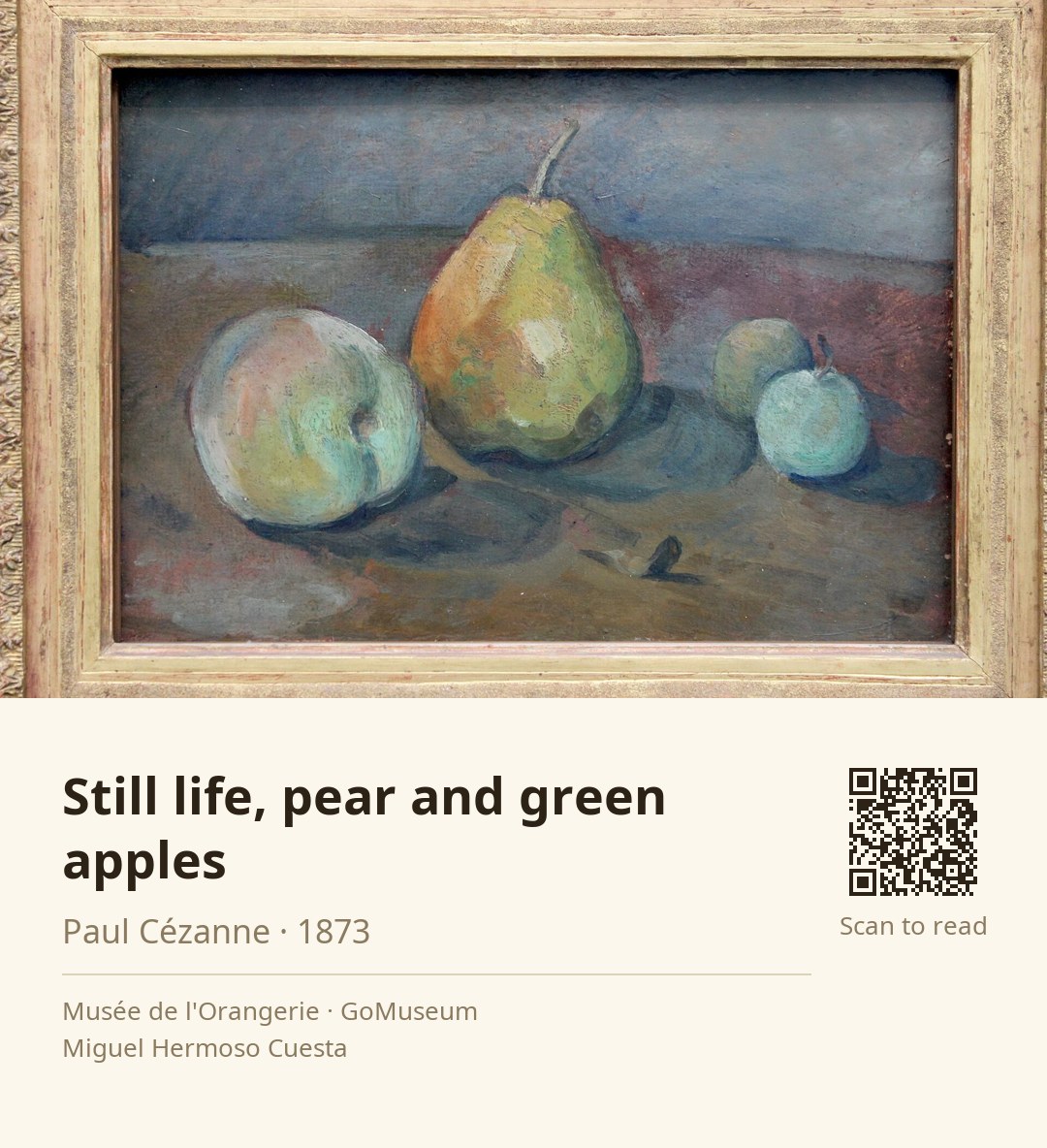
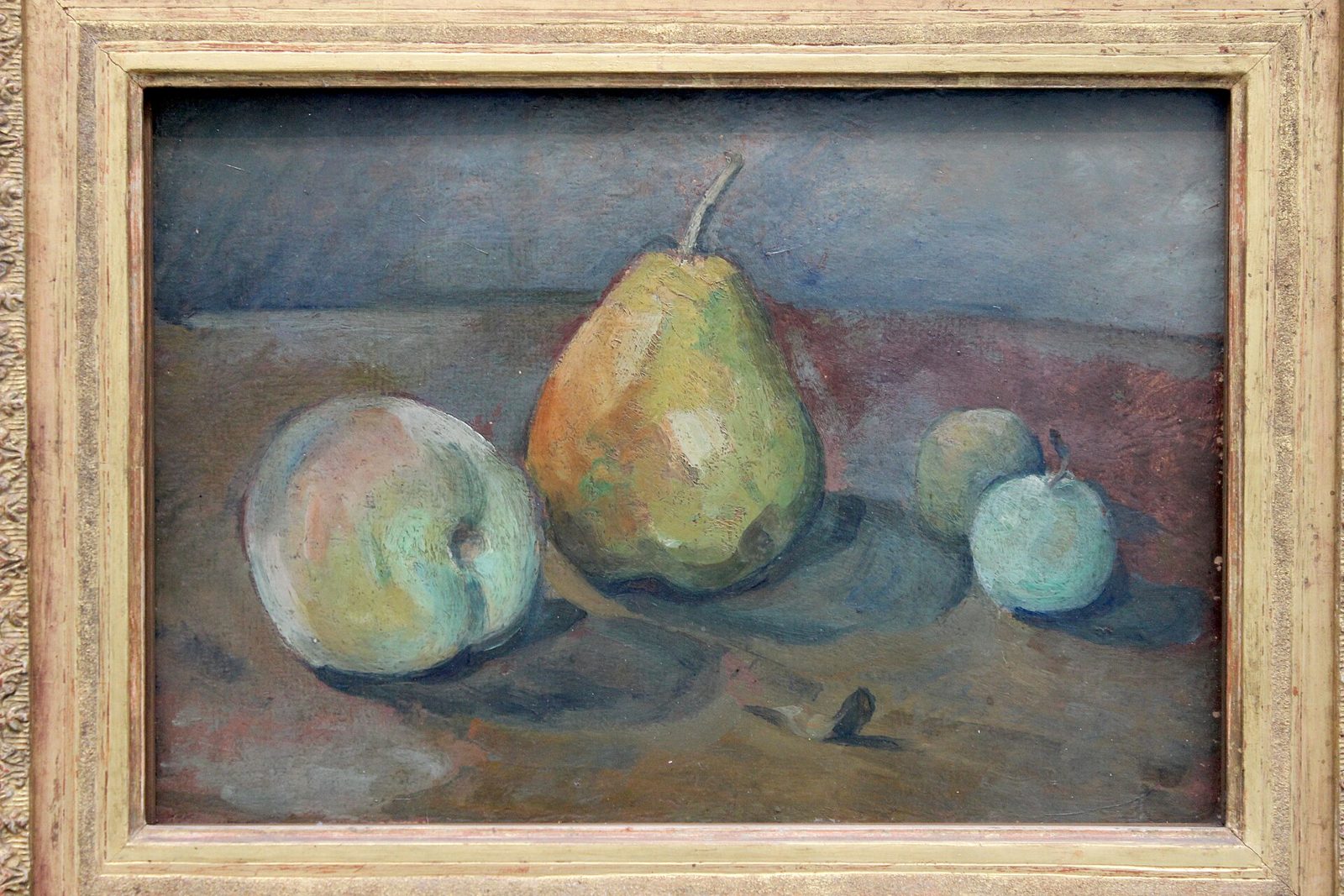
Still life, pear and green apples
🎧 This work has audio narration — listen in the appTake a moment to really look at this painting, "Still Life: Pear and Green Apples" by Paul Cézanne. Notice how the pear seems to glow with a warm, inviting hue, while the green apples sit cool and composed beside it. The way Cézanne captures the light and shadow on these fruits is nothing short of magical, isn’t it?
These details matter because they reveal Cézanne’s revolutionary approach to color and form. He wasn't just painting a bowl of fruit; he was exploring how light interacts with objects, how colors can shape our perception of reality. This painting, created in 1873, is a perfect example of his transition from traditional representation to a more modern interpretation, paving the way for future movements like Cubism.
Cézanne faced criticism in his time, with many not understanding his unique vision. Yet, he persisted, believing in the importance of capturing the essence of his subjects. As you stand here, think about the journey of this artwork and how it reflects not just the beauty of the pears and apples, but also the artist's struggle and innovation. What do you think Cézanne was trying to say about the ordinary objects around us?
Paul Cézanne was a French Post-Impressionist painter born on January 19, 1839, in Aix-en-Provence. His innovative approach to color and form bridged the gap between Impressionism and the emerging Cubism of the early 20th century. Initially influenced by Romanticism and Realism, Cézanne developed a unique style that emphasized the underlying structure of objects, using repetitive brushstrokes and planes of color to create depth and complexity in his work.
Despite facing ridicule and misunderstanding from critics during his early career, Cézanne garnered support from fellow artists like Camille Pissarro and the art dealer Ambroise Vollard, who recognized his talent. His first solo exhibition in 1895 marked a turning point, leading to greater appreciation of his contributions to art. Cézanne's legacy is profound; both Henri Matisse and Pablo Picasso acknowledged him as a foundational figure in modern art, dubbing him "the father of us all." He passed away on October 22, 1906, leaving behind a transformative body of work that continues to influence artists today.
Paul Cézanne created 'Still Life: Pear and Green Apples' in 1873, a time when he was still finding his unique voice in the art world. This painting was part of a larger journey for Cézanne, who faced significant criticism for his unconventional style. Initially, his work was met with confusion and ridicule, but he found support from fellow artists like Camille Pissarro and the influential art dealer Ambroise Vollard. It was Vollard who organized Cézanne's first solo exhibition in 1895, which marked a turning point in the artist's career and helped to elevate his status. The painting itself reflects a pivotal moment in art history, bridging the gap between Impressionism and the emerging Cubist movement. Over time, Cézanne's work gained recognition, and he became a key figure for many modern artists, including Henri Matisse and Pablo Picasso, who famously regarded him as 'the father of us all.'
As you gaze at this painting, pay attention to Cézanne's distinctive brushwork. His repetitive, exploratory strokes create a sense of depth and texture, inviting you to feel the weight of the pear and the coolness of the apples. The use of oil paint on canvas allows for a rich modulation of color, where the warm yellows and greens interact dynamically. Notice how Cézanne constructs the composition; he doesn’t just place the fruits haphazardly but arranges them with a careful balance that draws your eye across the canvas. The light plays a crucial role here, illuminating the pear in a way that almost makes it seem to glow, while the apples remain in shadow, creating a contrast that enhances their form. This technique of layering color and light is what gives the painting its vibrancy and life, transforming everyday objects into a study of perception and reality.
One interesting tidbit about Cézanne is that he had a lifelong connection with apples, which became a recurring motif in his still lifes. The story goes that when his friend Émile Zola thanked him for defending him in school, he gifted Cézanne a basket of apples.
Cézanne had a lifelong connection with apples, which became a recurring motif in his still lifes. This connection began when his friend Émile Zola gifted him a basket of apples as a thank you for defending him in school.
Cézanne came from a relatively affluent family, as his father was a successful banker. This financial security allowed him to pursue art without the immediate pressure of making a living, giving him the freedom to develop his unique style.
Cézanne's first solo exhibition in 1895, organized by art dealer Ambroise Vollard, marked a turning point in his career. It helped elevate his status in the art world and led to a broader recognition of his work, which had previously faced ridicule.