 Image: Philippe Cendron
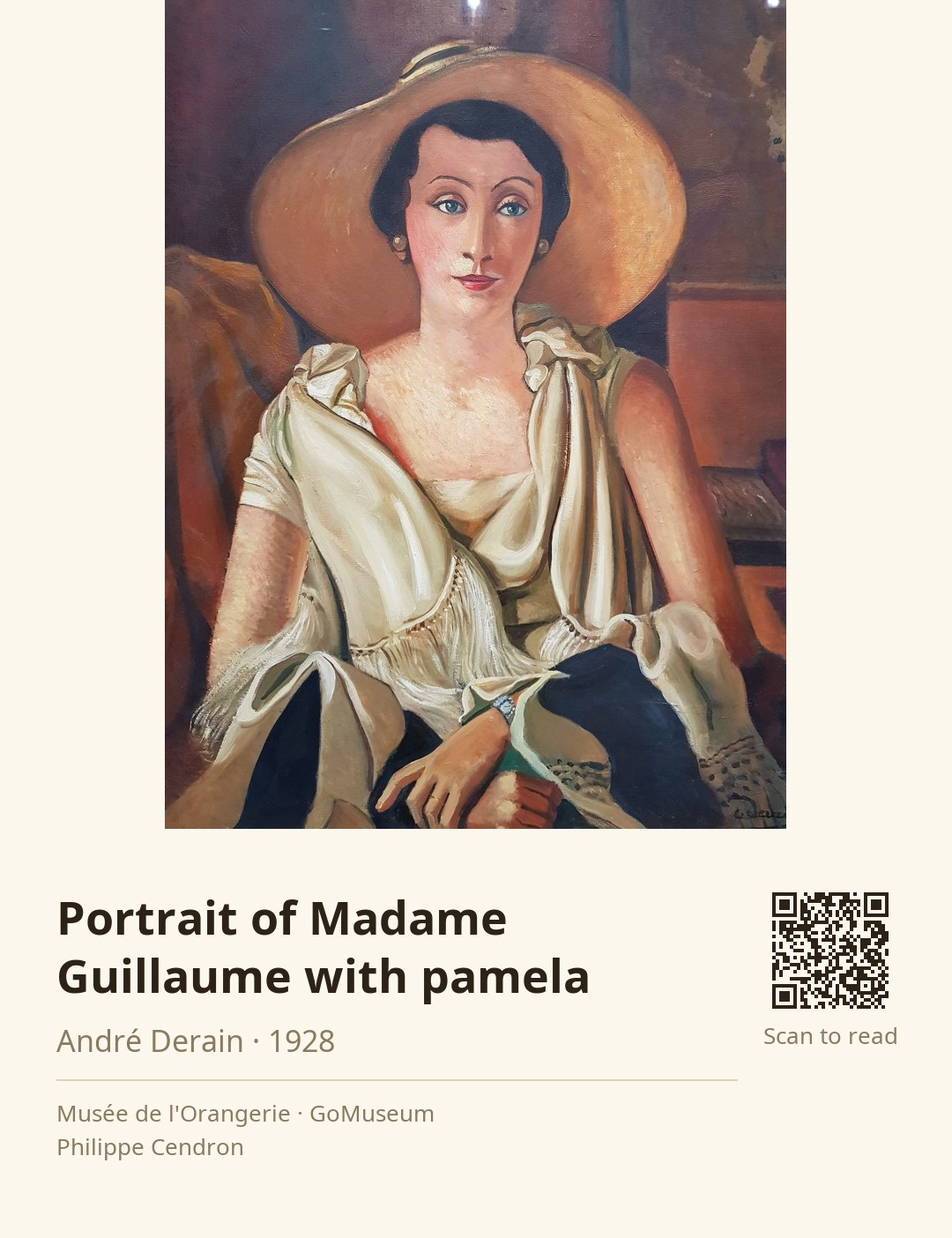
Portrait of Madame Guillaume with pamela
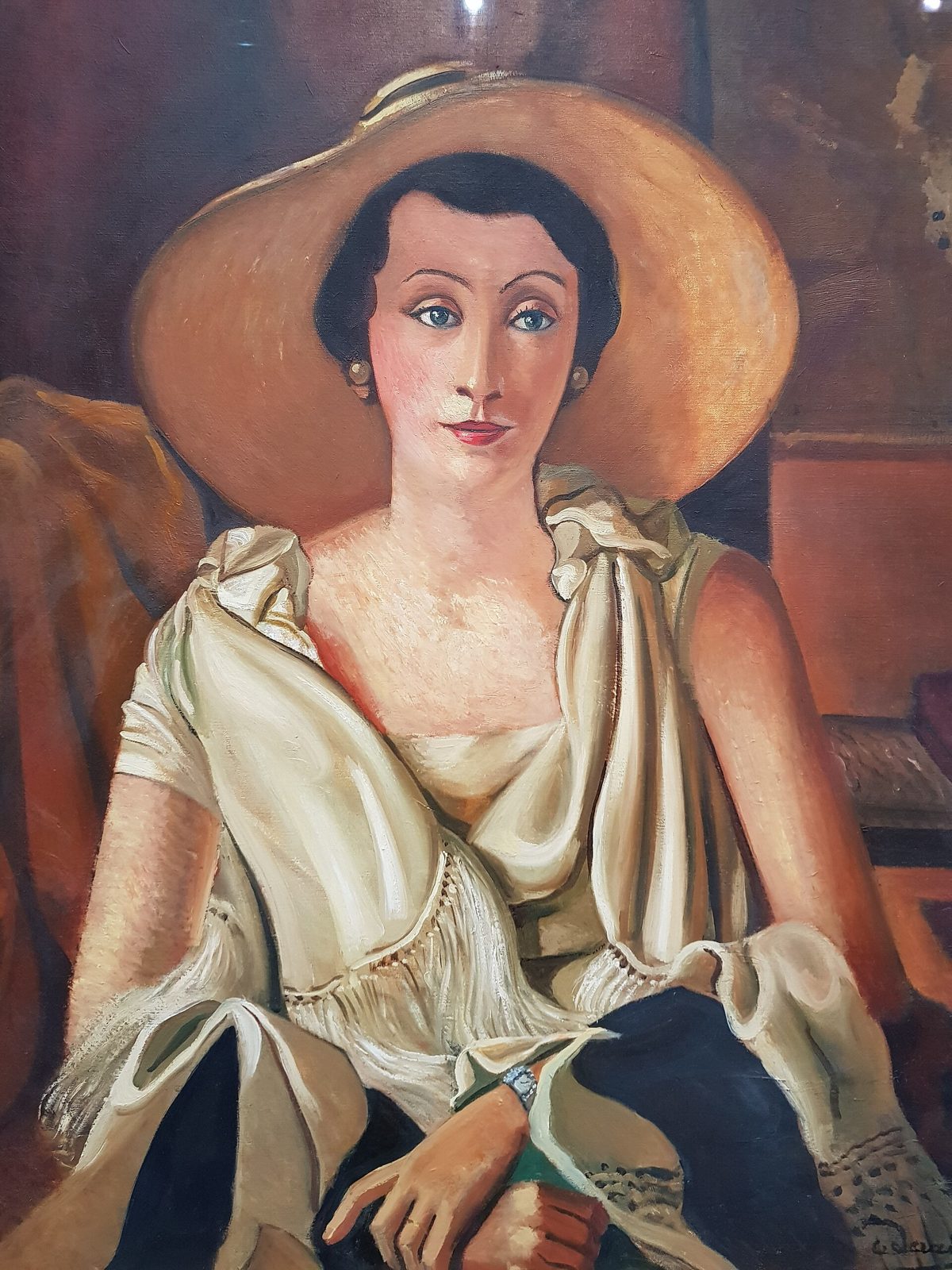
🎧 This work has audio narration — listen in the appTake a moment to really look at "Portrait of Madame Guillaume with Pamela." Notice how the light dances in her eyes, almost sparkling with life, while her serious expression holds a world of secrets. That striking contrast is key—it pulls you into her story, a woman of high society caught between elegance and intrigue.
Now, focus on the rich textures of her hat and stole. The way the fabric drapes and flows adds a sense of grandeur, but also hints at the weight of her social status. This isn't just a portrait; it’s a snapshot of a complex character, a woman who, after her husband’s death, became a figure of controversy—some even labeled her as manipulative.
Painted by André Derain in 1928, this work reflects not just her beauty but the societal dynamics of the time. Derain was a pioneer of Fauvism, known for his bold use of color, yet here he captures a more classical essence, blending modernity with tradition.
As you stand here, think about what this portrait reveals about the nature of power and perception in society. What do you see in her gaze? What stories might she tell if she could speak?
André Derain was a pivotal French artist born on June 17, 1880, in Chatou, near Paris. He co-founded the Fauvist movement alongside Henri Matisse, known for its bold use of color and expressive brushwork. Derain's early works from 1905-1906 showcased vibrant hues that challenged traditional aesthetics, earning the moniker "les Fauves" or "the wild beasts." His time in London further evolved his style, where he produced a series of striking paintings that captured the essence of the city with innovative techniques.
After World War I, Derain shifted towards a more classical approach, influenced by the Old Masters and a desire for order in art. This transition marked his emergence as a leader in the renewed classicism movement, where he combined his theatrical interests with visual arts. Despite facing criticism post-war, he remained a significant figure in the interwar period, contributing to ballet and theater design.
Derain's legacy is marked by his ability to bridge movements, from Fauvism to classicism, leaving an indelible mark on 20th-century art. He passed away on September 8, 1954, remembered as a complex artist who navigated the tumultuous changes of his time.
André Derain's 'Portrait of Madame Guillaume with Pamela' was painted between 1928 and 1929, during a time when both he and his subject, Madame Juliette Lacaze Guillaume, were at the height of their social prominence. This portrait is one of two he created of her, the first emerging in 1925. Commissioned by her husband, Paul Guillaume, a prominent art dealer, this work captures Domenica's complex persona, especially in the wake of her husband's death, which cast a shadow over her reputation. Following its completion, the painting was part of Paul Guillaume's collection until 1929, when it was acquired by Madame Jean Walter. It later found its home at the Louvre in 1959 and is now exhibited at the Musée de l'Orangerie in Paris, where it continues to intrigue viewers with its portrayal of a woman who navigated the treacherous waters of high society.
In this painting, Derain employs a striking combination of light and color that brings Domenica's character to life. Notice how the brushwork feels both deliberate and spontaneous, with rich textures in her hat and stole that seem to flow with an almost theatrical flair. The use of white highlights in her eyes creates a captivating sparkle, drawing you into her gaze. The composition is carefully structured; her serious expression and crossed hands suggest a poised yet troubled mind. The background, featuring a painting of Pierrot and Arlequin, adds layers of narrative, hinting at the performative aspects of her life.
Following his passing, she was often labeled as a manipulator, and many viewed this painting as a representation of her 'evil' nature. It's fascinating how a single artwork can shift in meaning over time, reflecting the complexities of the subject's life and societal perceptions.
Derain painted two portraits of Madame Juliette Lacaze Guillaume, indicating a significant connection between the artist and his subject, likely influenced by her social prominence and the art world connections through her husband, Paul Guillaume.
After the death of Paul Guillaume, Madame Guillaume's reputation suffered, with some labeling her as manipulative, which added a layer of intrigue to her character and the portrait itself, transforming her image from a high-society figure to a controversial one.
Derain's technique in this portrait, particularly the way he illuminated Madame Guillaume's eyes with a touch of white, was reminiscent of the Coptic portraits he collected, showcasing his interest in historical art forms and their impact on his modernist approach.