 Image: Miguel Hermoso Cuesta
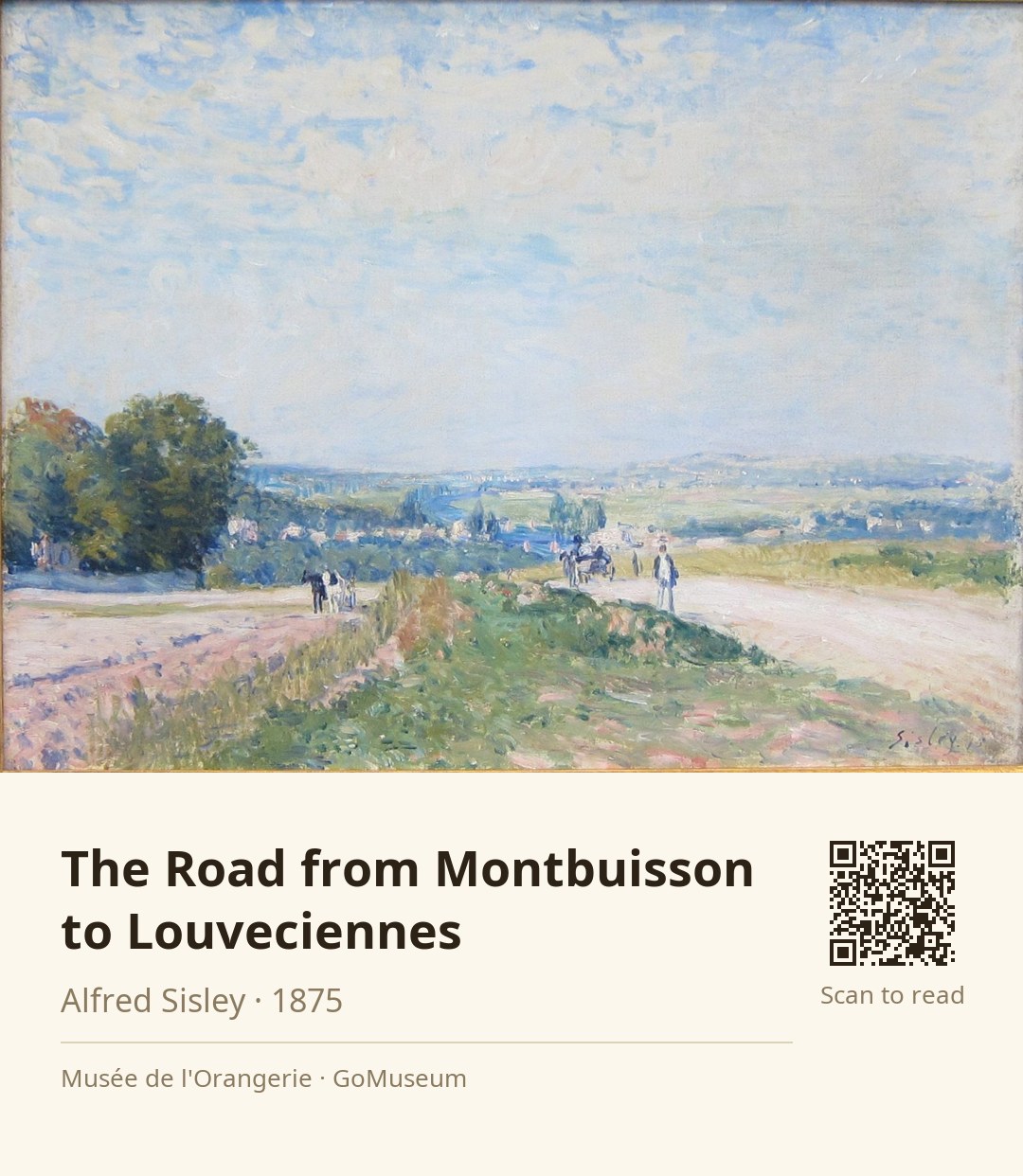
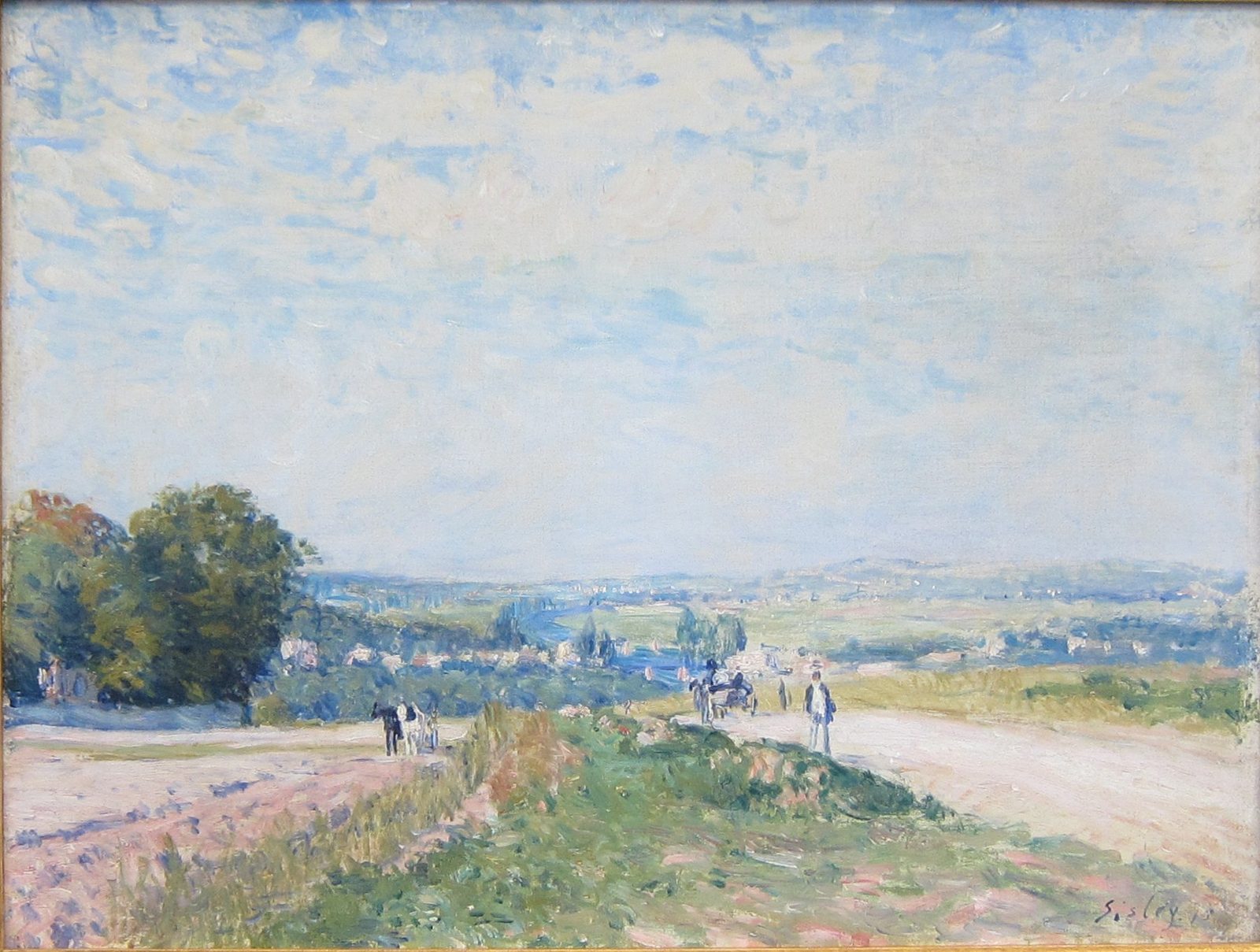
The Road from Montbuisson to Louveciennes
🎧 This work has audio narration — listen in the appTake a moment to really soak in the scene before you in Alfred Sisley’s "The Road from Montbuisson to Louveciennes." Notice how the path winds gently through the landscape, almost inviting you to step into the painting. Look closely at the soft, dappled light filtering through the trees, casting delicate shadows on the ground.
These details are crucial because they capture the essence of Impressionism—Sisley’s ability to convey the fleeting effects of light and atmosphere. The way he blends greens and blues creates a serene, almost dreamlike quality that transports you to a tranquil moment in nature. It’s not just a road; it’s a pathway to peace, reflecting the artist’s deep connection to the landscape around him.
Created in 1875, this painting showcases Sisley’s commitment to painting outdoors, a practice that defined his work and set him apart from many of his contemporaries. While he struggled for recognition during his lifetime, his dedication to capturing the beauty of everyday scenes has earned him a lasting place in art history.
As you stand here, think about the journey this road represents. What stories might it hold? What moments of beauty have unfolded along its path? Let your imagination wander as you reflect on the quiet power of this landscape.
Alfred Sisley was a British-born Impressionist landscape painter, born in Paris on October 30, 1839, to affluent expatriate parents. His dedication to painting outdoors, or en plein air, marked him as one of the most consistent figures within the Impressionist movement. Sisley’s work primarily focused on landscapes, with notable series depicting the River Thames, the floods at Marly-le-Roi, and the Gothic church at Moret-sur-Loing. Despite his talent, he struggled for recognition and financial stability throughout his life, often relying on the support of patrons and friends.
Sisley's artistic journey began in earnest after returning to Paris from London, where he had been sent to pursue a business career. Instead, he found his calling in art, studying at the École des Beaux-Arts and forming close friendships with fellow artists like Monet and Renoir. His personal life was marked by hardship, particularly after the Franco-Prussian War disrupted his family's financial support. He married Eugénie Lescouezec, and together they faced many challenges, including the loss of a child and Sisley’s ongoing financial instability.
Although Sisley’s work was largely overlooked during his lifetime, it has since gained significant appreciation, solidifying his place in art history as a key contributor to Impressionism and French landscape painting. His delicate depictions of nature continue to resonate, showcasing the beauty of the world around him. Sisley passed away on January 29, 1899, in Moret-sur-Loing, leaving behind a legacy that would flourish posthumously.
Alfred Sisley's 'The Road from Montbuisson to Louveciennes' was created in 1875, during a time when the Impressionist movement was still struggling for acceptance. Sisley, born to British parents in Paris, had dedicated himself to capturing the beauty of the French landscape, often painting en plein air. Despite his talent, he faced financial difficulties and limited recognition during his lifetime. Although Sisley exhibited at the Salon in 1868, it wasn't until after his death in 1899 that his work began to gain the acclaim it deserved. His paintings, including this one, were often overshadowed by his more famous contemporaries like Monet and Renoir, but today, they are celebrated for their tranquil beauty and masterful use of light.
In 'The Road from Montbuisson to Louveciennes,' Sisley employs a delicate touch that captures the essence of the Impressionist style. Notice how the brushwork is both loose and precise, creating a sense of movement in the foliage and the gentle undulations of the path. The dappled light filtering through the trees is achieved through a layering technique, where Sisley builds up colors to create depth and vibrancy. The palette is dominated by soft greens and blues, evoking a serene atmosphere that invites you to linger. The composition leads your eye along the winding road, suggesting a journey through this idyllic landscape. The balance between light and shadow adds to the painting's tranquility, making it feel almost like a moment frozen in time. This careful handling of paint and light is what gives the scene its dreamlike quality.
Sisley, often overshadowed by his contemporaries like Monet and Renoir, carved out a unique niche with his dedication to capturing the fleeting effects of light and atmosphere. His work influenced later generations of landscape painters, emphasizing tranquility and subtle color palettes. This painting, with its serene path and gentle brushwork, invites viewers to pause and appreciate the world around them, a legacy that resonates in today's art scene where nature and simplicity are celebrated. Remember, Sisley's approach was not just about what was seen, but how it felt—a quiet revolution in the art world.
One surprising fact about Sisley is that despite his British origins, he never obtained French citizenship during his lifetime. He applied for naturalization twice, but both attempts were unsuccessful, leaving him a British national until his death.
Sisley was born to affluent British parents in Paris, which provided him with a comfortable upbringing that allowed him to pursue art rather than a traditional business career. This privileged background enabled him to focus on his passion for painting, particularly landscapes, without the immediate financial pressures faced by many of his contemporaries.