Paris › Georges Seurat
Georges Seurat at Paris
1859 – 1891
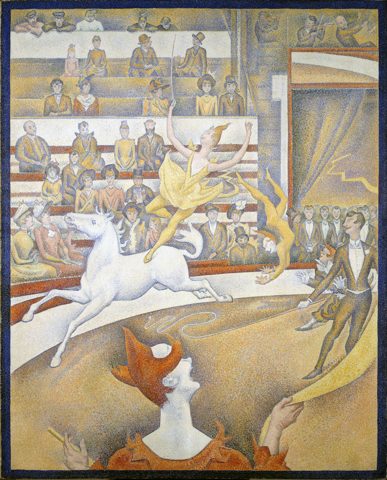
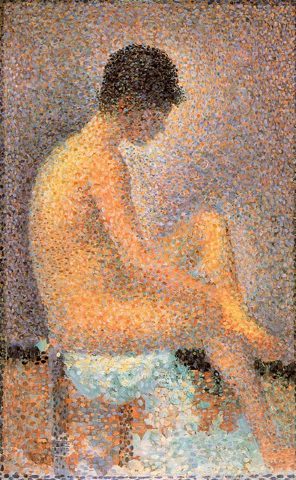
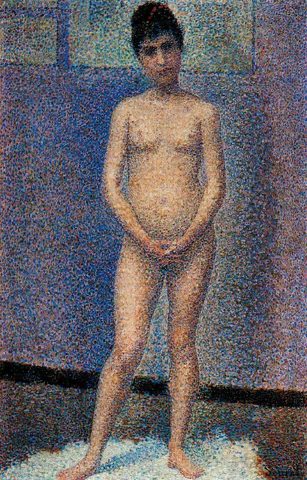
Georges Seurat was a French post-Impressionist artist born on December 2, 1859, in Paris. He is best known for developing pointillism, a technique that uses tiny dots of color to create optical blending. Seurat's character was marked by a unique blend of sensitivity and logical precision, which drove his innovative approach to art. His most famous work, "A Sunday Afternoon on the Island of La Grande Jatte," completed between 1884 and 1886, is a monumental piece that showcases various social classes enjoying leisure time in a park. This painting not only exemplifies his mastery of color theory but also played a pivotal role in the evolution of modern art, marking the beginning of Neo-Impressionism.
Seurat's artistic journey began with formal training at the École des Beaux-Arts, where he honed his skills in drawing and color. Despite facing rejection from the Paris Salon, he found a platform with the Société des Artistes Indépendants, where he exhibited his groundbreaking works. His influence extended beyond his lifetime, inspiring movements such as Fauvism and Cubism. Seurat's legacy as a pioneer of modern art is underscored by his meticulous approach to composition and color, making him a central figure in the history of 19th-century painting. He passed away on March 29, 1891, leaving behind a profound impact on the art world.